Newsletter Subscribe
Enter your email address below and subscribe to our newsletter
[forminator_form id="25163"]

All voices matter
investing+1investingsedaily+1Volatility in the global technology sector has climbed to its highest level since the dot-com crash, as investors reassess whether AI-driven returns from hyperscalers and semiconductor companies can be sustained, according to a new report from UBS's HOLT research unit published this week.sedaily+1
The turbulence is reshaping capital flows across global markets, with investors rotating out of U.S. technology stocks and into European equities, which have hit a string of record highs.
UBS analyst Michel Lerner warned that heavy data-center spending on AI infrastructure is eroding cash flow returns on investment at the largest cloud and data-center providers, even as profit margins remain intact. The bank estimates the top five hyperscalers — Microsoft , Meta , Alphabet , Amazon Amazon.com, Inc. , and Oracle — face a combined $227 billion funding gap next year against their operating and financing commitments.bitget+1
Historically, of roughly 650 large capital expenditure surges since 1998, 60% were followed by a permanent decline in cash flow returns, with the effect most pronounced among companies whose starting returns were already elevated.investing
In semiconductors, returns have roughly tripled to around 30%, a level matched by fewer than 1% of companies since 1990. UBS noted that current valuations assume these returns will persist for five years — a scenario that runs counter to typical competitive dynamics. The report cited Chinese AI developers DeepSeek and Moonshot as evidence that economic moats in the sector may not be unassailable.investing
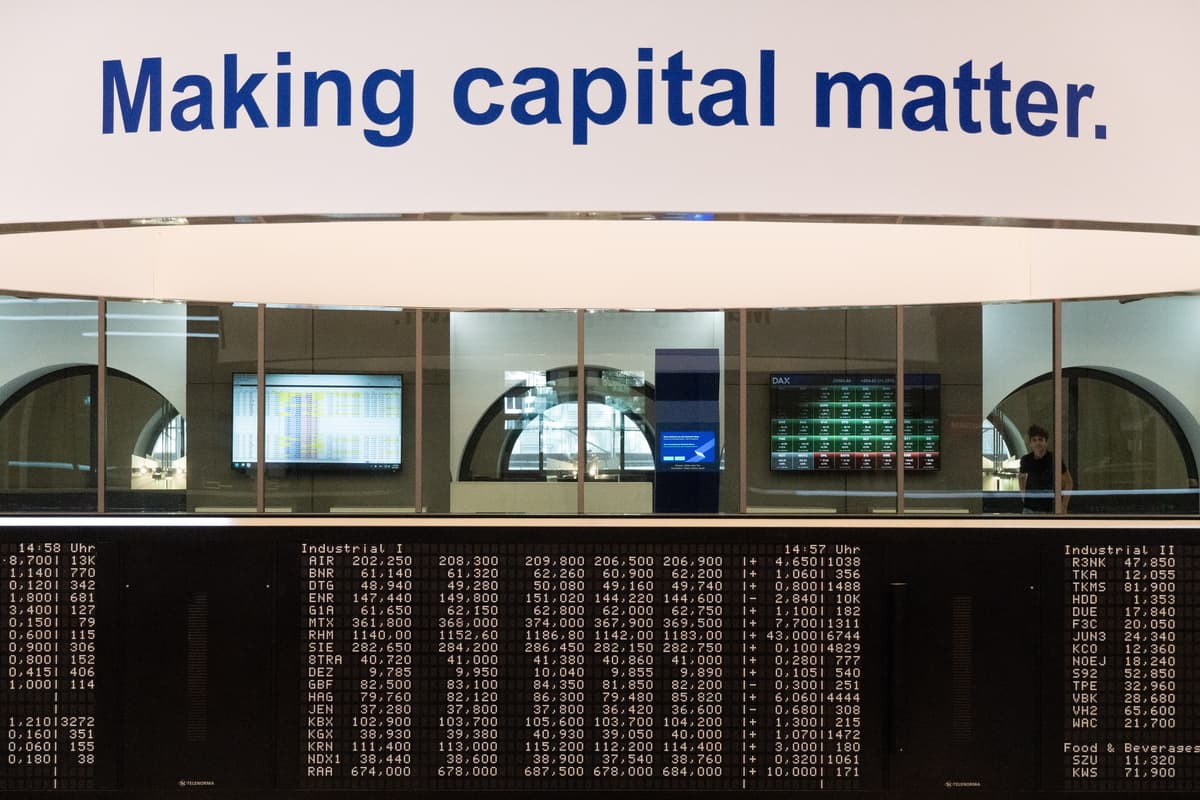
The instability in U.S. tech has accelerated a rotation into European equities. The Stoxx Europe 600 closed at 660.25 on August 7, marking a fourth consecutive record high. Germany's DAX, the U.K.'s FTSE 100, France's CAC 40, and Spain's IBEX also reached record levels last week.sedaily
"Europe is the anti-AI trade," said Julian Lafargue, chief market strategist at Barclays Private Bank, according to The Wall Street Journal.wsj
Second-quarter earnings at European companies are expected to rise 22% from a year earlier, the strongest pace since 2022, according to FactSet. Bank earnings have been especially robust, with BNP Paribas posting second-quarter net profit of 4.345 billion euros, up 33% year-over-year, and UBS seeing net profit climb 17%.sedaily
UBS found that software, enterprise data, and services stocks have already seen aggregate price-to-book ratios fall about 40% over the past 18 months on fears of AI-driven disruption. Historically, 80% of stocks that derated by a comparable amount failed to regain prior valuation levels within a decade.investing
The bank pointed to Value and Low Volatility as the strongest-performing style factors during past tech-led selloffs, with Value outperforming in all six major episodes since 2004. But UBS cautioned that Value's traditional link to the economic cycle has weakened since 2023, while Low Volatility stocks tend to underperform outside of selloff periods unless paired with strong fundamentals.investing
"The U.S. market has never been more exposed to the AI theme," Lerner wrote, noting that hyperscalers and tech stocks now account for 40% of the market.bitget