Newsletter Subscribe
Enter your email address below and subscribe to our newsletter
[forminator_form id="25163"]

All voices matter
economictimescnbc+1cnbc+1Washington and Tokyo's rare joint intervention to support the Japanese yen has thrust the world's largest government bond market into the spotlight, as investors weigh whether Japan — the biggest foreign holder of US Treasurys — will continue to finance America's expanding debt.
The United States and Japan intervened in currency markets on Friday to halt the yen's slide after it weakened to nearly 164 per dollar, its lowest level in roughly 40 years. Treasury Secretary Scott Bessent confirmed the action on Sunday, calling it a response to "disorderly yen movements" — the first US yen-buying intervention since 1998 and the first joint US-Japan operation since 2011.cnbc+1
The methods were unconventional. The Treasury funded its yen purchases using euros from its Exchange Stabilization Fund rather than dollars, a move Reuters columnist Jamie McGeever described as aimed at avoiding even the optics of selling dollar-denominated assets while long-dated Treasury yields sit at their highest levels since 2007. Japan is estimated to have spent over $36 billion in Friday's operation, with total recent intervention potentially exceeding $60 billion.reuters
Bessent also championed Japan's use of the Federal Reserve's Foreign and International Monetary Authorities Repo Facility, which allows foreign central banks to borrow dollars against their Treasury holdings rather than sell the securities outright. He said he wants to see the facility "upsized" beyond its current $60 billion daily limit.bloomberg+1
The intervention's aftershocks reached Japan's bond market on Tuesday, when a 10-year Japanese government bond auction drew notably weaker demand. The bid-to-cover ratio fell to 2.56 from 3.13 at the previous sale — the lowest since May 2025 — and the tail widened to its highest in two years, according to Reuters. The benchmark 10-year JGB yield climbed to 2.85% before settling near 2.795%.economictimes+1
Rising Japanese yields pose a longer-term challenge for US debt markets. As ING strategists noted, higher JGB yields are making domestic government bonds increasingly competitive with currency-hedged US Treasurys iShares 20+ Year Treasury Bond ETF for Japanese investors, potentially reducing a critical source of foreign demand. "With the record US deficit unlikely to be addressed anytime soon, foreign buyers will need to play an important role to prevent UST yields from breaking higher," ING wrote.businessinsider
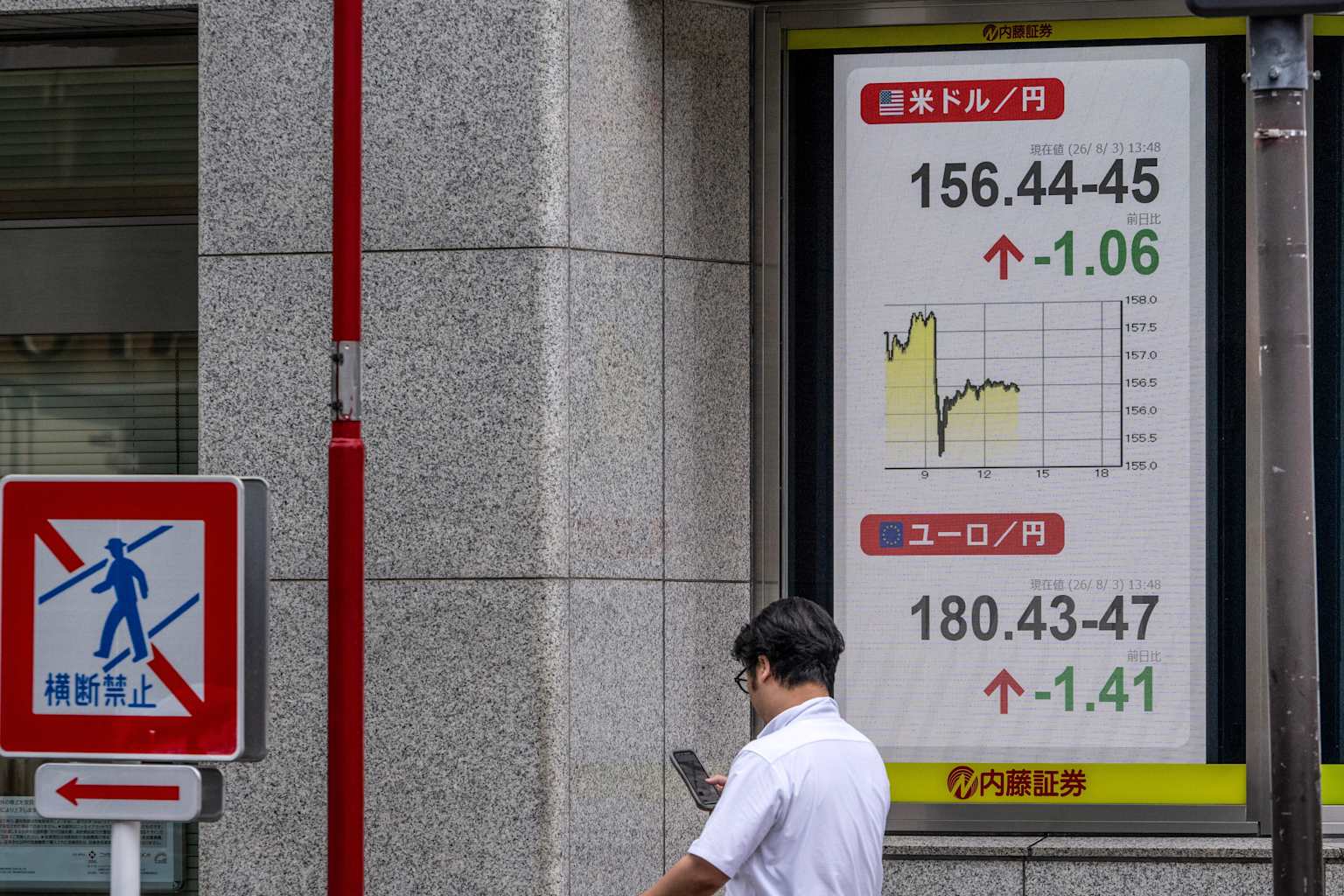
The yen strengthened to around 157 per dollar by early this week, roughly 4% above its pre-intervention lows. Both governments signaled willingness to act again. Japan's finance minister Satsuki Katayama said officials "will not hesitate to conduct further joint intervention."wsws+2
Whether the intervention established a durable ceiling near 164 remains uncertain. Masahiko Loo, senior fixed income strategist at State Street , told Bloomberg he believes the dollar-yen pair has peaked and that 155 is now the level to watch. But the structural forces pushing the yen weaker — a wide interest-rate gap between the US and Japan, heavy energy import costs, and an aging population — have not disappeared.cnbc+1
As CNBC reported, the episode has also raised questions about whether the Federal Reserve will be drawn further into US financial diplomacy, with new Fed Chairman Kevin Warsh signaling openness to closer collaboration with Treasury on international matters.cnbc