Newsletter Subscribe
Enter your email address below and subscribe to our newsletter
[forminator_form id="25163"]

All voices matter
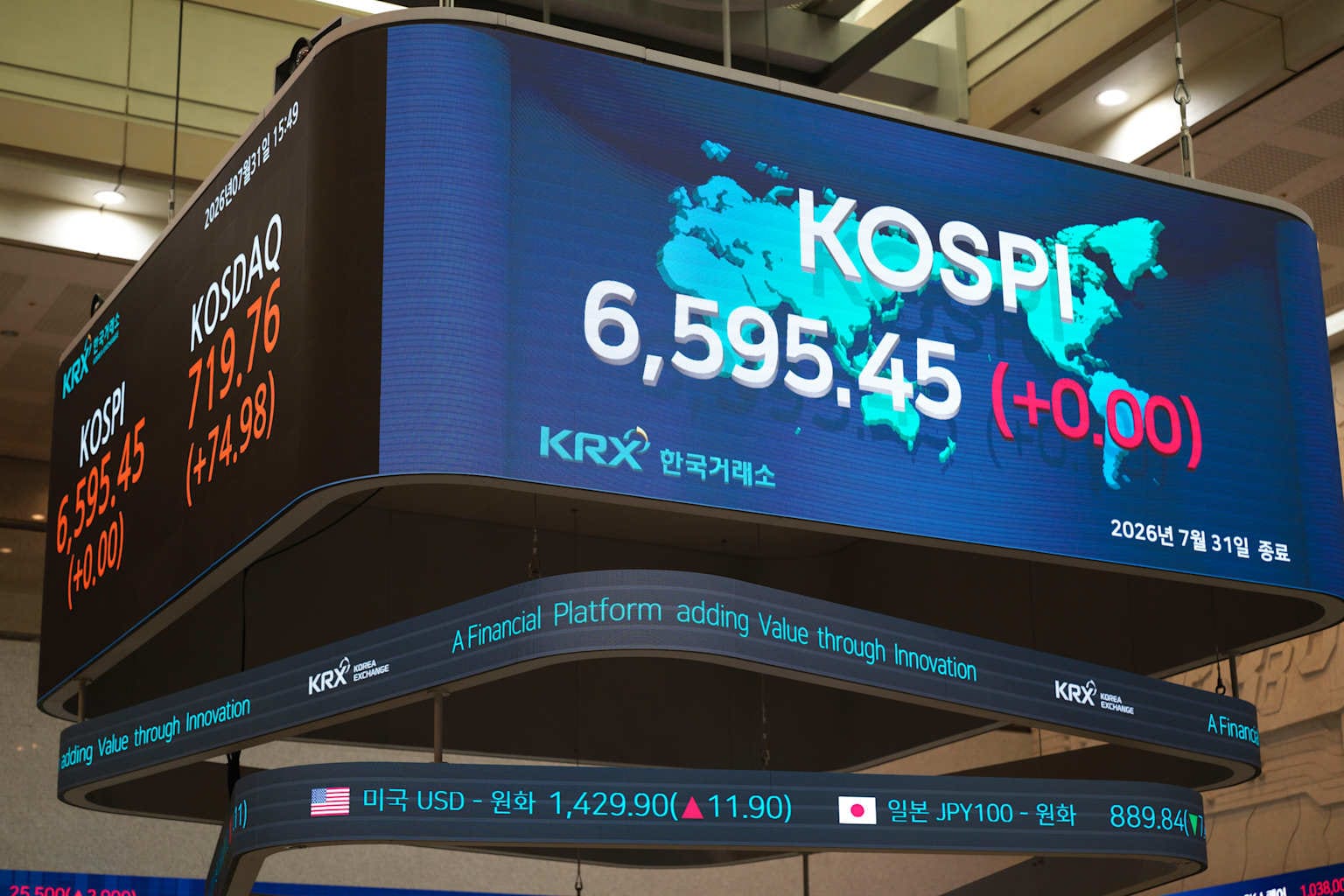
finimize+1kedglobal+1malayaEmerging-market equities retreated this week as South Korea's Kospi extended a punishing selloff and Asian semiconductor stocks cooled, dragging the MSCI Emerging Markets Index lower from a three-week high. The decline laid bare the risks of an index increasingly dominated by a handful of AI-linked chip firms in Seoul and Taipei.
The MSCI EM equity benchmark fell roughly 1.7% on Wednesday, according to Financial Times data, even as EM currencies held near record levels — a divergence that points to an equity-specific selloff rather than a broad flight from developing-world assets. Samsung Electronics tumbled more than 5% and SK Hynix sank nearly 7% on Thursday, the Economic Times reported, as the Kospi plunged to 6,238.finimize+2
The rout is the latest chapter in a volatile stretch for Korean equities. South Korea's benchmark has shed more than 28% from a record high of 9,114 reached on June 22, according to KED Global, after an AI-fueled rally that had more than doubled the index over the prior year. Trading was halted four times in July alone — a record run for circuit-breaker suspensions, the Straits Times reported.kedglobal+1
The turbulence has spotlighted the extreme top-heaviness of the MSCI EM index. Just nine companies — mostly Korean and Taiwanese semiconductor names along with Alibaba and Tencent — now account for more than 40% of the benchmark, according to Reuters, making it even more concentrated than the U.S. market. Taiwan and South Korea together represent roughly 49% of the index, State Street Global Advisors noted in June, up sharply from prior years as the AI semiconductor cycle redirected capital flows.malaya+1
"What we're seeing is that emerging markets, which people used to look to as a source of diversification, are not really a source of diversification anymore," MSCI's head of research Ashley Lester said.malaya
BNP Paribas head of APAC cash equity research William Bratton told Reuters that institutional clients "are struggling with the level of volatility in Korea at the moment — to the point that they think any sort of fundamental positive earnings story is not worth pursuing". Despite the recent losses, the Kospi remains up roughly 49% year-to-date, Benzinga noted, underscoring how steep the preceding AI-driven rally had been.benzinga+1
The mismatch between falling equities and steady currencies suggests the selloff is mechanical — driven by index concentration and systematic strategies that reduce exposure when volatility spikes — rather than a judgment on EM growth fundamentals.finimize