Newsletter Subscribe
Enter your email address below and subscribe to our newsletter
[forminator_form id="25163"]

All voices matter
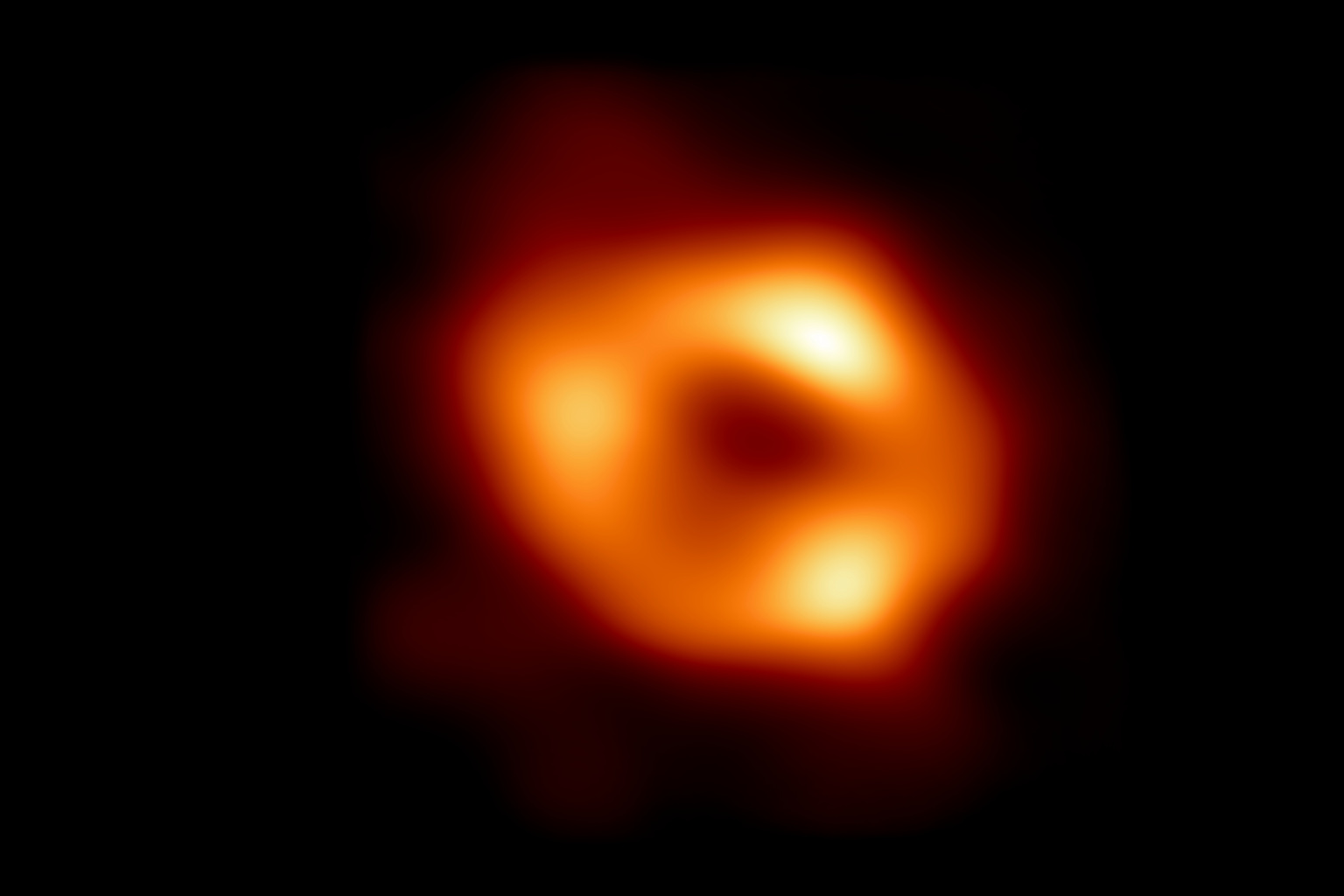
sci+1scispaceAstronomers using the James Webb Space Telescope have detected water molecules and silicate dust around a dying star just 0.55 light-years from Sagittarius A*, the supermassive black hole at the center of the Milky Way — a discovery that challenges assumptions about what can survive in the galaxy's most extreme radiation environment.
The findings, published August 11, 2026, in the journal Astronomy & Astrophysics, represent the first continuous mid-infrared spectrum ever collected for IRS 3, one of the brightest infrared sources near the galactic center.sci+1
IRS 3 is a red giant about six times the mass of the Sun and roughly 72 million years old. The star has entered its asymptotic giant branch phase, shedding layers of gas and dust through powerful stellar winds as it nears the end of its life. Despite sitting in a neighborhood dominated by intense ultraviolet and X-ray radiation pouring from the region around Sagittarius A*, the star continues producing dust and harboring intact water molecules.sci
"Galactic centres are among the most extreme environments, so understanding whether stars can continue enriching their surroundings there is an important question," said Dr. Florian Peißker, lead author of the study from the University of Cologne. "With Webb, we can directly observe how stars behave under these conditions and see that dust production remains remarkably resilient."space+1
Using Webb's Mid-Infrared Instrument (MIRI), the research team produced a spectrum showing two absorption features that can only be produced by oxygen-rich, silicate-based dust — ruling out earlier suggestions from ground-based observations that IRS 3 might be carbon-rich. The researchers modeled roughly 100,000 variations of the star's surrounding envelope using radiation-transport code, finding a layered shell structure extending about 10,000 astronomical units from the star, with temperatures dropping from around 927 degrees Celsius near the star to minus 173 degrees Celsius in the outer regions.space+1
The detection of water is particularly notable because water molecules are fragile and easily destroyed by the radiation near a supermassive black hole. The finding suggests the star's dusty envelope is thick enough to shield delicate chemistry from its harsh surroundings.sci
"The detection of water is especially exciting because it shows that molecular material can survive in an environment dominated by intense radiation," said Dr. Macarena Garcia Marin, an ESA astronomer and co-author. "This tells us that even close to a supermassive black hole, stars can continue contributing material back into their surroundings."yahoo+1
Water and dust are essential ingredients in the formation of new stars and planets, meaning material shed by aging stars like IRS 3 could eventually seed future generations of celestial objects — even in the galaxy's most violent neighborhoods.space