


Newsletter Subscribe
Enter your email address below and subscribe to our newsletter
[forminator_form id="25163"]

All voices matter

A single flash of light inside a massive underground detector in South Dakota has set off a wave of theoretical activity, as physicists around the world race to determine whether the event marks the first direct detection of dark matter…

A wave of new research is converging on an answer to one of the James Webb Space Telescope's most tantalizing puzzles: the nature of mysterious "little red dots" scattered across the early universe. Multiple studies published this year now point…

A study published September 15 in The Astrophysical Journal has found that actively feeding supermassive black holes may contribute to star formation in their host galaxies rather than suppress it, challenging a widely held view of how galaxies evolve.

Physicists working with CERN's Large Hadron Collider have produced the first laboratory measurements of cosmic ray collisions with atmospheric gases, offering a new window into the particle showers that constantly bombard Earth. The results, published in Physical Review Letters, are…

A single flash of light inside a vat of liquid xenon, recorded nearly a mile beneath South Dakota, has stirred one of the longest-running quests in physics. An international team of 250 scientists working on the LUX-ZEPLIN experiment says the…

Astronomers have pushed the observational limits on Cloud-9, a mysterious hydrogen gas cloud near the spiral galaxy Messier 94, and still found no trace of stars — reinforcing its status as the best-known candidate for a "dark galaxy" predicted by…

On September 1, 2026, scientists working with the LUX-ZEPLIN dark matter detector in South Dakota reported a single, unexplained particle interaction that some physicists believe could represent the first direct trace of dark matter — the invisible substance thought to…

Scientists using NASA's Chandra X-ray Observatory have identified a previously unknown class of cosmic objects — dubbed "hypersoft X-ray sources" — that emit unusually low-energy X-rays and intense ultraviolet radiation, a finding published Wednesday in Nature Astronomy.

Two new analyses published this month are raising fresh questions about one of modern cosmology's foundational ideas: that a mysterious force called dark energy is driving the universe's expansion to accelerate. The studies arrive amid a broader period of uncertainty…
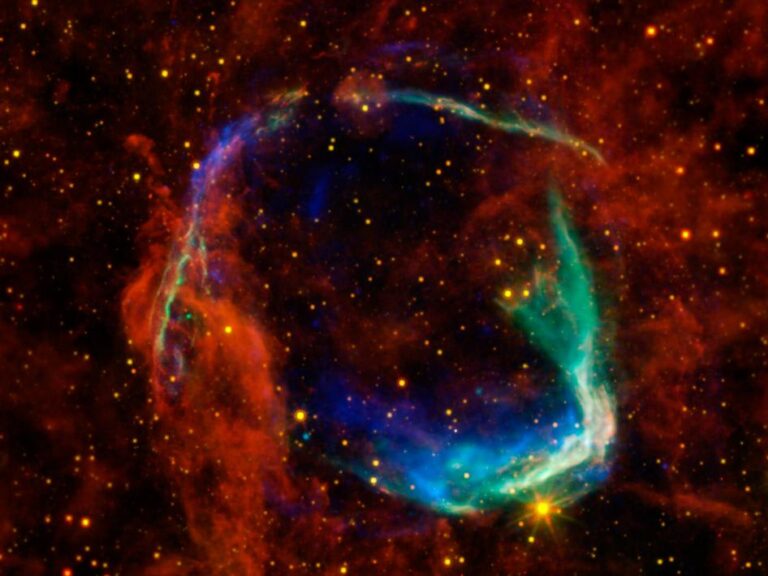
The largest catalog of exploding white dwarf stars ever assembled is pushing scientists to reconsider what they think they know about dark energy, the mysterious force behind the universe's accelerating expansion.

Scientists working on the LUX-ZEPLIN (LZ) experiment, the world's most sensitive dark matter detector, have recorded a single particle interaction they cannot explain using known physics — a result that, while far from a discovery, represents the most tantalizing hint…
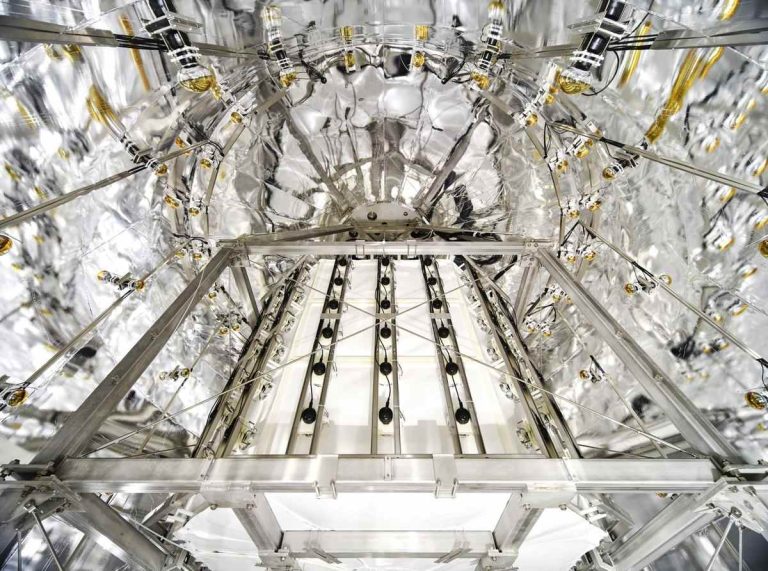
A detector built to find dark matter has instead caught the quietest neutrinos ever recorded. On Monday, the XENON collaboration announced that its XENONnT experiment, buried 1,400 meters beneath Italy's Gran Sasso mountain, achieved the first observation of low-energy solar…

In a pair of advances that probe the quantum nature of the vacuum, physicists have for the first time directly imaged the fluctuations of a quantum field in its ground state, while a separate team has reported the strongest astrophysical…

A team of astrophysicists at the Chinese Academy of Sciences has reported what it calls the most direct evidence to date for dark matter, identifying a "sharp" gamma-ray signal consistent with the annihilation of weakly interacting massive particles, or WIMPs…
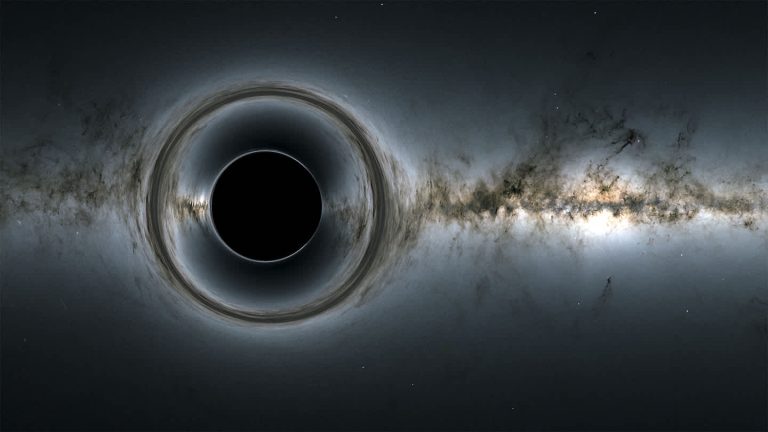
Researchers have pieced together the violent merger that ejected a supermassive black hole from its host galaxy at nearly 1,000 kilometers per second, marking the first observed case of a phenomenon long predicted by general relativity.
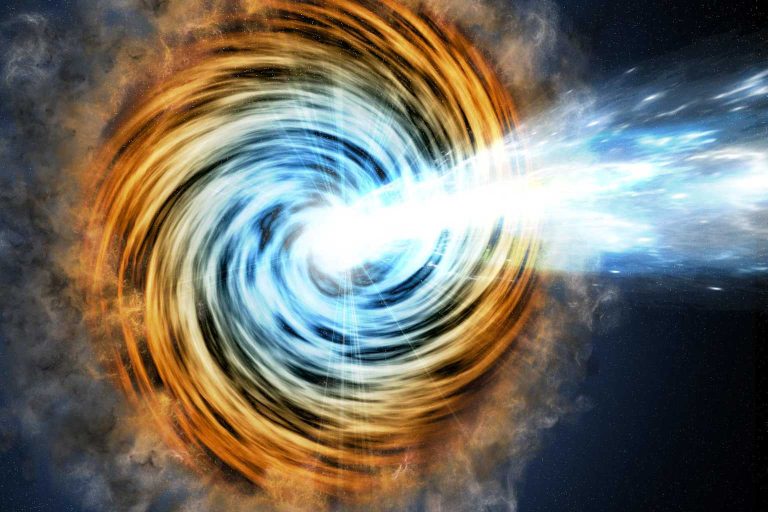
Telescopes at the Roque de los Muchachos Observatory in La Palma, Spain have captured very-high-energy gamma rays from OP 313, establishing it as the most distant blazar ever observed at these energies. The findings, released on August 15 by the…

Two separate discoveries reported this month are offering astronomers fresh approaches to one of the universe's deepest puzzles: the nature of dark matter, the invisible substance that accounts for roughly 85% of all matter yet has never been directly detected.

The most massive galaxies in the early universe contain far more small, faint stars than astronomers had assumed, making them up to four times heavier than previous estimates suggested. The finding, published Monday in Nature Astronomy, deepens an already vexing…

Astronomers have discovered the fastest star ever observed in the Milky Way, a faint object called S301 that whips around the supermassive black hole at the center of our galaxy at roughly 8 percent of the speed of light. The…

Astronomers using the James Webb Space Telescope have detected water molecules and silicate dust around a dying star just 0.55 light-years from Sagittarius A*, the supermassive black hole at the center of the Milky Way — a discovery that challenges…

Astronomers have identified a never-before-seen type of astrophysical object in the early universe: a "black hole star," a hybrid entity that looks like an enormous star but is powered by the gravitational engine of a black hole. The discovery, published…

Engineers at NASA's Jet Propulsion Laboratory have successfully implemented a power-saving maneuver on Voyager 2 that will keep the 49-year-old probe's three remaining science instruments operating for at least another year, the agency announced on August 4.
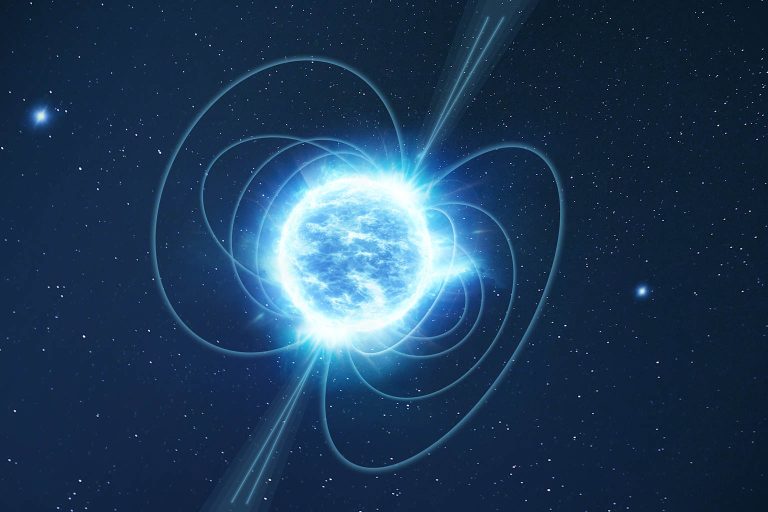
An international team of astronomers has reported what may be the first direct astrophysical evidence of vacuum birefringence — a nearly 90-year-old quantum physics prediction that extreme magnetic fields can alter how light travels through seemingly empty space. The results,…
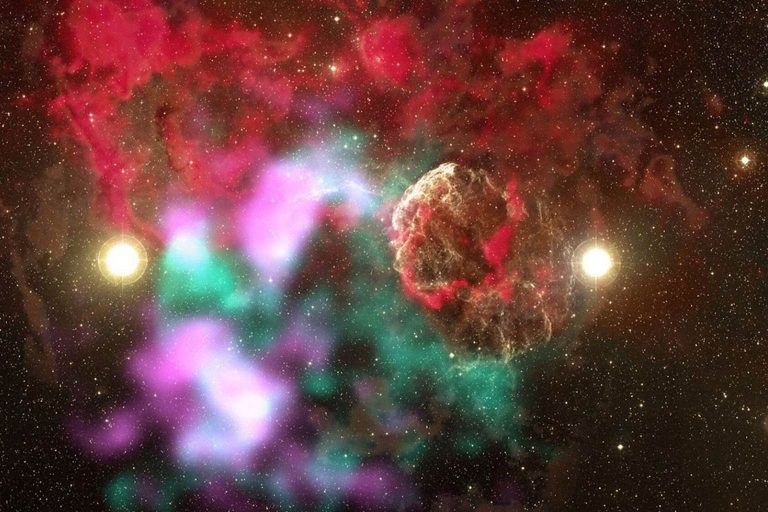
Astronomers have identified what they believe is the first known binary star system in which both stars ended their lives in supernova explosions, each leaving behind a distinct cloud of glowing debris still visible thousands of years later. The discovery,…
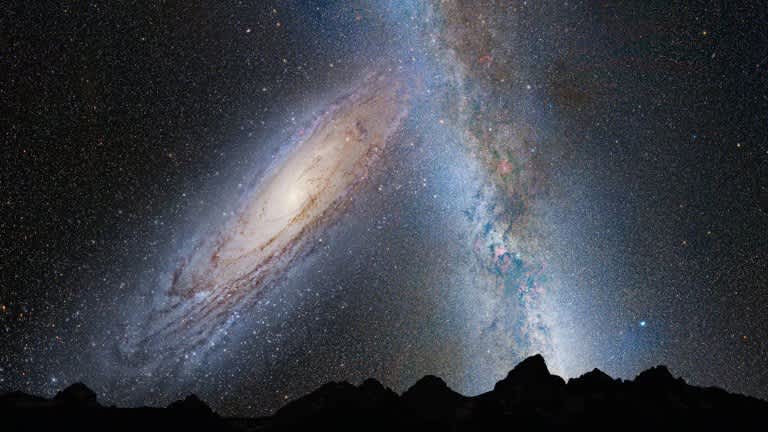
The Milky Way's stellar disc was dramatically reoriented — flipping more than 90 degrees — following a head-on collision with a massive dwarf galaxy roughly 10 to 11 billion years ago, according to new research from Durham University presented this…

Astronomers have pinpointed the location of the universe's long-sought "missing" ordinary matter, finding it scattered in vast, diffuse clouds stretching millions of light-years from galaxies — far further than simulations had predicted.
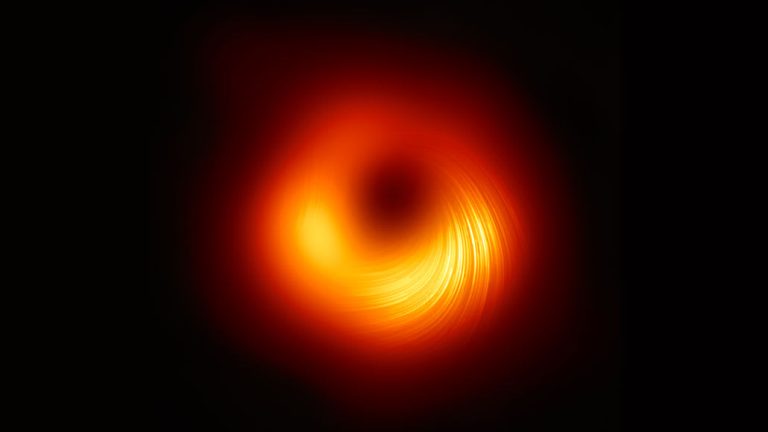
Researchers have moved beyond photographing a black hole to diagnosing its physical properties, producing the first spatially resolved spectral-index map of the supermassive black hole M87* at the scale of its event horizon. The study, published Monday in The Astrophysical…
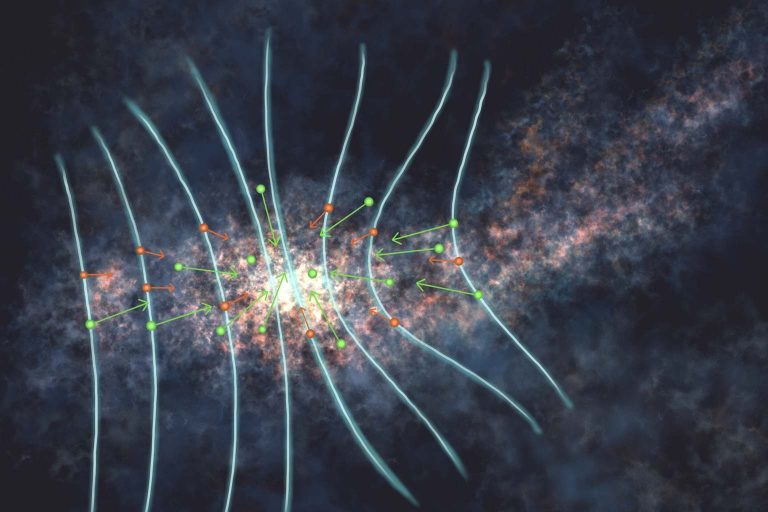
An international team of astrophysicists has for the first time detected an observational signature of ambipolar diffusion — a subtle velocity difference between ions and neutral molecules — inside a prestellar core, offering a direct glimpse into the physical mechanism…
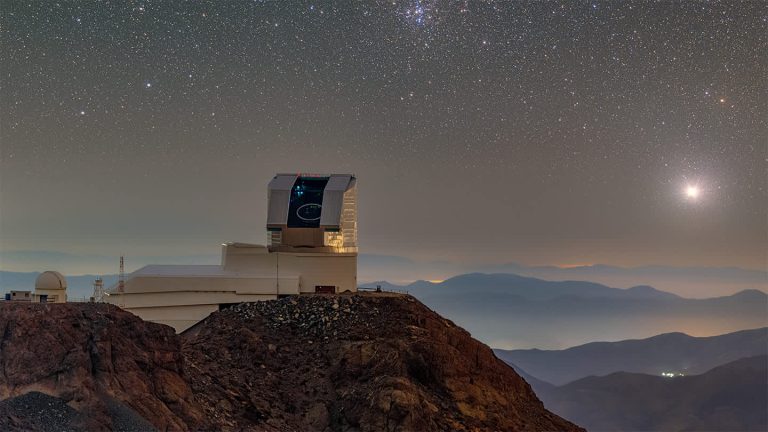
The NSF–DOE Vera C. Rubin Observatory has officially launched its Legacy Survey of Space and Time, beginning a decade-long campaign to create what its operators call "the greatest cosmic movie ever made." The announcement on June 30, 2026, marks the…
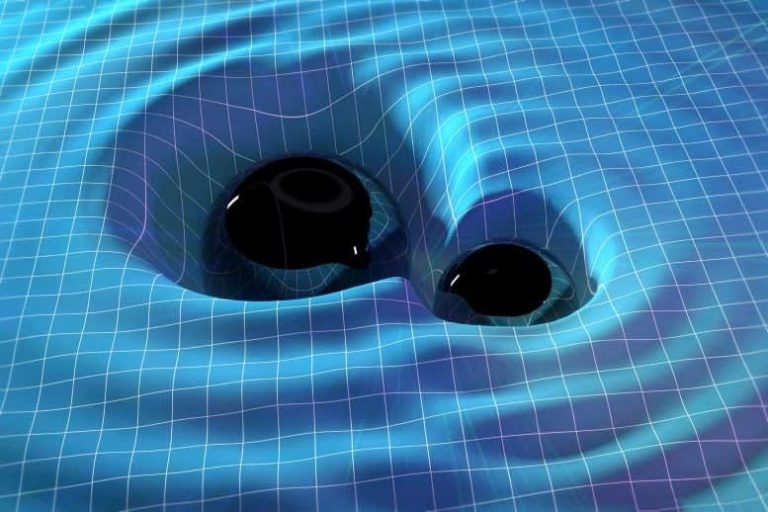
Scientists have detected the direct imprint of a black hole's event horizon in gravitational wave data for the first time, extracting information from closer to the "point of no return" than any previous observation. The findings, published Wednesday in Nature,…