


Newsletter Subscribe
Enter your email address below and subscribe to our newsletter
[forminator_form id="25163"]

All voices matter

Astronomers say a white dwarf about 250 light-years from Earth may have a planet that formed after its parent star died. If confirmed, it would be the first known planet to form around a white dwarf. In a study published…
You're all caught up
You've seen all the main stories from the past 2 days.
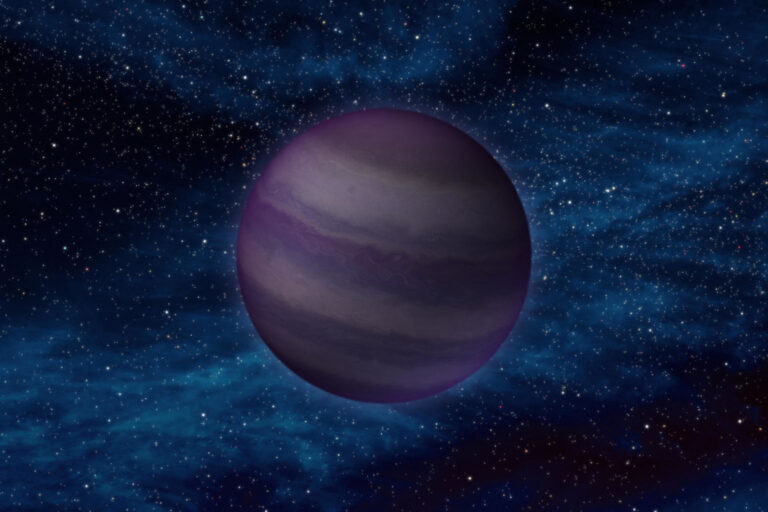
The James Webb Space Telescope has watched the weather change on WISE 0855, the coldest known brown dwarf. Over 11 hours, high water clouds grew thicker and thinner, and gases rose from deep inside the object. A team led by…
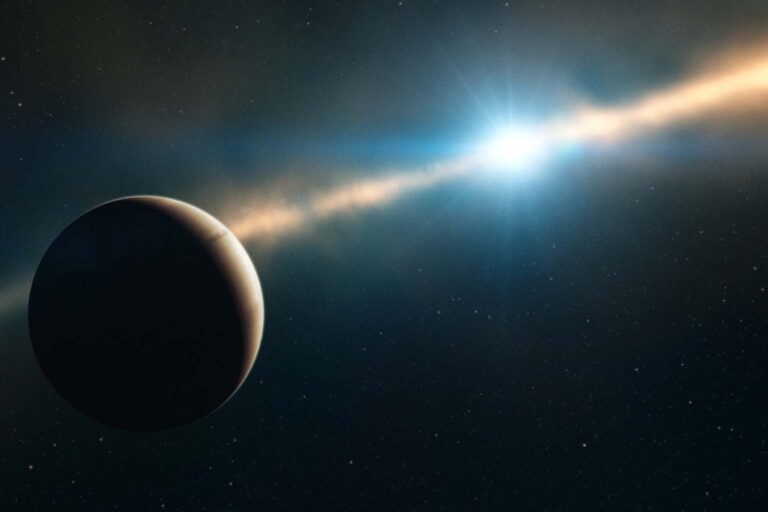
Astronomers say they have detected radio emission coming directly from a planet outside the solar system for the first time. The source is Beta Pictoris b, a gas giant about 63 light-years from Earth. The signal points to a very…

Elon Musk said Wednesday, Sept. 30, that SpaceX's Starship could change astronomy by launching much larger telescopes into orbit and giant observatories to the Moon. He made the claim two days after the rocket reached orbit for the first time.
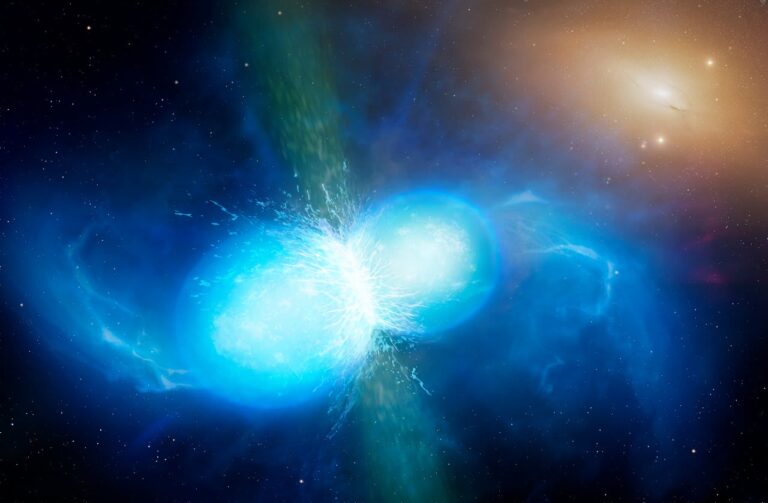
An international team of astronomers has uncovered a previously unseen chapter in one of the most violent events in the universe: the collision and merger of two neutron stars. Using China's Einstein Probe satellite, researchers observed minutes-long soft X-ray emission…
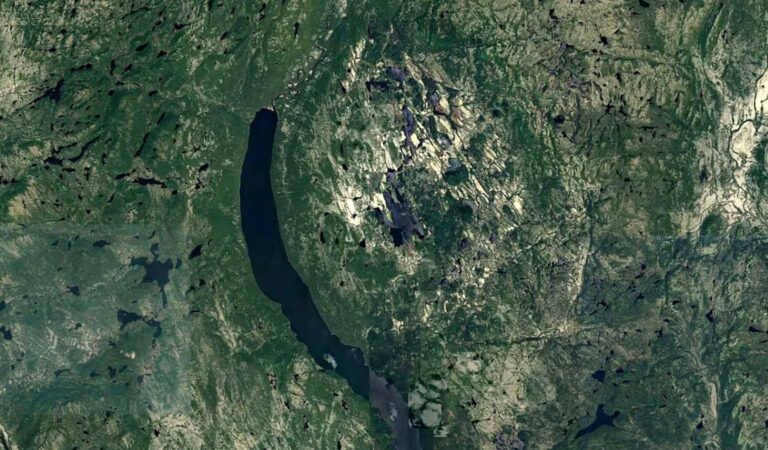
What began as one amateur astronomer's search for a campsite has ended with the confirmation of the largest meteorite impact crater discovered on Earth since 2018.

For the first time, astronomers have detected radio waves originating directly from a planet outside our Solar System — a discovery that opens a new window into the magnetic environments of distant worlds and the search for habitable exoplanets.
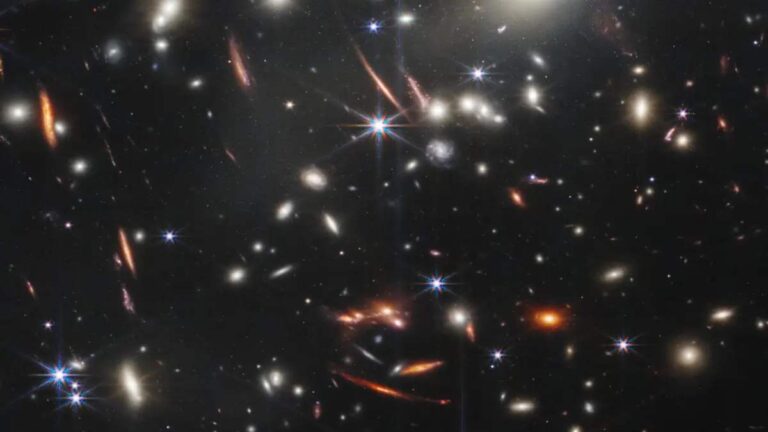
A quarter-century-old pillar of modern cosmology — that the universe's expansion is accelerating, driven by a mysterious "dark energy" — is facing renewed scrutiny from multiple research groups whose reanalyses of supernova data suggest the evidence may not be as…
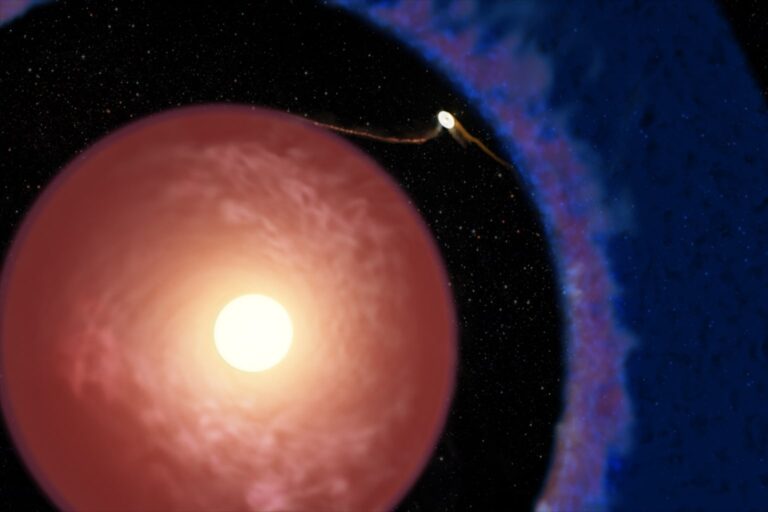
A team of astronomers has confirmed the youngest exoplanet ever detected, a Jupiter-mass world less than one million years old that is still actively growing within the swirling disk of gas and dust around its host star. The discovery, published…

NASA's James Webb Space Telescope has captured one of its largest public images to date — a sweeping near-infrared mosaic of IC 348, a star-forming region roughly 1,000 light-years from Earth in the constellation Perseus. Featured by NASA on Tuesday,…
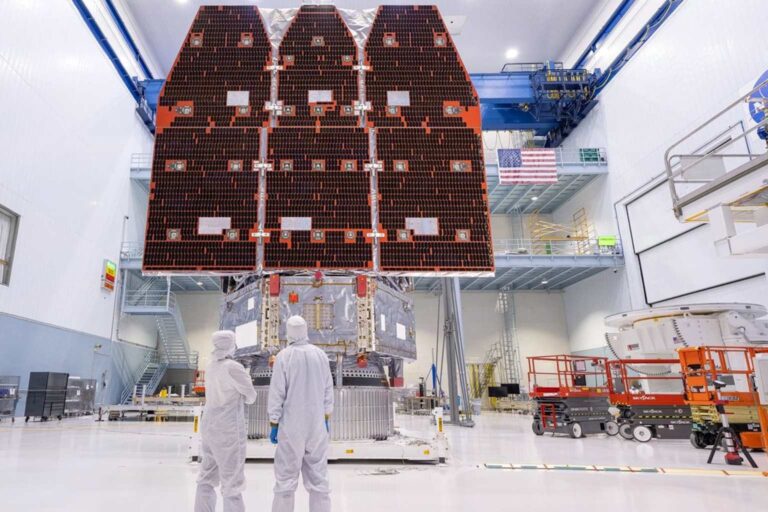
NASA's Nancy Grace Roman Space Telescope could operate for more than twice its original lifespan after a precise launch and an exceptionally efficient first course correction left the observatory with far more fuel than planned, the agency announced on September…
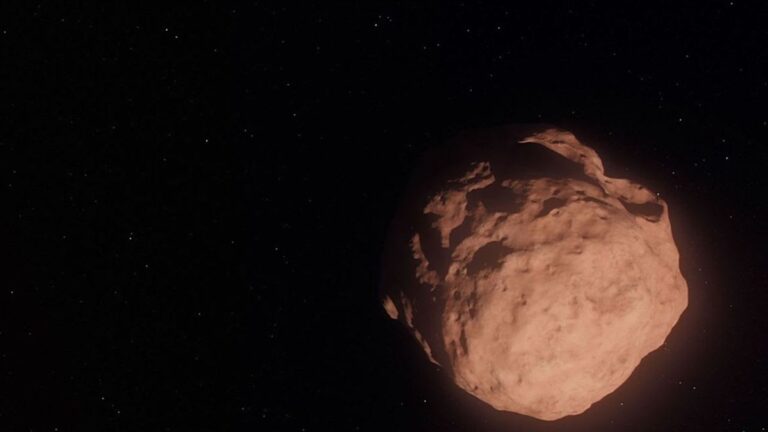
The Hubble and James Webb space telescopes have jointly discovered 27 new trans-Neptunian objects in the deepest survey yet of the outer solar system, finding fewer tiny bodies than planet-formation models predicted and surfaces that appear remarkably unchanged since the…
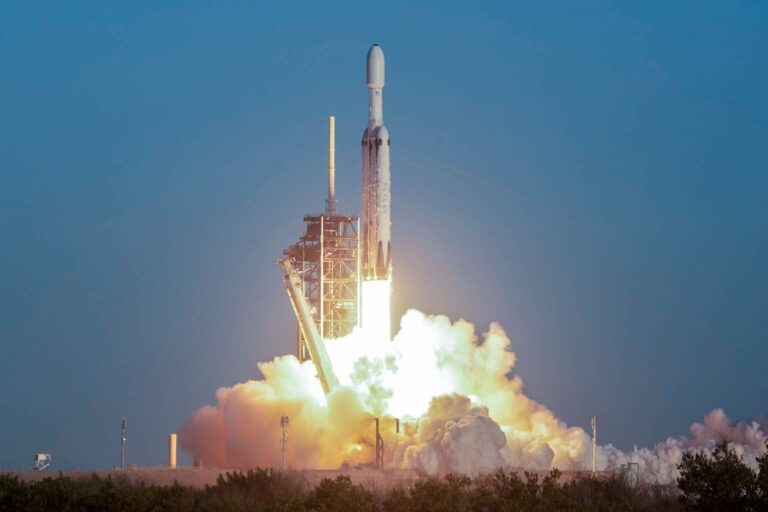
NASA's $4.3 billion Nancy Grace Roman Space Telescope launched successfully on August 30 from Kennedy Space Center in Florida, embarking on a three-month voyage to its orbital perch roughly one million miles from Earth. Now nearly two weeks into its…

Astronomers have pushed the observational limits on Cloud-9, a mysterious hydrogen gas cloud near the spiral galaxy Messier 94, and still found no trace of stars — reinforcing its status as the best-known candidate for a "dark galaxy" predicted by…

Scientists using NASA's Chandra X-ray Observatory have identified a previously unknown class of cosmic objects — dubbed "hypersoft X-ray sources" — that emit unusually low-energy X-rays and intense ultraviolet radiation, a finding published Wednesday in Nature Astronomy.

The interstellar comet 3I/ATLAS, only the third object from beyond our solar system ever detected, has been confirmed as unusually rich in carbon dioxide compared to comets born around our Sun, according to observations from NASA's James Webb Space Telescope…

A team of astronomers has shown for the first time that fast radio bursts — intense, millisecond flashes of radio light from across the cosmos — can directly measure how explosive processes inside galaxies smooth out the surrounding distribution of…

Astronomers have for the first time observed an icy body in the outer solar system actively transforming into a comet, capturing a long-theorized but never-before-seen stage of small-body evolution. A team led by planetary scientist Charles Schambeau of the University…

NASA and the European Space Agency have released a striking new image from the Hubble Space Telescope revealing a massive "superbubble" carved into a nebula in the Large Magellanic Cloud, one of the Milky Way's closest galactic neighbors.
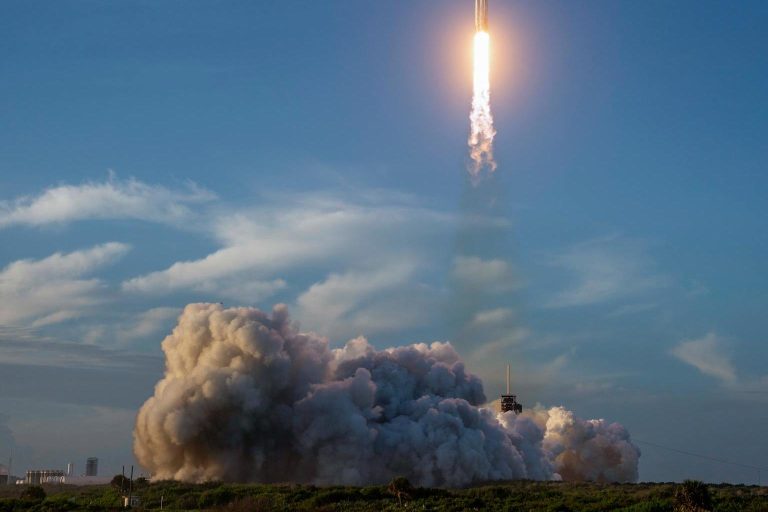
NASA's Nancy Grace Roman Space Telescope fired its thrusters for the first time on Monday, August 31, beginning a series of trajectory adjustments as it cruises toward its operational orbit nearly 1 million miles from Earth. The maneuver came just…

Astronomers have uncovered four pairs of rapidly growing black holes in the early universe that appear to be on a collision course, offering the first direct evidence that black hole mergers may have fueled the mysterious rise of supermassive black…
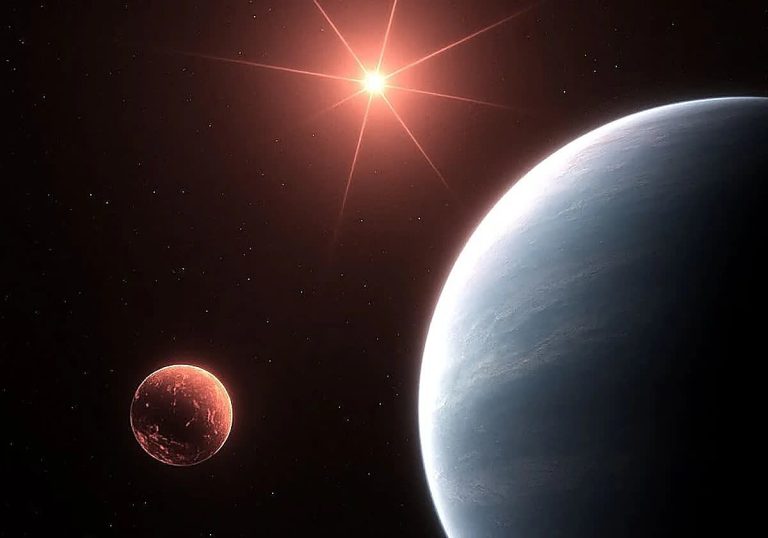
An international team led by Spain's Institute of Astrophysics of Andalusia (IAA-CSIC) has confirmed the existence of a two-planet system 337 light-years from Earth, one of whose worlds sits in a zone where liquid water could persist on its surface.…

NASA's newest flagship observatory, the Nancy Grace Roman Space Telescope, lifted off Sunday morning from Kennedy Space Center in Florida, beginning a quest to map the hidden universe on a scale never before attempted from space.

NASA's Nancy Grace Roman Space Telescope, the agency's next flagship observatory, is set to launch Sunday, Aug. 30, 2026, at 7:26 a.m. ET aboard a SpaceX Falcon Heavy rocket from Launch Complex 39A at Kennedy Space Center in Florida. The…

A deep partial lunar eclipse unfolded across the night sky on Thursday, August 27, into the early hours of Friday, August 28, with Earth's shadow covering approximately 96% of the Moon's surface at its peak. The event, the last eclipse…
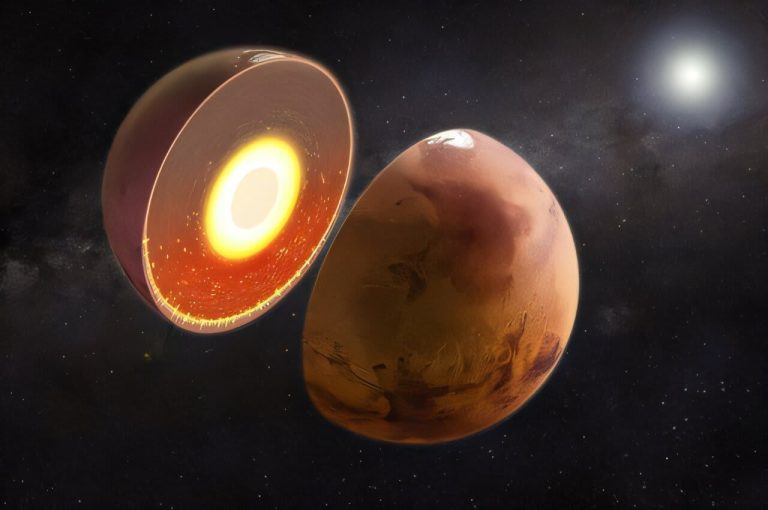
Researchers have found that Mars's southern interior is 200 to 400 degrees Celsius warmer than its northern half and partially molten, a discovery that could reshape understanding of the planet's geological history and past habitability.

NASA's Nancy Grace Roman Space Telescope is scheduled to launch at 7:26 a.m. ET on Sunday, August 30, aboard a SpaceX Falcon Heavy rocket from Kennedy Space Center's Launch Complex 39A in Florida. The $4 billion flagship observatory will be…

A Martian meteorite discovered in Algeria in 2019 has been confirmed as 1.27 billion years old, filling a nearly two-billion-year gap in the geologic record of Mars, according to a study published in the journal Geochimica et Cosmochimica Acta. Separately,…
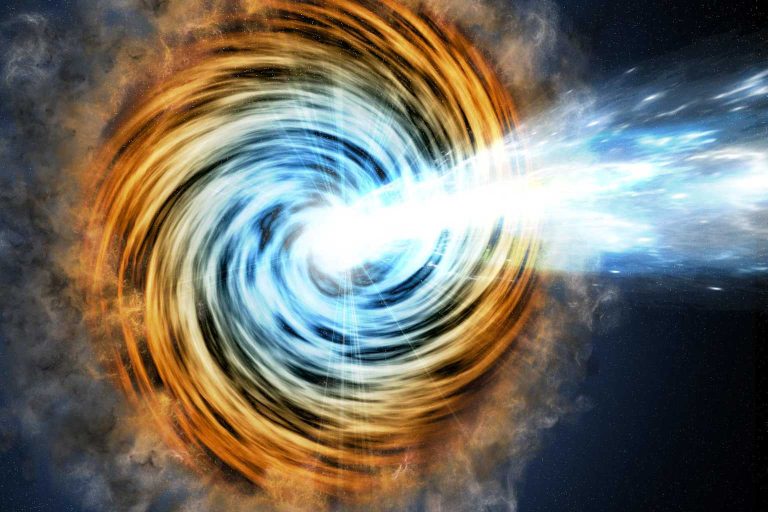
Telescopes at the Roque de los Muchachos Observatory in La Palma, Spain have captured very-high-energy gamma rays from OP 313, establishing it as the most distant blazar ever observed at these energies. The findings, released on August 15 by the…
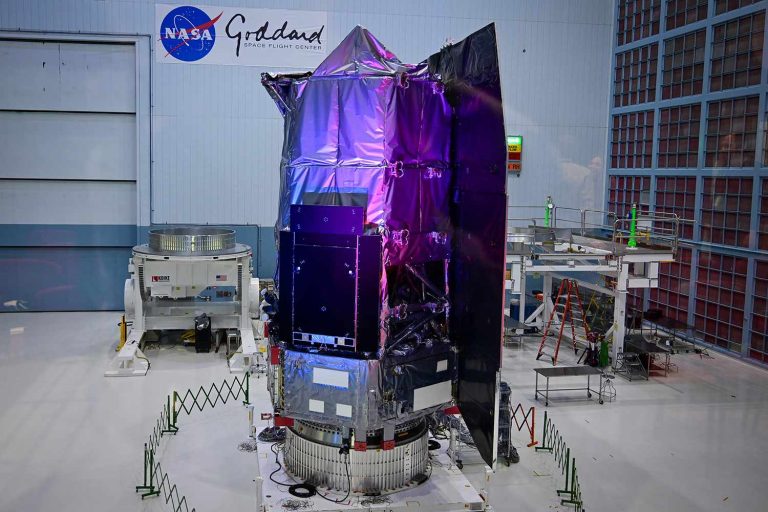
NASA is preparing to launch the Nancy Grace Roman Space Telescope from Kennedy Space Center in Florida on August 30, sending its next flagship observatory on a SpaceX Falcon Heavy rocket to a position 1.5 million kilometers from Earth. Liftoff…