Newsletter Subscribe
Enter your email address below and subscribe to our newsletter
[forminator_form id="25163"]

All voices matter
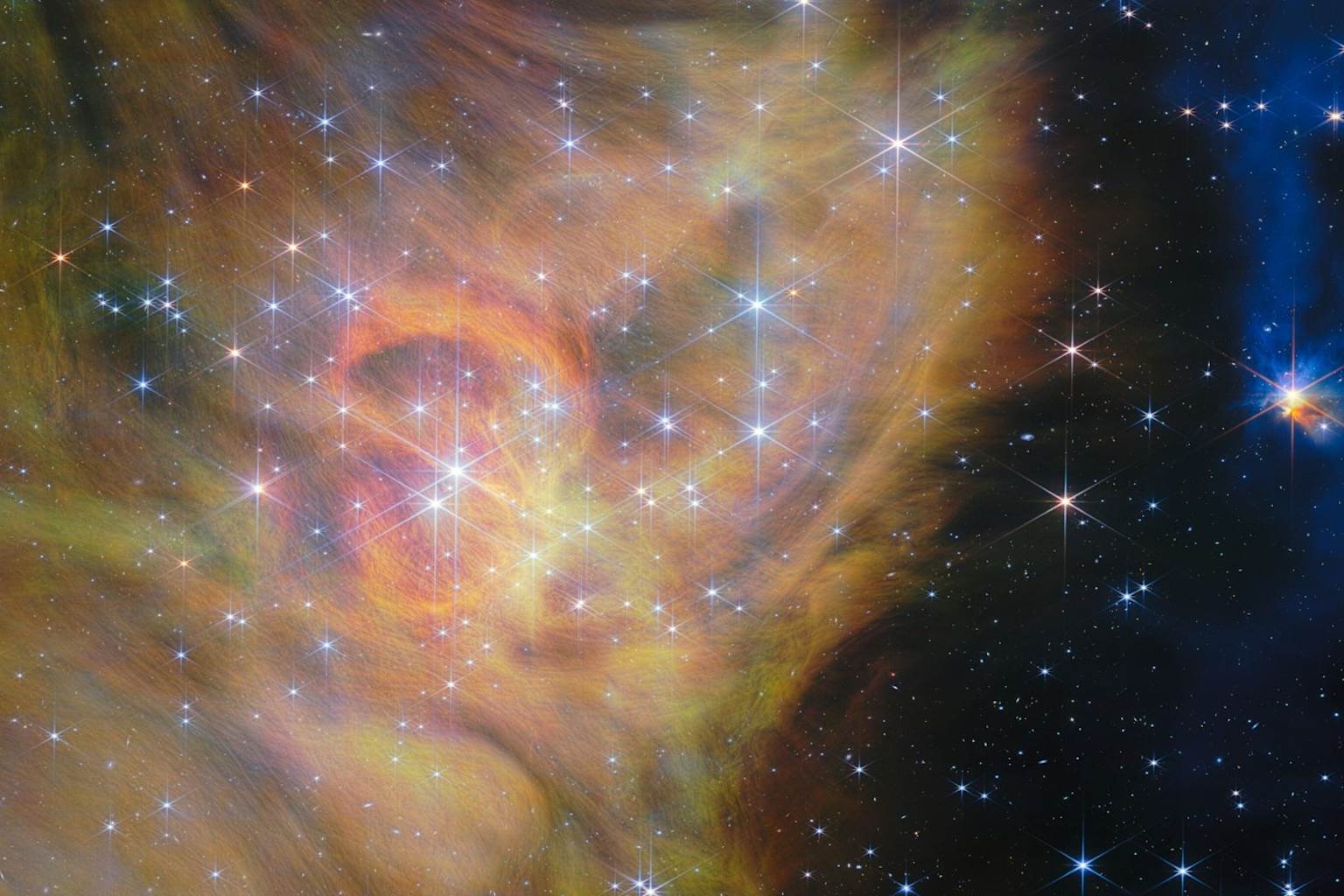
science.nasagreekreporterscience.nasaNASA's James Webb Space Telescope has captured one of its largest public images to date — a sweeping near-infrared mosaic of IC 348, a star-forming region roughly 1,000 light-years from Earth in the constellation Perseus. Featured by NASA on Tuesday, September 15, 2026, the panorama showcases not only the turbulent birth of stars but also a discovery that tests the limits of star-formation theory: brown dwarfs weighing as little as twice the mass of Jupiter.science.nasa
The observations, led by Kevin Luhman of Pennsylvania State University and Catarina Alves de Oliveira of the European Space Agency, identified brown dwarfs with estimated masses of roughly two and ten times Jupiter's — the least massive such objects ever found. One of the lightest also showed excess infrared emission that the researchers interpret as evidence of a surrounding disk, raising the possibility that planets could form around an object itself barely heavier than a giant planet.greekreporter+1
Brown dwarfs occupy an ambiguous zone between stars and planets. They form the way stars do, through the gravitational collapse of gas clouds, but never accumulate enough mass to sustain hydrogen fusion. The smallest stars weigh about 8 percent of the Sun's mass; anything lighter that forms independently is classified as a brown dwarf.science.nasa
The same team had previously used Webb to find brown dwarfs in IC 348 with masses three to four times Jupiter's in 2022. Using Webb's NIRCam in 2024 and its NIRSpec instrument in 2025, they pushed that floor even lower. At roughly 0.19 percent of the Sun's mass, the newly identified objects challenge formation models that struggle to explain how the star-birth process can produce bodies this small.techeblog+1
The detection of a disk around one of the lightest brown dwarfs is especially striking. Planets are thought to develop inside rotating disks of gas and dust, and finding such a disk around an object only twice Jupiter's mass suggests the planet-formation process may operate across a wider range of settings than previously assumed. NASA describes this as a possibility rather than a confirmed finding — the evidence comes from spectral measurements, not direct imaging of forming planets.greekreporter+1
The mosaic itself spans 16 by 20 arcminutes and includes protostars ejecting jets into surrounding gas, creating luminous Herbig-Haro objects such as HH 797 and the propeller-shaped HH 211. The researchers also identified an unidentified hydrocarbon feature in the spectra of the lowest-mass brown dwarfs, a signal seen only in these extreme objects and one that may warrant a new spectral classification.techeblog+1
"These are the least massive brown dwarfs known," NASA stated, "and their existence poses a challenge to models of how stars form".science.nasa