


Newsletter Subscribe
Enter your email address below and subscribe to our newsletter
[forminator_form id="25163"]

All voices matter
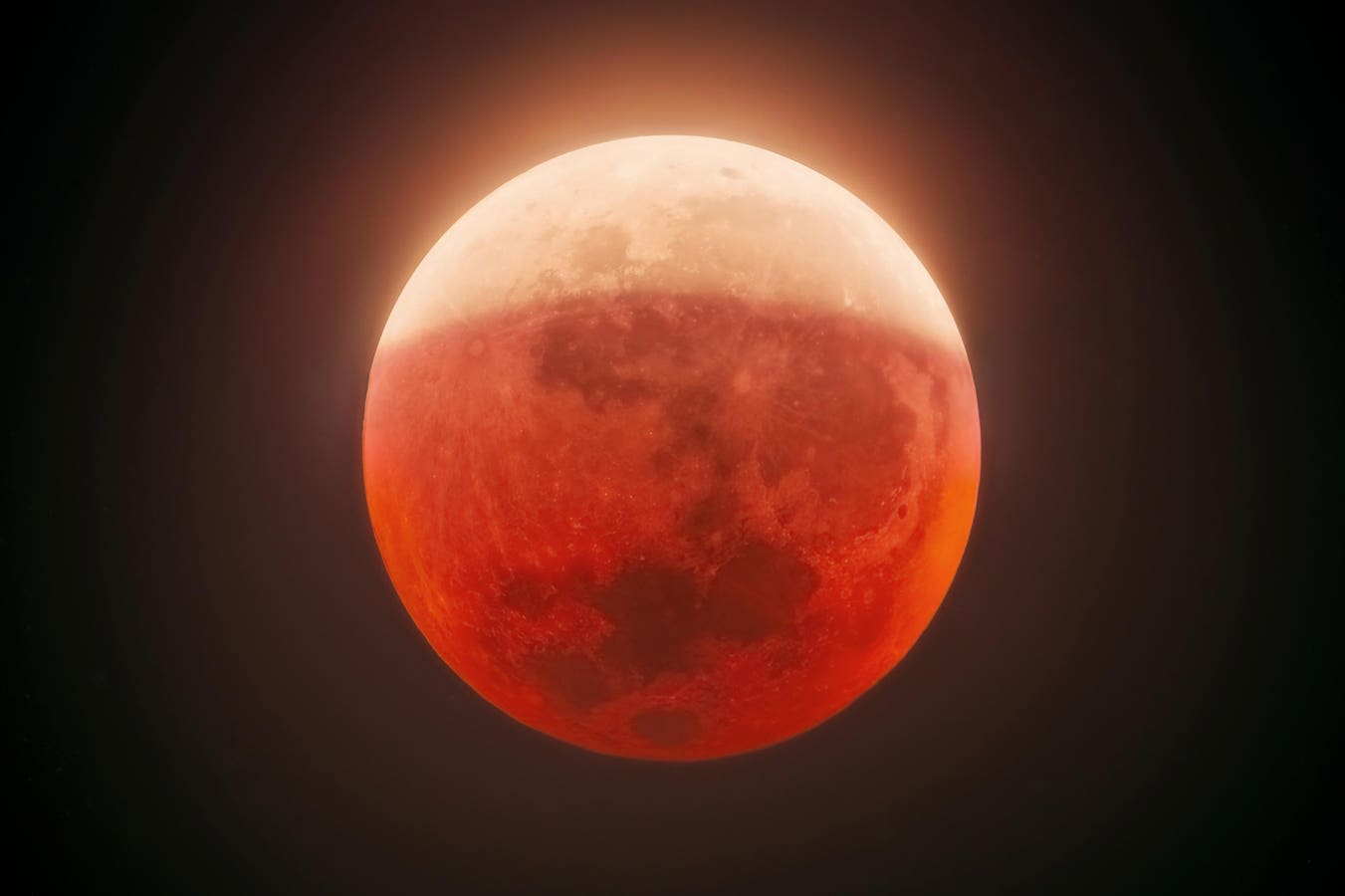
bloomberglinea+1bloomberglineausatodayA deep partial lunar eclipse unfolded across the night sky on Thursday, August 27, into the early hours of Friday, August 28, with Earth's shadow covering approximately 96% of the Moon's surface at its peak. The event, the last eclipse of 2026, drew the attention of observers across the Americas, western Europe, and western Africa as the Moon took on the reddish-copper tones that give the phenomenon its popular name: the "Blood Moon."bloomberglinea+2
At the moment of maximum eclipse, around 4:13 UTC on August 28, roughly 96.3% of the lunar disk was immersed in the umbra — the darkest central region of Earth's shadow — according to NASA. That translated to 12:13 a.m. Eastern time, 11:13 p.m. Central, 10:13 p.m. Mountain, and 9:13 p.m. Pacific on the night of August 27 for viewers in the United States.usatoday+3
The partial phase lasted approximately 3 hours and 18 minutes, while the full event — including the subtler penumbral stages — spanned 5 hours and 38 minutes. Noah Petro, head of the Planetary Geology, Geophysics, and Geochemistry Laboratory at NASA's Goddard Space Flight Center, told CNN that because a small sliver of the Moon remained in direct sunlight, the eclipsed portion would not acquire the deep, uniform orange of a total eclipse, though dramatic darkening and copper tones were still expected.bloomberglinea+2
The Americas were the most favored continent, with the Moon above the horizon for the entire duration of the event from North America's east coast through South America. In western Europe and western Africa, the eclipse began in the pre-dawn hours of Friday, though the Moon set before the final stages concluded. According to the specialized site TimeandDate, nearly one billion people could see the eclipse in its entirety, while about three billion — 44% of the world's population — could witness at least part of it.rmg+4
In Mexico City, the maximum occurred at 10:13 p.m. local time, according to the UNAM's Institute of Radioastronomy and Astrophysics, which noted that the event was visible across all of Mexico. In Spain, the peak arrived at 6:12 a.m. on Friday, with the western regions enjoying a more complete view before moonset.as+3
Unlike solar eclipses, the lunar eclipse required no protective eyewear. Astronomers recommended binoculars or a small telescope to appreciate the copper-colored details on the lunar surface and suggested finding locations away from urban light pollution. Pamela Gay, senior scientist at the Planetary Science Institute, encouraged observers to simply set up a hammock and enjoy the experience.cnnespanol.cnn+2
The next comparable lunar eclipse visible from the Americas will not arrive until June 26, 2029, when a total lunar eclipse is expected.usatoday


