Newsletter Subscribe
Enter your email address below and subscribe to our newsletter
[forminator_form id="25163"]

All voices matter
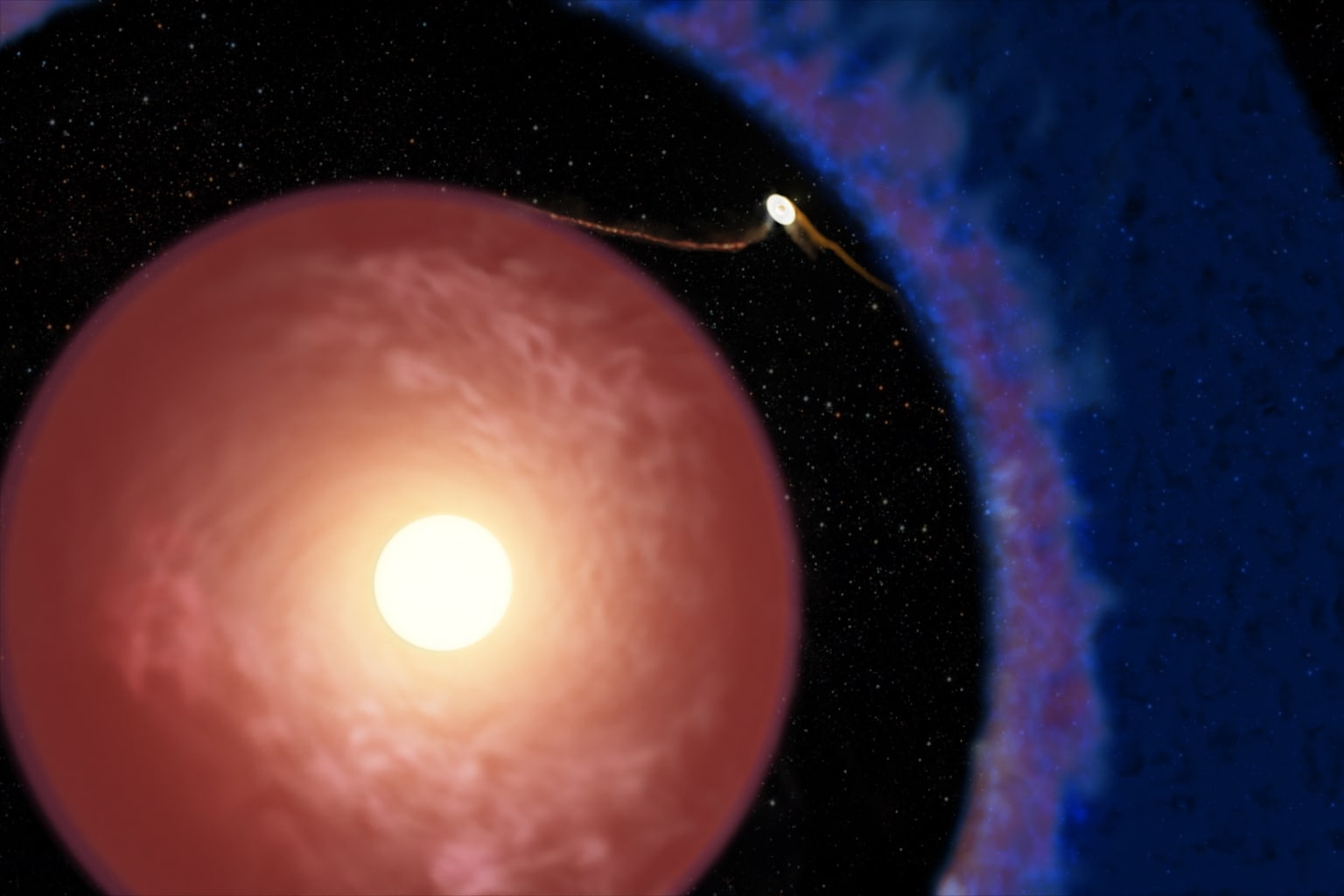
science.nasa+1keckobservatoryscience.nasaA team of astronomers has confirmed the youngest exoplanet ever detected, a Jupiter-mass world less than one million years old that is still actively growing within the swirling disk of gas and dust around its host star. The discovery, published Wednesday in The Astrophysical Journal Letters, offers a rare window into the earliest stages of how planets take shape.science.nasa+1
The planet, called Elias 2-24 b, orbits a young star roughly 450 light-years from Earth. It was found hiding in archival observations from the W. M. Keck Observatory in Hawaii, where a coronagraph had blocked the glare of the host star and revealed a faint point of light sitting inside a gap in the star's protoplanetary disk.keckobservatory
The previous record holders for youngest known planet were a four-way tie among worlds orbiting two different stars, all more than 5 million years old. Elias 2-24 b shatters that benchmark by a wide margin.space+1
"Our planet-formation models already struggled to explain the previous record holders for the youngest known planet," said Lucas Cieza, a professor at the Instituto de Estudios Astrofísicos in Chile and co-author of the study. "Elias 2-24 b shows us that even our best planet-formation models are still missing some important processes."science.nasa
The study was led by Andrea Bernardi, a doctoral candidate at the Universidad Diego Portales in Chile, who combed through the Keck Observatory Archive, a NASA-funded partnership between Keck and the NASA Exoplanet Science Institute at Caltech/IPAC. Bernardi's team identified the planet in data from 2018 and 2020, then stitched together its motion over time to confirm it was orbiting the star rather than being an imaging artifact or background object.keckobservatory
The confirmation resolves a puzzle that began roughly a decade ago when ALMA observations first revealed a gap in the young star's dusty disk. The European Southern Observatory's Very Large Telescope later detected a faint signal in that gap, but astronomers could not determine whether it was a planet. Current models predicted a Jupiter-sized world should take about 5 million years to form, yet Elias 2-24 b sits 55 times farther from its star than Earth is from the Sun and appears to have formed far faster than expected.science.nasa
"The planets should be found within the gaps, since they are carving them," Bernardi said. "And that's exactly where we found Elias 2-24 b."space
The research team pointed to NASA's Nancy Grace Roman Space Telescope, which launched on August 30, as a tool that could transform the search for young planets. Equipped with the most advanced coronagraph ever sent to space, Roman could detect planets in much smaller orbits that are currently invisible through stellar glare.space+1
"This is just the beginning of a new era of discovery," Cieza said. "It's incredible that with modern technology, we are actually able to see planet formation in action."science.nasa