Newsletter Subscribe
Enter your email address below and subscribe to our newsletter
[forminator_form id="25163"]

All voices matter
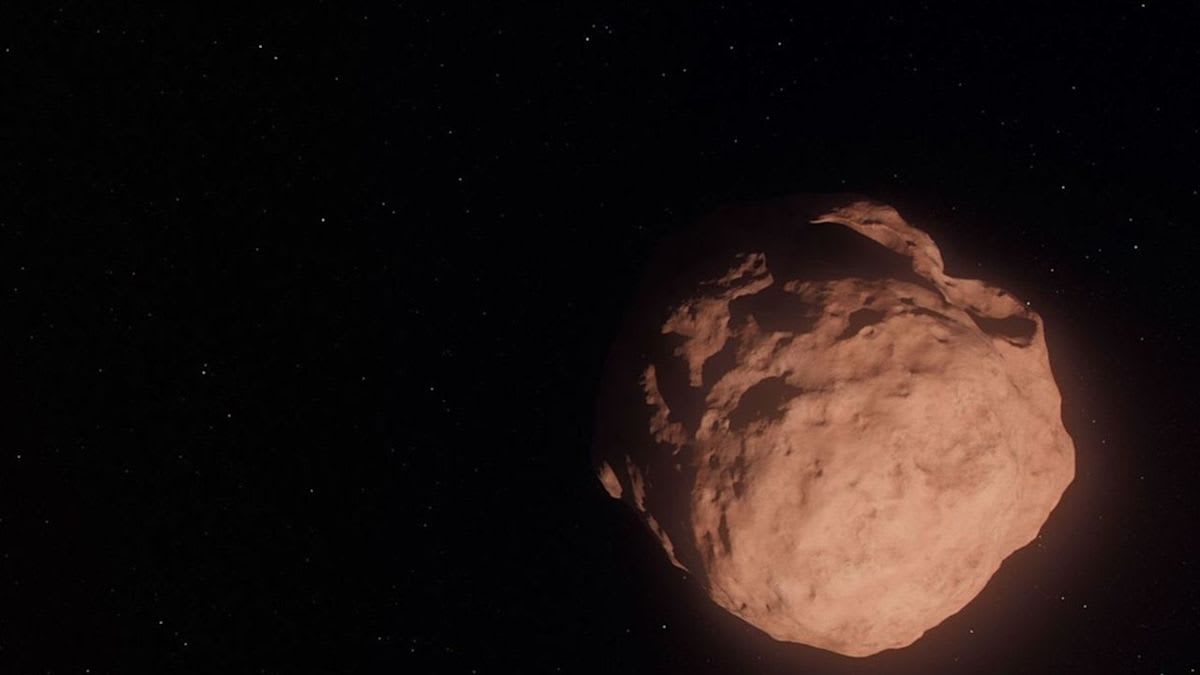
spacedaily+1spacedailyspaceThe Hubble and James Webb space telescopes have jointly discovered 27 new trans-Neptunian objects in the deepest survey yet of the outer solar system, finding fewer tiny bodies than planet-formation models predicted and surfaces that appear remarkably unchanged since the solar system's birth billions of years ago.
The results, published September 8 in two papers in The Astronomical Journal, reveal objects all smaller than 25 miles (40 kilometers) across, with the smallest measuring roughly 6 miles (10 kilometers) in diameter. The discoveries were led by two PhD candidates: Anastasia Morgan of Northern Arizona University, who handled color and composition analysis, and Marielle Eduardo of the University of Victoria, who analyzed size distribution.spacedaily+1
Webb's Near-Infrared Camera detected all 27 objects across just 0.05 square degrees of sky, reaching a depth equivalent to spotting a swarm of fireflies on the Moon from Earth. Hubble recovered 13 of those detections in visible light, producing color measurements spanning 0.35 to 3.2 micrometres.spacedaily
Eduardo's size-distribution analysis found that the number of objects increased slowly toward fainter magnitudes, fitted by a power-law slope of 0.29. That result falls short of the sharply rising abundance of small bodies that some formation models produce, suggesting the Kuiper Belt was not ground down by collisions as thoroughly as astronomers assumed.spacedaily
"It's very interesting that the process of planetesimal formation ends up producing the same distribution of sizes for both cold and hot populations, despite forming in different regions of the early solar system," Eduardo said. "The process seems to be insensitive to disk conditions, producing similar planetesimal sizes whether the disk is hot or cold, and dense or fluffy."space
Perhaps more surprising, the smallest TNOs retain colors matching their larger relatives, contradicting expectations that repeated impacts would have altered their surfaces. Dynamically "cold" objects on stable, circular orbits within the Kuiper Belt showed the same narrow color range as their bigger counterparts, while dynamically "hot" objects — those scattered onto elongated orbits by gravitational interactions with Uranus and Neptune — displayed a broader but similarly familiar spread.space+1
"So it's really fascinating to see that the smallest objects are somehow 'remembering' and preserving the history of how they were made," Morgan said.space
The findings leave scientists with two options: either collisions in the distant solar system occur far less frequently than population models suggest, or impacts do happen but fail to reshape these small bodies' surfaces as expected. David Trilling of Northern Arizona University noted that even the displaced, dynamically hot TNOs "retain a signature of where they were born, even though they've been orbitally scrambled since then."news.ssbcrack+1
The survey's strength is its depth rather than breadth — a single narrow line of sight through a vast, structured population. Still, Webb has opened a size range previously accessible only through extrapolation, and these first 27 detections suggest the Kuiper Belt's smallest survivors are not mere collision debris but ancient objects still carrying information about the disk in which they formed.spacedaily