


Newsletter Subscribe
Enter your email address below and subscribe to our newsletter
[forminator_form id="25163"]

All voices matter
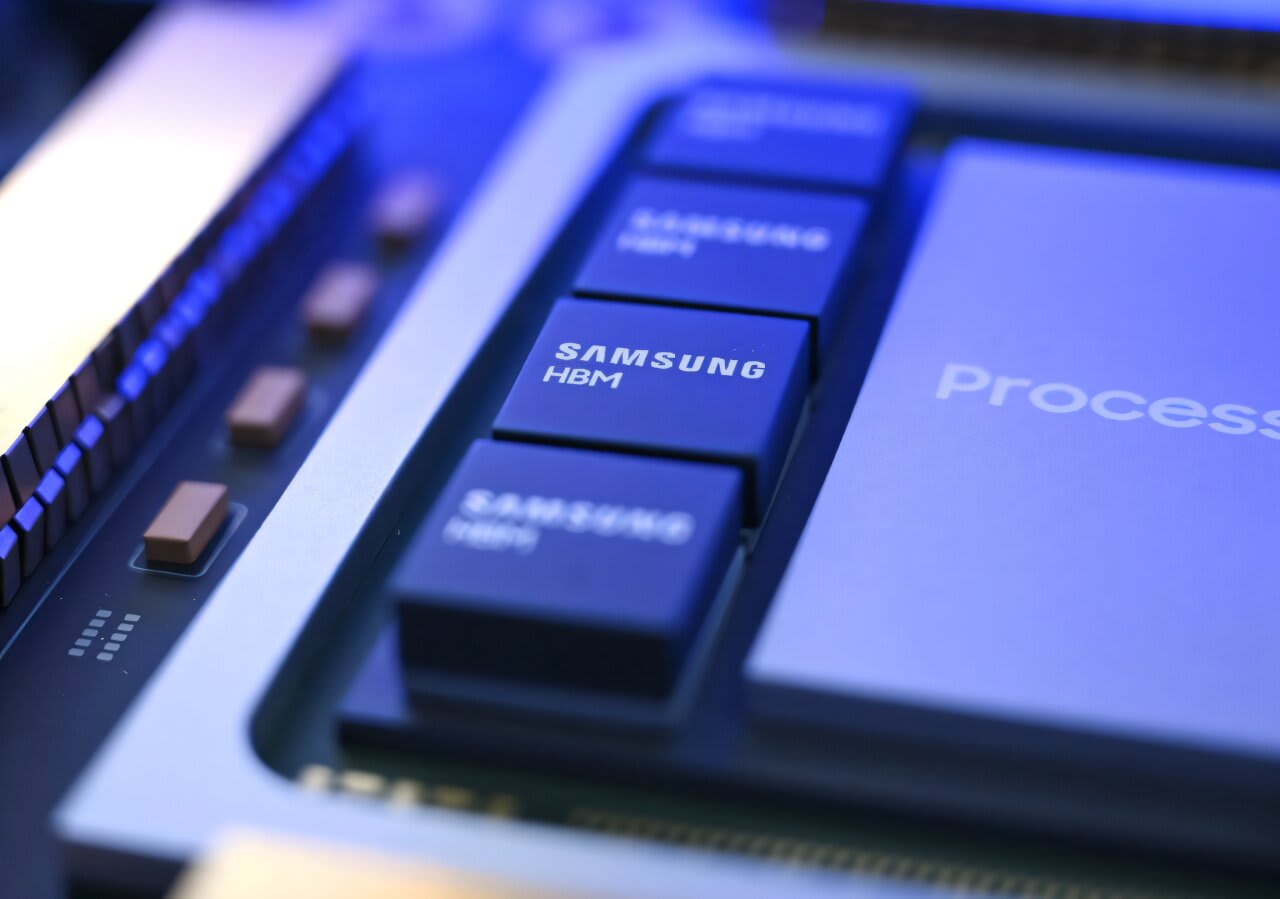
wccftech247wallst+1chosun+1Samsung Electronics has reportedly committed roughly 70% of its memory production capacity to long-term supply agreements extending through 2031, according to a report from South Korea's Seoul Economic Daily. The deals, struck with major AI customers including Microsoft , Nvidia , and Google Alphabet Inc. , reflect a memory market fundamentally reshaped by artificial intelligence demand — and a price gap that reveals just how desperate buyers are to secure supply.
Under the long-term agreements, a 36GB HBM3E module sells for between 500,000 and 700,000 Korean won, or roughly $300 to $400. On the spot market, the same module costs approximately 2.87 million won — around $2,100. The five-to-one price difference underscores the trade customers are willing to make: deep discounts in exchange for years of guaranteed access to the high-bandwidth memory that powers AI accelerators.247wallst+1
Memory has historically been one of the most cyclical corners of the semiconductor industry, with prices swinging sharply between glut and shortage. Long-term agreements at locked-in prices are changing that dynamic. Samsung confirmed on its second-quarter earnings call that it planned to allocate 60 to 70 percent of total memory capacity to such contracts, and the Seoul Economic Daily report suggests the company has now reached the upper end of that range.wccftech+1
The shift toward HBM is tightening conventional DRAM supply as well. Newer generations like HBM4 require more DRAM layers per module, diverting wafer capacity away from the commodity market. South Korean trade data shows DRAM export volumes fell 13.2% between May and July, even as the total value of those exports climbed 18.5%.sammyguru+1
SK hynix CEO Kwak Noh-jung said on August 27, following the groundbreaking of a $4 billion HBM packaging facility in West Lafayette, Indiana, that the shortage would persist. "We expect the supply shortage to continue until the end of 2030," Kwak told reporters, adding that "there are currently no clear signs of a downturn". SK hynix's board has approved approximately $38.3 billion of investment through 2031.chosun+1
Micron Technology stands to benefit from the same supply-demand imbalance, though all three major memory makers face the same constraint: new factories take years to build and qualify, and customers are pre-reserving output before those facilities come online.247wallst
The steep discount embedded in long-term contracts could eventually lower per-unit AI computing costs. But analysts warn that cheaper computing tends to expand total demand rather than shrink it — a dynamic known as Jevons' paradox. As inference costs fall, companies deploy more models, serve more users, and automate more tasks, driving aggregate memory consumption higher. For now, the evidence points toward a multiyear period in which supply growth struggles to keep pace with the AI buildout's appetite for memory.247wallst


