Newsletter Subscribe
Enter your email address below and subscribe to our newsletter
[forminator_form id="25163"]

All voices matter
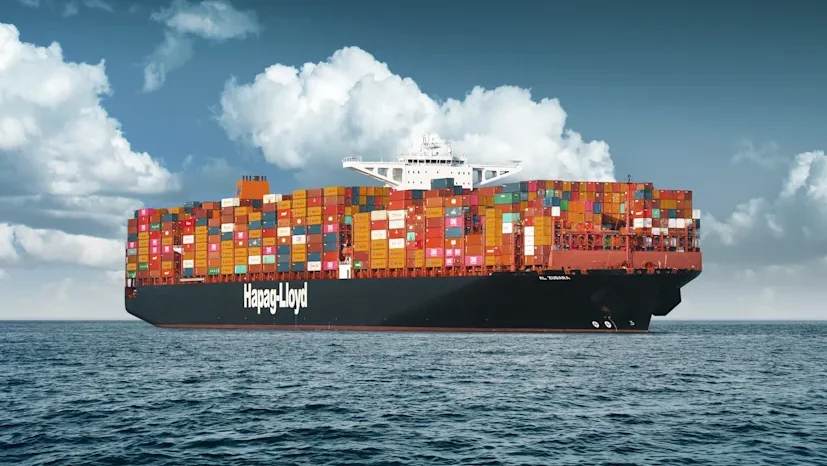
reuterscontainer-news+1multimodalHapag-Lloyd reported on Thursday that the closure of the Strait of Hormuz cost the company approximately $600 million in the second quarter of 2026, dragging net profit down sharply even as stronger freight rates and Asian export demand provided a partial offset.container-news+1
The German container shipping giant posted Group EBITDA of $829 million in Q2, slightly above the $820 million recorded a year earlier. But net profit fell to $83 million from $306 million in Q2 2025, as the Middle East disruption generated additional costs for bunker fuel, insurance, storage, service rerouting, and inland transportation.reuters+1
The results marked a clear improvement from a difficult first quarter. Transport volumes rose to 3.5 million TEU from 3.4 million a year earlier, while the average freight rate climbed 9% year on year to $1,475 per TEU, driven by strong exports from Asia and improved U.S. demand.investing+1
"The second quarter was better than the first, driven by significantly higher spot rates and robust demand," CEO Rolf Habben Jansen said. He noted that the company's Gemini Cooperation network with Maersk A.P. Moller – Maersk A/S "continued to outperform the market, setting the industry benchmark for schedule reliability."container-news+1
Despite the Q2 recovery, Hapag-Lloyd recorded a Group loss of $173 million for the first half of 2026, compared with a profit of $775 million a year earlier.investing
Hapag-Lloyd raised its full-year 2026 earnings guidance on July 13, now expecting Group EBITDA between $2.7 billion and $3.7 billion and Group EBIT between $0.1 billion and $1.1 billion. The company cautioned that the outlook remains subject to "considerable uncertainty" due to volatile freight rates and the ongoing Middle East conflict.reuters+2
Maersk, which also reported Thursday, delivered an even sharper earnings rebound, raising its full-year underlying EBITDA guidance to $10.5–12.5 billion from a previous range of $8–10 billion, citing strong demand from the Far East and tight capacity. Together, the Gemini partners' results underscore how geopolitical disruption is simultaneously inflating costs and supporting freight rates across the container shipping industry.multimodal