Newsletter Subscribe
Enter your email address below and subscribe to our newsletter
[forminator_form id="25163"]

All voices matter
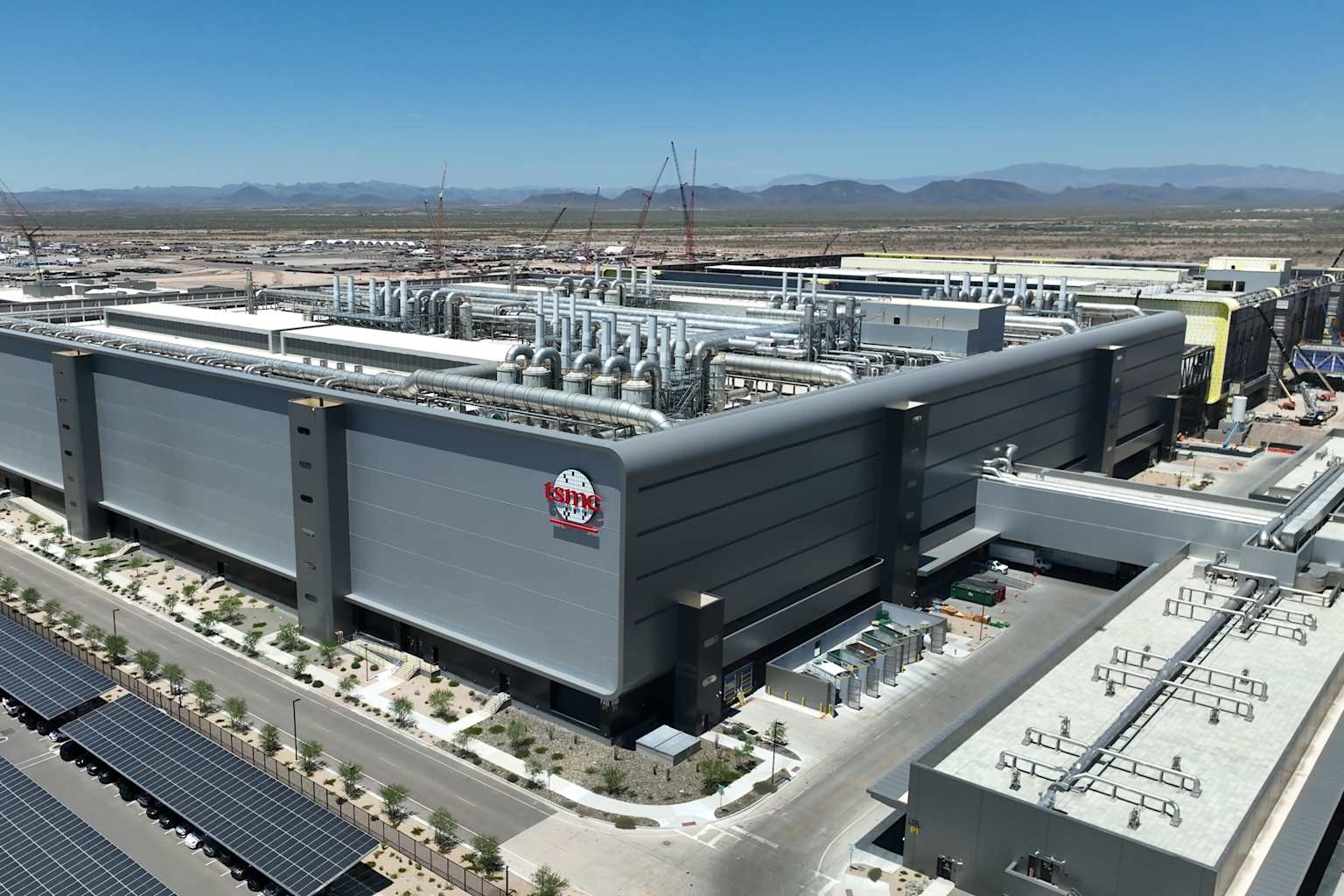
trendforce+1wccftechtrendforce+1TSMC's Taiwan Semiconductor Manufacturing Company Limited advanced packaging capacity remains fully booked through 2027, and the sustained crunch is now reshaping competitive dynamics in the semiconductor supply chain. According to a report from Taiwan's Economic Daily News, cited by TrendForce, some backend advanced packaging orders are spilling over to Intel's Malaysia operations to support shared major customers — a departure from traditional industry practices that underscores the severity of the shortage.digitimes
TSMC's chip-on-wafer-on-substrate (CoWoS) technology is central to manufacturing AI processors, combining GPUs and high-bandwidth memory into a single package. Despite aggressive capacity buildouts — scaling from roughly 75,000 wafers per month in 2025 toward a target of 130,000 by end of 2026 — demand continues to outpace supply. CoWoS lead times are running 52 to 78 weeks, with Nvidia holding roughly 60% of capacity.trendforce+1
Data from SemiAnalysis Chipbook, cited by Wccftech, shows approximately $1.3 billion worth of HBM was shipped to Malaysia, while shipments to Taiwan fell below $3 billion. With Intel believed to be the only major player in Malaysia capable of integrating HBM into chips at scale, analysts interpret this as evidence of backend packaging activity at Intel's facilities.wccftech
TSMC Chairman C.C. Wei has previously said that competitors adding packaging capacity could ease shortages and ultimately benefit TSMC's front-end wafer business by removing bottlenecks.trendforce
Intel's EMIB-T technology, which embeds silicon bridges directly into substrates to connect chips without a full-size silicon interposer, is gaining traction as an alternative to CoWoS. Intel's EMIB-T package yields are reportedly approaching 90%, though substrate yields remain the key bottleneck. Digitimes reported in late July that Unimicron confirmed EMIB-T will not reach true mass production until 2027, with the company working alongside two Japanese suppliers to advance the technology.wccftech+2
Unimicron is expanding ABF substrate capacity for AI GPUs and ASICs, with EMIB-T development focused on improving substrate yields toward an initial target of around 50%. ASE COO Tien Wu has said that CoWoS, EMIB, and other packaging solutions are not mutually exclusive, with ASE positioned to provide assembly and final testing for EMIB-T customers.trendforce
TrendForce notes that EMIB's architecture could offer a cost advantage over CoWoS by eliminating the need for a full-size silicon interposer. Intel has said EMIB-T is expected to exceed 8x reticle size this year and expand beyond 12x by 2028. TSMC, meanwhile, reported at the 2026 OCP APAC Summit that its 5.5x-reticle-size CoWoS is in volume production with yields exceeding 98%, and expects to scale beyond 14x reticle size by 2029.trendforce