Newsletter Subscribe
Enter your email address below and subscribe to our newsletter
[forminator_form id="25163"]

All voices matter
cnn+1cnn+1cnn+1A single flash of light inside a vat of liquid xenon, recorded nearly a mile beneath South Dakota, has stirred one of the longest-running quests in physics. An international team of 250 scientists working on the LUX-ZEPLIN experiment says the event, detected in June 2023, may represent the first direct observation of a dark matter particle — though they caution it falls well short of a confirmed discovery.
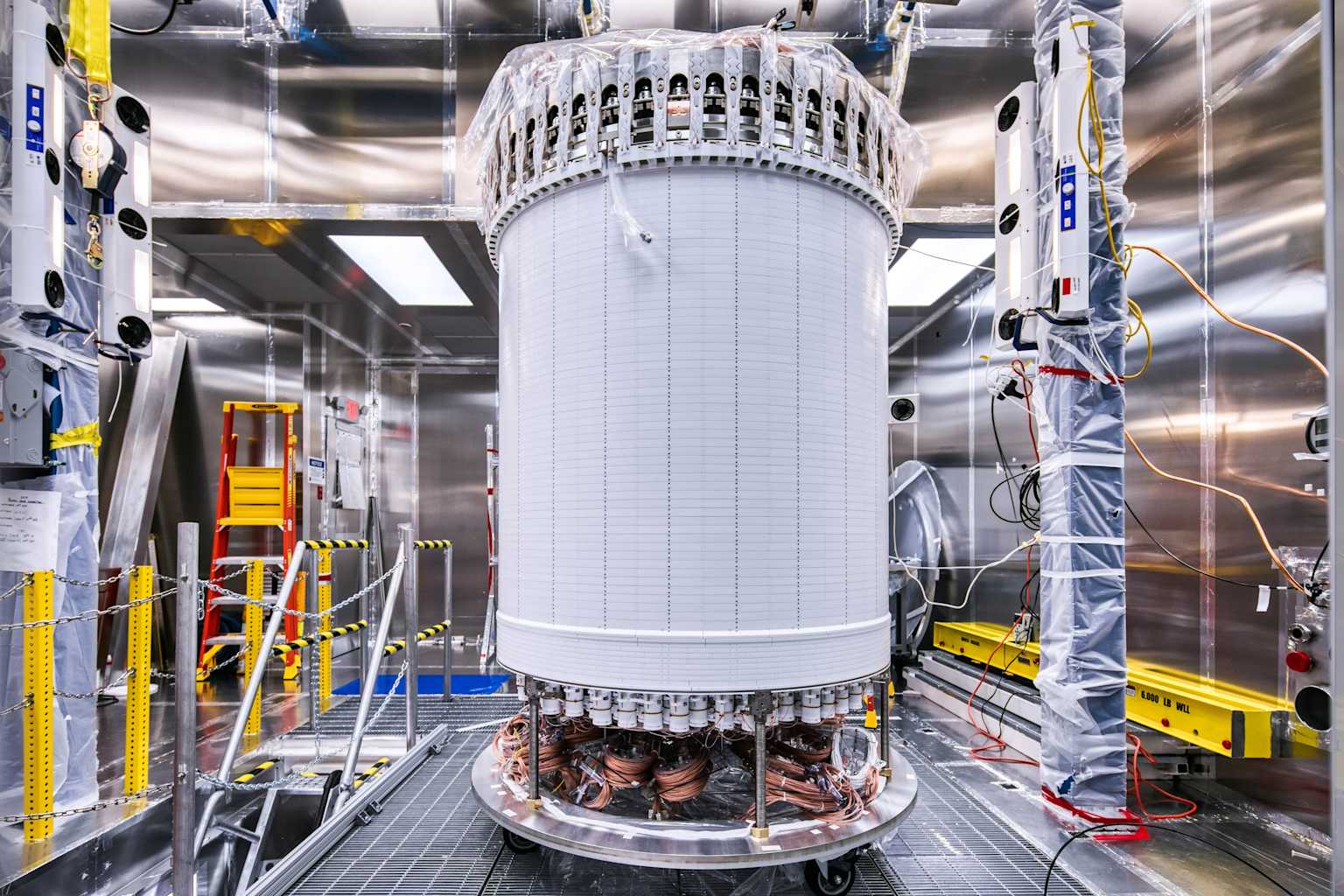
The LZ detector, housed in the former Homestake gold mine at the Sanford Underground Research Facility, uses seven metric tons of ultra-pure liquid xenon to hunt for weakly interacting massive particles, or WIMPs, a leading dark matter candidate. While analyzing 220 days of data collected between March 2023 and April 2024, the team identified one interaction that does not match any known background source.cnn+1
According to the collaboration, there is only a 0.5% chance the event was caused by ordinary interference — making it the most compelling dark matter-related signal the instrument has recorded. Sam Eriksen, a senior research associate at the University of Bristol and lead author of the study, presented the findings on Sept. 1 at the TeV Particle Astrophysics conference in Japan. The team has also submitted a paper to Physical Review Letters.dailygalaxy+2
"With only one event, we don't want to get ahead of ourselves," said Rick Gaitskell, a professor at Brown University and spokesperson for the LZ experiment. "We are not claiming to have seen dark matter. But we have seen something interesting that we want to share with the scientific community for their input."dailygalaxy
The result currently stands at 2.6 sigma — roughly a 1-in-200 chance of being a random fluctuation. Particle physics requires 5 sigma, or about a 1-in-3.5-million chance, before declaring a discovery. Alvine Kamaha, an assistant professor of physics at UCLA and a member of the LZ collaboration, said in an email to CNN Warner Bros. Discovery, Inc. that "one event, on its own, is insufficient" and that researchers need to observe whether additional events emerge as more data are gathered.mezha+1
The team is now analyzing a newer dataset covering 700 days of observations. To guard against unconscious bias, researchers have inserted synthetic events mimicking genuine dark matter interactions, which are removed only after the analysis is complete.cnn+1
The detected event occurred at a higher energy than most WIMP models predict. Tim M. P. Tait, a physicist at the University of California, Irvine, who is not part of the collaboration, said this could mean dark matter "might turn out to be more peculiar and extraordinary than we initially imagined." Tracy Slatyer, a professor at the Massachusetts Institute of Technology, agreed the higher energy is intriguing and said that if confirmed, the signal "could serve as a key unlocking a wealth of information about new physics."cnn
Independent verification may come from similar experiments, including XENONnT in Italy and PandaX-4T in China. For now, the physics community watches and waits. As Gaitskell put it: "The way it always starts, in terms of getting a new explanation or verifying a new model, it has to start with a single event."oceanstatemedia+2