Newsletter Subscribe
Enter your email address below and subscribe to our newsletter
[forminator_form id="25163"]

All voices matter
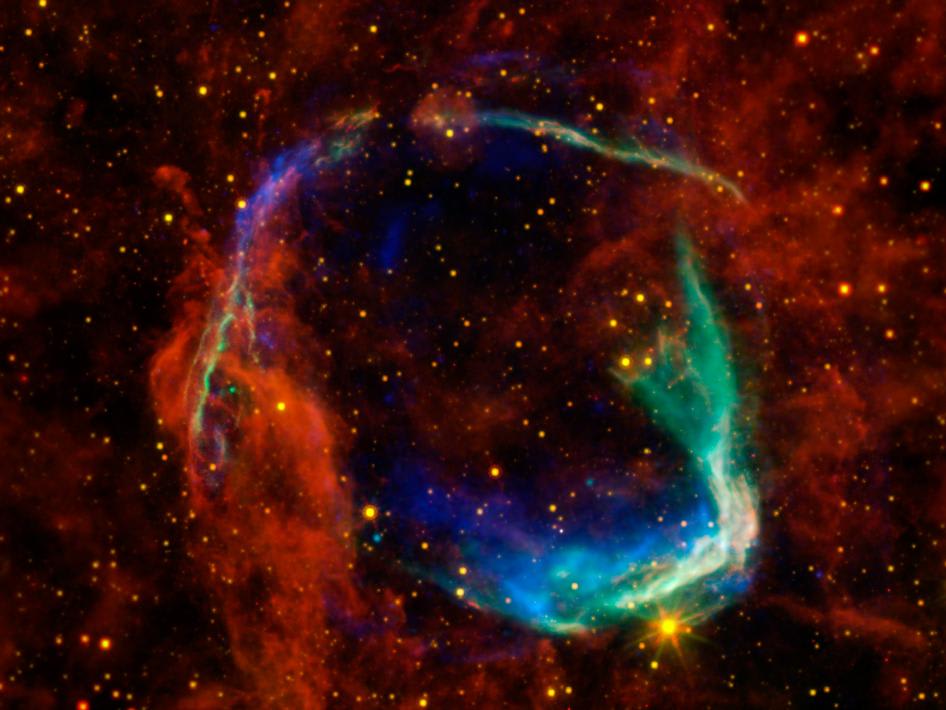
phys+1miragenews+1phys+1The largest catalog of exploding white dwarf stars ever assembled is pushing scientists to reconsider what they think they know about dark energy, the mysterious force behind the universe's accelerating expansion.
Researchers at the University of Queensland announced on Tuesday that they have compiled a dataset of 2,884 Type Ia supernovae — stellar explosions used as cosmic distance markers — merging three decades of astronomical observations into a single, unified framework. Rather than confirming the prevailing cosmological model, in which dark energy is a fixed constant, the results add to a growing body of evidence that dark energy may be changing over time.phys+1
The project, led by PhD candidate Ryan Camilleri and astrophysicist Professor Tamara Davis, combined historical supernova measurements with data from the Dark Energy Survey published in 2024. Older observations were reanalyzed using modern techniques to account for cosmic dust, galaxy mass, and gravitational lensing — the bending of light around massive objects.miragenews+1
"We've rebuilt three decades of astronomical observations into a single, consistent framework," Camilleri said. "Instead of confirming the standard model of cosmology, which assumes dark energy is fixed and unchanging, we have more evidence that dark energy may change over time."phys
The findings, posted to the arXiv preprint server, are detailed in two papers: one on the combined Hubble diagram and cosmological constraints, and another on host-galaxy mass measurements.arxiv+1
The results echo independent findings from the Dark Energy Spectroscopic Instrument (DESI), which detected hints of time-varying dark energy through surveys of relic sound waves from the early universe. Davis called the convergence noteworthy.
"Our supernova data from DES in 2024 first showed hints that dark energy may be time-varying, and this new compilation also sees a deviation from the standard model, although in a slightly different direction," Davis said. "Two completely independent measurements have found hints of time variation in dark energy, challenging the standard model's assumption that dark energy doesn't change."miragenews+1
Davis added that the research could hold clues to one of physics' deepest puzzles: reconciling gravity with quantum mechanics.miragenews
Future surveys are expected to strengthen the dataset further. The Dark Energy Bedrock All-Sky Supernova program (DEBASS) is already detecting hundreds of additional supernovae closer to Earth than those captured by the DES survey. The collaboration draws on the work of hundreds of researchers across programs including the Foundation Supernova Survey, the Sloan Digital Sky Survey, and the Carnegie Supernova Project.xinhuanet+2