


Newsletter Subscribe
Enter your email address below and subscribe to our newsletter
[forminator_form id="25163"]

All voices matter

A study published in Nature on Wednesday challenges one of the foundational assumptions of modern cosmology, reporting the detection of anisotropic structures in the cosmic web on scales of up to a gigaparsec — roughly 3.26 billion light-years — well…
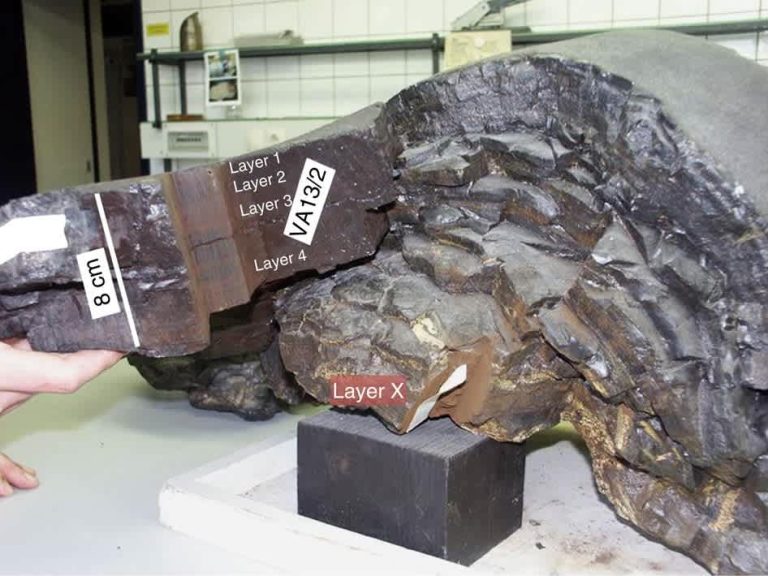
Debris from a cataclysmic cosmic explosion more than 100 million years ago is still falling on Earth today. An international team of researchers has detected hundreds of atoms of plutonium-244 — a radioactive isotope that can only form in the…

A Yale-led team of astronomers has confirmed that a faint dwarf galaxy 67 million light-years from Earth contains no dark matter, making it the third such galaxy found along an unusual linear trail — and offering some of the strongest…

The expansion of the universe is still accelerating, according to a new study that rebuts claims made late last year suggesting the cosmos had entered a phase of deceleration. The paper, published on June 11 in the Monthly Notices of…

A team of astronomers has identified two ghostlike galaxies in the Fornax Cluster that appear to contain almost no dark matter, marking only the second known case of such a twin pair and adding fresh tension to standard models of…

The Norwegian Academy of Science and Letters on Wednesday named ten scientists as recipients of the 2026 Kavli Prize, honoring breakthroughs in astrophysics, nanoscience, and neuroscience. Each prize carries a $1 million award shared among its laureates.

Two weeks after its theatrical debut, scientists continue to weigh in on "Project Hail Mary," the Ryan Gosling-led adaptation of Andy Weir's best-selling novel, and the consensus is that the film gets most of its science right — with a…