Newsletter Subscribe
Enter your email address below and subscribe to our newsletter
[forminator_form id="25163"]

All voices matter
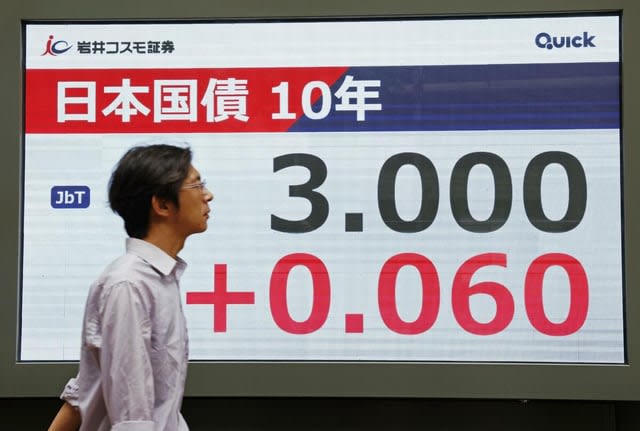
japantimes+1news.futunnnews.futunnJapanese government bond yields near their highest levels in three decades are fueling a growing debate over whether the nation's enormous pool of overseas capital — nearly $5 trillion in foreign assets — could begin shifting homeward, with potentially far-reaching consequences for global bond markets and funding conditions.
The 10-year JGB yield briefly touched 3% last week for the first time since 1996, driven by inflationary pressures, expectations that the Bank of Japan may accelerate rate hikes, and concerns over government fiscal spending. The yen has appreciated roughly 4% since September, making it the best-performing G10 currency, while markets have moved to nearly fully price a 25-basis-point BOJ hike to 1.25% at the September meeting.japantimes+2
"If domestic yields continue to rise, Japan may gradually retain more capital at home," said Ales Koutny, head of international rates at Vanguard Asset Management's active funds. "That matters not only for the yen and JGBs, but also for Treasury markets, European bond markets and broader global funding conditions."japantimes
The investment calculus that sent Japanese capital abroad for decades is changing. With USD hedging costs near 3%, the yield on 10-year US Treasuries after currency hedging falls to roughly 2% in yen terms — about one percentage point below comparable JGBs. For hedged Japanese investors, domestic bonds now offer superior real returns.news.futunn
Deutsche Bank has estimated that in an upside scenario involving broad asset-allocation adjustments by pension funds, insurers, and individual investors, up to $440 billion could flow into Japanese domestic assets over coming years. James Athey, a fund manager at Marlborough Investment Management, said the conditions for repatriation "are largely in place" and expressed surprise more institutions have not already shifted back.news.futunn
Yet actual capital flows tell a more nuanced story. Ministry of Finance data released Tuesday showed Japanese investors poured 1.3 trillion yen into foreign equities in August — the largest monthly purchase in five months — while selling a net 1.02 trillion yen of overseas short-term debt and 143 billion yen of long-term bonds. The pattern suggests rotation within foreign assets rather than a broad retreat.economictimes.indiatimes
The Government Pension Investment Fund, managing roughly 318 trillion yen, remains a focal point. Health Minister Kenichiro Ueno said Tuesday that GPIF is still "continuing to consider this matter in an appropriate manner" regarding asset allocation but has not confirmed any changes. Even a one-percentage-point shift could move over 3 trillion yen in capital flows, though analysis from Dai-ichi Life Research Institute suggests GPIF already allocated an estimated 5.7 trillion yen to domestic bonds in the April-June quarter — the largest for that period since fiscal 2021.finance.biggo
Critically, GPIF can increase JGB holdings substantially without formally changing its targets. Its domestic bond allocation can rise to 31% within existing bands, corresponding to roughly 17 trillion yen of room.finance.biggo
For now, the so-called great repatriation remains more prospect than reality. Shoki Omori, chief fixed-income strategist for Japan at Deutsche Bank, noted that life insurers have largely refrained from selling foreign bonds, banks have only modestly trimmed holdings, and pension trusts continue adding overseas assets. Instead, Japanese investors are reducing currency hedging on foreign holdings — from 62% in 2024 to roughly 40% this year — rather than withdrawing funds outright.news.futunn
Masayuki Nakajima, senior strategist at Mizuho Bank, argued that the stabilization of yields matters more than their absolute level. "Once investors believe that JGB yields have stabilized, the same 3% yield level could attract significantly stronger buying interest than currently observed."news.futunn