Newsletter Subscribe
Enter your email address below and subscribe to our newsletter
[forminator_form id="25163"]

All voices matter
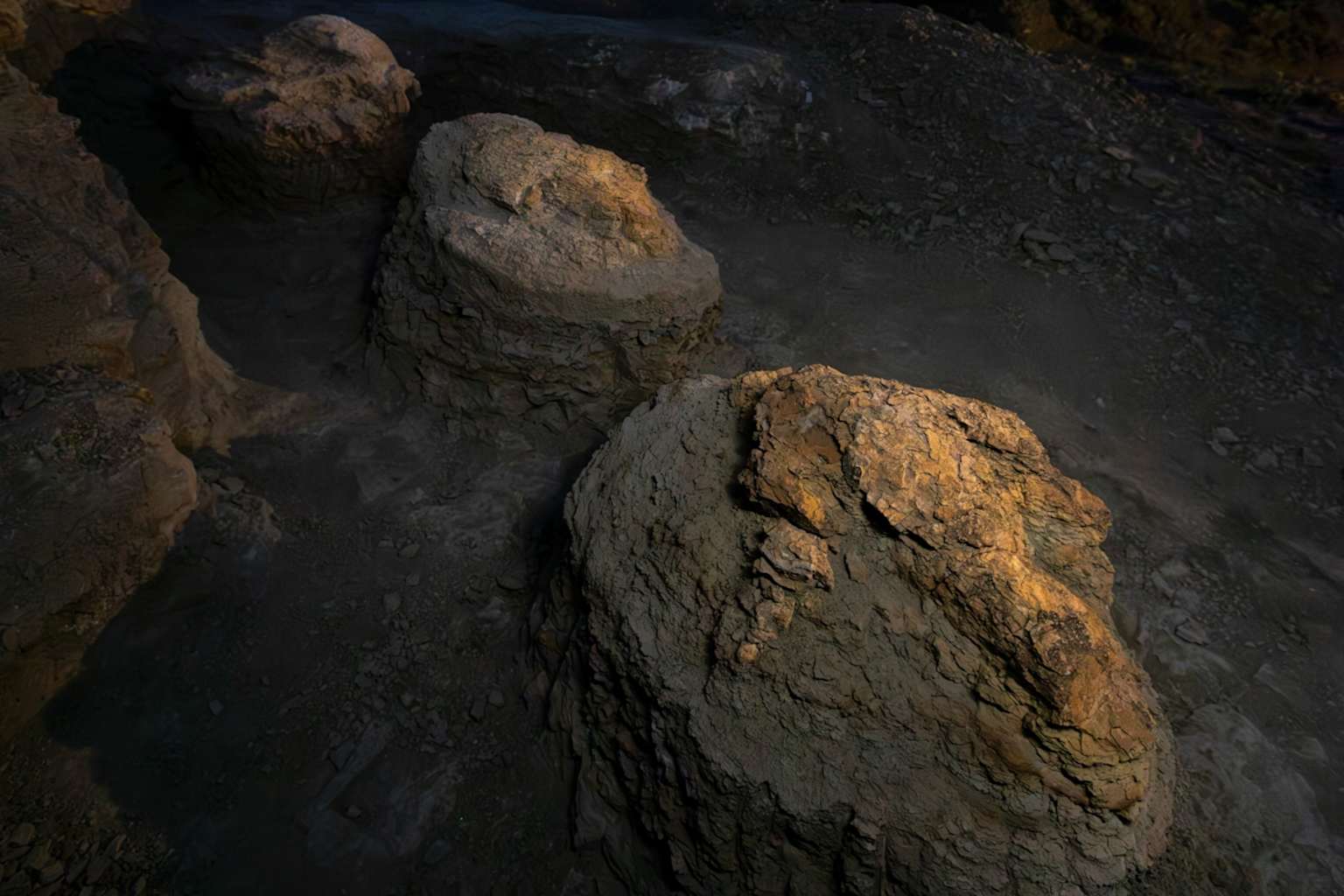
dmns+1nationalgeographicdmns+1A high school teacher's sharp eye in the North Dakota badlands has led to a once-in-a-lifetime paleontological discovery: the first trackway ever attributed to an adult Tyrannosaurus rex. The find, published on September 8 in the Journal of Vertebrate Paleontology, captures a brief, unhurried walk by one of the largest predators to roam North America, frozen in mud roughly 66.5 million years ago.nationalgeographic+1
The approximately 23-foot-long trackway consists of four three-toed footprints, each about three feet long, found in the Hell Creek Formation near Marmarth, North Dakota. Researchers from the Denver Museum of Nature & Science and Liverpool John Moores University in England estimate the animal was walking at about 3.5 to 4.5 miles per hour — comparable to a brisk human pace. While isolated adult T. rex footprints have been identified before — one in New Mexico and one in Montana — no one had previously documented a sequence of tracks from this species.eurekalert+2
Kent M. Hups, a teacher at Northglenn High School in Colorado who has spent decades searching for ancient footprints, spotted the first print in 2025 while volunteering with a Denver Museum field crew. "I saw something sticking up out of the ground, and it looked really peculiar," he told National Geographic. He texted paleontologist Tyler Lyson, a senior curator at the Denver Museum: "Hey just found a t Rex footprint!!!!!!"nationalgeographic
Lyson was skeptical. But when the team returned the next day and began digging where a third print should logically appear, a pickaxe struck stone — footprint number three. Then came a fourth and a fifth, extending out of the hillside across 66 million years.nationalgeographic
The distinction between a single footprint and a trackway matters. "Bones tell us an enormous amount about these animals, but footprints capture a moment of behavior," Lyson said. "With a trackway, we can actually follow an animal as it moved across the landscape. That is incredibly rare for T. rex."dmns
The team attributed the prints to T. rex based on their size, the narrow shape of the toes characteristic of tyrannosaurs, and the abundance of T. rex fossils in the surrounding rock. The study's lead author, Peter Falkingham of Liverpool John Moores University, analyzed the tracks entirely through 3D digital scans transmitted from North Dakota, never visiting the site in person.bioengineer+2
Three of the footprints are expected to be recovered by helicopter this fall and transported to the Denver Museum of Nature & Science, where they will eventually go on display. The museum plans to share updates on the recovery with guests this winter. For Hups, the discovery still feels surreal. "I never thought I'd find tracks in the Hell Creek, ever," he said. "They're so, so, so rare."dmns+1