Newsletter Subscribe
Enter your email address below and subscribe to our newsletter
[forminator_form id="25163"]

All voices matter
ecb.europaecb.europaecb.europa+1Economists at the European Central Bank published a blog post on Monday arguing that China's pre-war oil stockpiling, rapid adoption of electric vehicles, and reduced petrochemical consumption have played a central role in limiting the global economic fallout from the Iran war, which has removed roughly 14 million barrels per day from world oil supply.ecb.europa
The analysis, titled "Energy shock: why oil and gas prices have risen less than expected," compares the current crisis with the energy disruption triggered by Russia's invasion of Ukraine in 2022 and seeks to explain why a far larger supply shock has produced a comparatively modest price response.ecb.europa
The closure of the Strait of Hormuz following U.S. and Israeli strikes on Iran in late February 2026 interrupted around 20 million barrels per day of transit — one-fifth of global oil supply. After pipeline workarounds by Saudi Arabia and the United Arab Emirates, the net supply loss has averaged around 14 mb/d, dwarfing the approximately 1 mb/d reduction caused by Russia's war in Ukraine.ecb.europa
Yet both conflicts produced strikingly similar price increases. By early June, oil stood about 29% above pre-conflict levels after retreating from a peak rise of more than 50%, according to the ECB economists. Following Russia's invasion, prices also rose roughly 30% at their peak — a broadly comparable outcome despite a shock fourteen times smaller.ecb.europa
Brent crude was trading around $90 per barrel on Monday, having pulled back after briefly exceeding $100 last week. German 10-year Bund yields, meanwhile, eased below 3.2% but remained near a 15-year high reached last week, as investors weighed the inflationary consequences of elevated energy costs.barchart+2
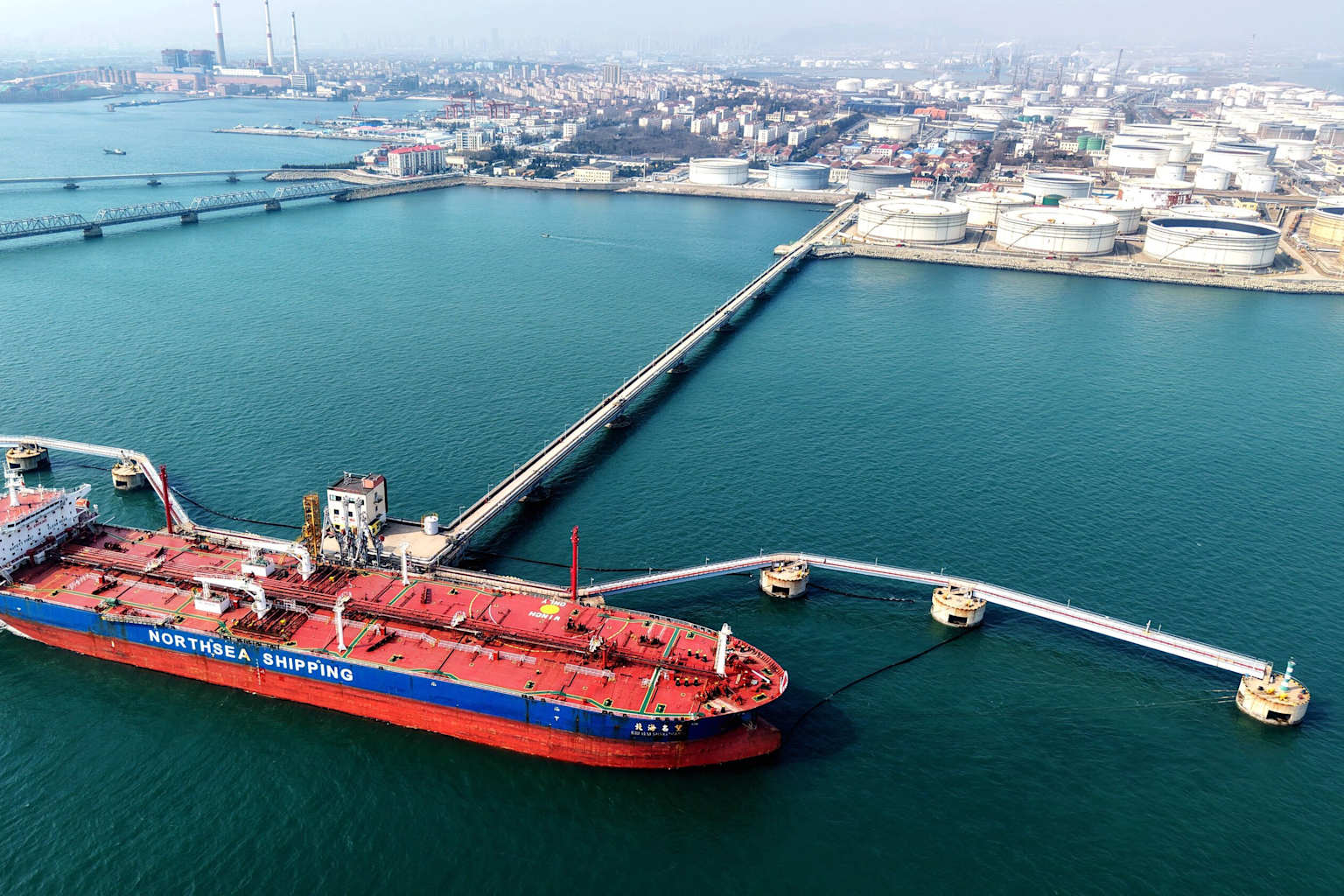
The ECB blog identified several factors behind the restrained price response, with China featuring prominently. Chinese crude inventories rose from an estimated 92 days of import cover in 2023 to around 115 days by early 2026, providing a substantial cushion when shipments through the Strait were halted. China's rapid shift to electric vehicles also helped push the global oil market into a supply surplus of roughly 2.5 mb/d before the conflict began.ecb.europa
Weaker Chinese petrochemical consumption and lower Middle Eastern jet fuel demand contributed to a sharp downward revision in global oil demand forecasts. The International Energy Agency cut its second-quarter 2026 demand outlook by 3 mb/d relative to January, projecting a year-on-year decline of around 2% — far steeper than the 0.6 mb/d shortfall seen after the Ukraine invasion.ecb.europa
A record coordinated release of 400 million barrels from strategic reserves — more than double the 182 million barrels released in 2022 — further eased market tightness.journalrecord+1
The ECB authors cautioned that conditions remain "highly volatile," particularly after renewed U.S.-Iran strikes earlier this month reignited fears of a prolonged disruption. A protracted closure of the Strait would gradually deplete existing buffers and force markets to abandon expectations of a rapid resolution, raising the risk of fresh price surges.reuters+2
The ECB kept interest rates on hold last week at 2.25%, with President Christine Lagarde noting that a rate hike had been discussed.freemalaysiatoday+1