


Newsletter Subscribe
Enter your email address below and subscribe to our newsletter
[forminator_form id="25163"]

All voices matter
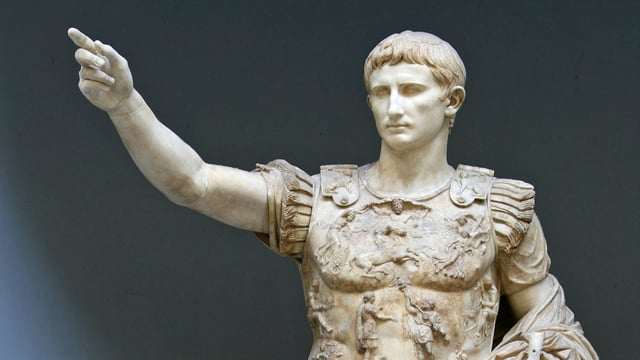
sciencenews.sciencenews+1.sciencenews+1.sciencenews+1.sciencenews+1.Google DeepMind researchers have developed an artificial intelligence system that can decipher, restore, and provide new historical insights about ancient Roman inscriptions, according to a study published today in Nature. The AI model, called Aeneas, analyzed one of Rome's most famous texts and uncovered subtle language patterns that had escaped human historians for centuries.sciencenews
The system revealed that the Res Gestae Divi Augusti—Emperor Augustus' autobiographical inscription once displayed on bronze pillars in Rome—contains previously unrecognized parallels with Roman legal documents and reflects "imperial political discourse" focused on maintaining power. This insight represents the first time AI has identified new interpretative elements in this well-studied ancient text.miragenews+1
Aeneas builds on DeepMind's earlier Ithaca system, which focused on Greek inscriptions, but extends the technology to Latin texts across the Roman Empire. The system uses a generative neural network to search for parallels within a database of over 176,000 Latin inscriptions, helping historians "interpret, attribute and restore fragmentary Latin texts" through combined textual and visual analysis.sciencenews+1
When tested on the Res Gestae inscription, Aeneas identified two probable date ranges—between 10 B.C. and 1 B.C., and between A.D. 10 and A.D. 20—reflecting scholarly disagreements about when the text was composed. "The way that it has modeled this scholarly debate was really an exciting result for us," said study co-author Thea Sommerschield, a historian at the University of Nottingham.bulletin.kenyon+1
More than 90% of historians who tested Aeneas found it helpful for determining the age and location of inscriptions. The system made epigraphers—specialists who study ancient inscriptions—both more accurate and faster at their work.publish.obsidian+2
"This is not just a successful case study. This is a new way of modeling historical uncertainty, transforming the way we study history," said co-author Yannis Assael, a computer scientist at Google DeepMind.sciencenews
Professor Alison Cooley from the University of Warwick, who helped evaluate the system, noted that Aeneas "picked up on clues of spelling and vocabulary, as well as the linguistic nuances indicating subtle political ideology".bulletin.kenyon
Aeneas represents a significant evolution in DeepMind's AI systems for historical analysis, expanding upon their earlier work with Ithaca for Greek inscriptions. The system's advanced capabilities make it remarkably versatile for historians working with damaged or contextless ancient materials. Unlike previous tools, Aeneas can process multimodal inputs by analyzing both textual content and visual information from inscription images, determine geographical provenance, and—most impressively—restore gaps in texts where the missing length is unknown.sciencenews+1
The technology has been meticulously developed through collaboration between Google DeepMind and researchers from the Universities of Nottingham, Warwick, Oxford, and Athens University of Economics and Business. Professor Dame Mary Beard of Cambridge University described Aeneas as "a really exciting and expert 'test run'" that promises to be "transformative" for a field that has traditionally relied on individual scholars' memory, judgment, and educated guesswork. The AI's ability to rapidly identify connections across thousands of inscriptions—finding shared names, phrases, and formulas—essentially transforms the painstaking work of piecing together historical puzzles into a significantly more efficient process.miragenews


