Newsletter Subscribe
Enter your email address below and subscribe to our newsletter
[forminator_form id="25163"]

All voices matter
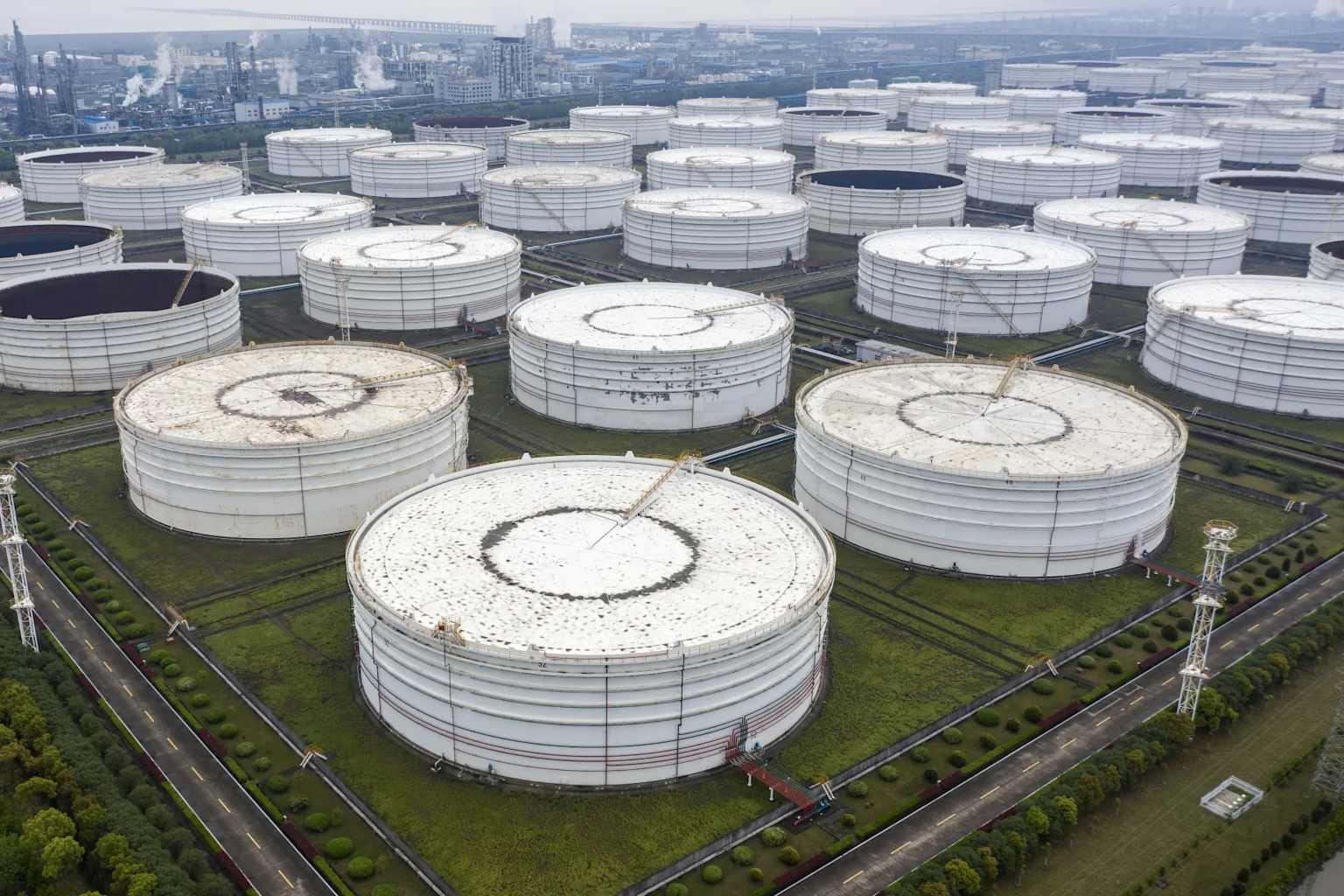
wsj+1tradersunion+1wsjYears before the U.S. launched its military campaign against Iran, China was quietly building the world's largest strategic oil reserve. Now, months into a conflict that has upended global energy flows, that foresight has handed Beijing an unexpected form of power: the ability to shape oil markets and shield its economy while much of the world scrambles for supply.
China's strategic and commercial oil reserves are estimated at between 1 billion and 1.4 billion barrels — equivalent to roughly 120 days of imports — making them larger than those held by the United States. The U.S. Energy Information Administration estimated that China added an average of 1.1 million barrels per day to its strategic inventories in 2025, when Beijing took advantage of discounted crude from sanctioned suppliers including Russia and Iran. From 2022 to 2025, China's imports of Russian crude jumped 26% while Iranian crude imports more than doubled, according to data from Vortexa cited by The Wall Street Journal News Corp .wsj+1
When the war disrupted flows through the Strait of Hormuz, China slashed imports dramatically. Reuters Thomson Reuters Corporation reported in July that Chinese shipments fell to 40% of pre-war levels, averaging just 8 million barrels per day since April compared with a five-year average of 11.5 million. Rather than panic buying, Beijing drew down commercial inventories at roughly 700,000 barrels a day between May and mid-August while keeping its aboveground strategic reserves largely intact.reuters+1
The approach has drawn attention from economists and market strategists. Mohamed El-Erian, president of Queens' College at the University of Cambridge, highlighted the WSJ's reporting as evidence that China's "well-coordinated approach" has made it "the most significant swing buyer in international energy markets". Francisco Blanch, head of commodities research at Bank of America Securities, made a similar observation earlier this month, calling China "very skilled at managing their energy" position.tradersunion+1
China's import cuts helped prevent the kind of price spike many analysts had feared. Fortune reported in June that China's "plummeting imports have effectively shielded oil prices from increasing" despite the effective closure of the Strait of Hormuz. CNBC Comcast Corporation described China's reduction as "key to easing global price pressures".fortune+1
The strategy has not been painless. China's gasoline exports plunged 93% in the second quarter compared with a year earlier, and refinery runs fell from more than 15 million barrels a day to roughly 12.5 million. Larry Hu, chief China economist at Macquarie, estimated that 90% of the slowdown in Chinese industrial production in the second quarter was tied to the oil and petrochemicals chain.wsj
Still, China's broader preparation — including its rapid adoption of electric vehicles, expansion of high-speed rail, and investment in coal-to-chemical processing — has cushioned the blow. "Oil is not the Achilles' heel we thought it was," said Michal Meidan of the Oxford Institute for Energy Studies. Sinopec China Petroleum & Chemical Corporation Chairman Hou Qijun recently said Chinese oil demand "very likely peaked last year," three years earlier than previously estimated.investing+1
How long China can sustain reduced imports remains an open question. As Tom Reed of Argus Media noted, "Restricting exports is indeed a lever China can pull anytime, but it still entails economic costs".wsj