Newsletter Subscribe
Enter your email address below and subscribe to our newsletter
[forminator_form id="25163"]

All voices matter
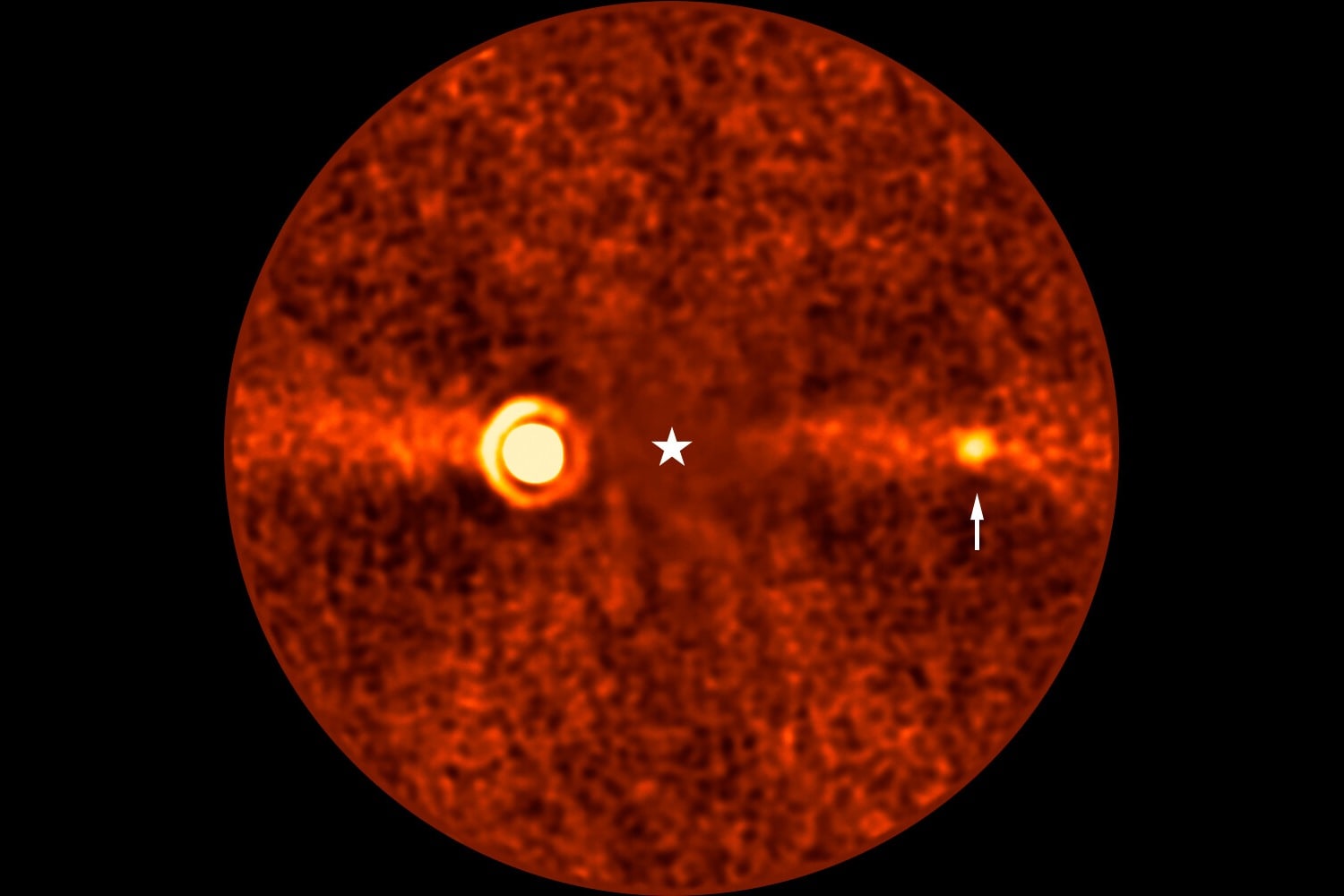
upi+1universiteitleiden+1phys+1After more than a decade of hiding in plain sight, a third planet has been confirmed orbiting the young star Beta Pictoris — and it is the faintest exoplanet ever directly imaged from Earth.
The European Southern Observatory announced the discovery of Beta Pictoris d on Wednesday, a gas giant 100 times dimmer than its sibling Beta Pictoris b and among the lightest worlds ever captured in ground-based telescope images. The finding, published in The Astrophysical Journal Letters, caps what researchers described as "a decade-long game of hide-and-seek."upi+3
The initial detection was made using the Enhanced Resolution Imager and Spectrograph (ERIS) on ESO's Very Large Telescope in Chile, led by astronomers Ben Sutlieff and Markus Bonse. Once the team knew where to look, they found the planet lurking in archival VLT observations stretching back 11 years — images that had been examined many times before without anyone recognizing the faint signal.phys+3
"The new planet is 100 times fainter than Beta Pictoris b, the famous planet in the same system, making it the faintest exoplanet ever imaged directly from Earth," Bonse said.ukri+1
An independent team led by Aidan Gibbs at the University of California also detected Beta Pictoris d using the James Webb Space Telescope, providing confirmation through a separate instrument and method.ukri
Beta Pictoris d has a mass of about 2.4 times that of Jupiter — far lighter than the system's two previously known planets — and orbits its host star at roughly 26 times the Earth-Sun distance, taking an estimated 91 years to complete one circuit. Located 63 light-years from Earth, the Beta Pictoris system is now only the second, after HR 8799, in which more than two planets have been directly imaged.science.nasa+3
The discovery demonstrates what current ground-based telescopes can achieve with advanced data-processing techniques and highlights the potential for ESO's upcoming Extremely Large Telescope, which will push direct imaging sensitivity even further. For now, the Beta Pictoris system — already one of the best-studied in the solar neighborhood — has given astronomers a new puzzle: understanding how a relatively low-mass, cool gas giant ended up on such a wide orbit around a star barely 20 million years old.universiteitleiden+1