Newsletter Subscribe
Enter your email address below and subscribe to our newsletter
[forminator_form id="25163"]

All voices matter
servethehome+1servethehomemk+1Waymo Alphabet Inc. presented its first custom silicon for autonomous driving at Hot Chips 2026 on Monday, detailing a purpose-built 5-nanometer ASIC designed to process and fuse raw sensor data in real time aboard its robotaxis.
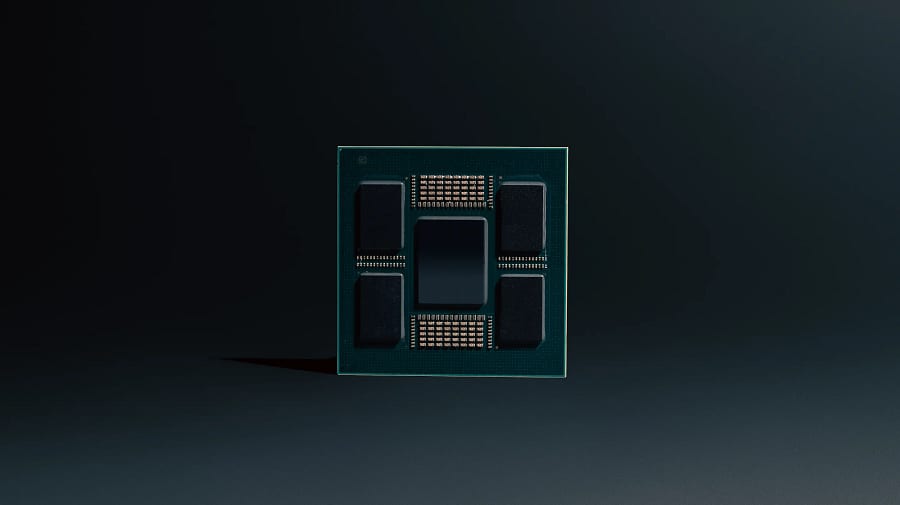
The chip, which Waymo calls its Sensor Fusion Processor and internally brands as the carTPU, aggregates streams from lidar, camera, radar, and microphone arrays before feeding embeddings to the vehicle's downstream driving models. Fabricated on TSMC's Taiwan Semiconductor Manufacturing Company Limited N5 automotive process, the processor fits in a 45 mm by 45 mm package with 208 mm² of silicon, pairs in-package LPDDR5x memory at 273 GB/s bandwidth, and draws less than 75 watts. Waymo quotes more than 1,000 TOPS of ML performance dedicated to front-end processing.servethehome+1
Daniel Rosenband, a senior Waymo researcher, delivered the presentation at Stanford University's Memorial Auditorium, framing the chip as the answer to a decade-long evolution from off-the-shelf accelerators toward hardware co-designed with the company's own sensor fusion models. "What we are trying to create is not a driver who is equal to humans, but a superhuman driver who has far fewer accidents than humans," Rosenband said, defending Waymo's multi-sensor approach against camera-only alternatives.mk
The carTPU pairs Waymo-designed blocks — including an image signal processor, video codecs, MIPI ingest, and scratchpad memory — with third-party GPUs, PCIe Gen5, 25G Ethernet, and secure boot IP. Each processing element holds a highly banked 2 MB SRAM so activations stay resident, while a compiler-first software stack builds a single mega-kernel for the entire model and shards it to fit on-chip.servethehome
Waymo emphasized achieved performance over raw TOPS, noting that its ahead-of-time compilation and hardware-software co-design yield latency from first pixel to embedding output that off-the-shelf parts cannot match at comparable power.waymo+1
Waymo confirmed the processor is running in its sixth-generation vehicles, which currently operate in cities including Phoenix, Los Angeles, San Francisco, and Austin. A blog post published days before the conference offered an initial look at the compute architecture and named AMD, Micron, Nvidia , Samsung, SanDisk, Socionext, and TSMC as hardware partners.thenextweb+2
"Ultimately, I want to run an AI model with one trillion parameters in a car," Rosenband said, describing a long-term goal of shrinking the current onboard computer from its "pizza box" form factor to laptop size.mk