Newsletter Subscribe
Enter your email address below and subscribe to our newsletter
[forminator_form id="25163"]

All voices matter
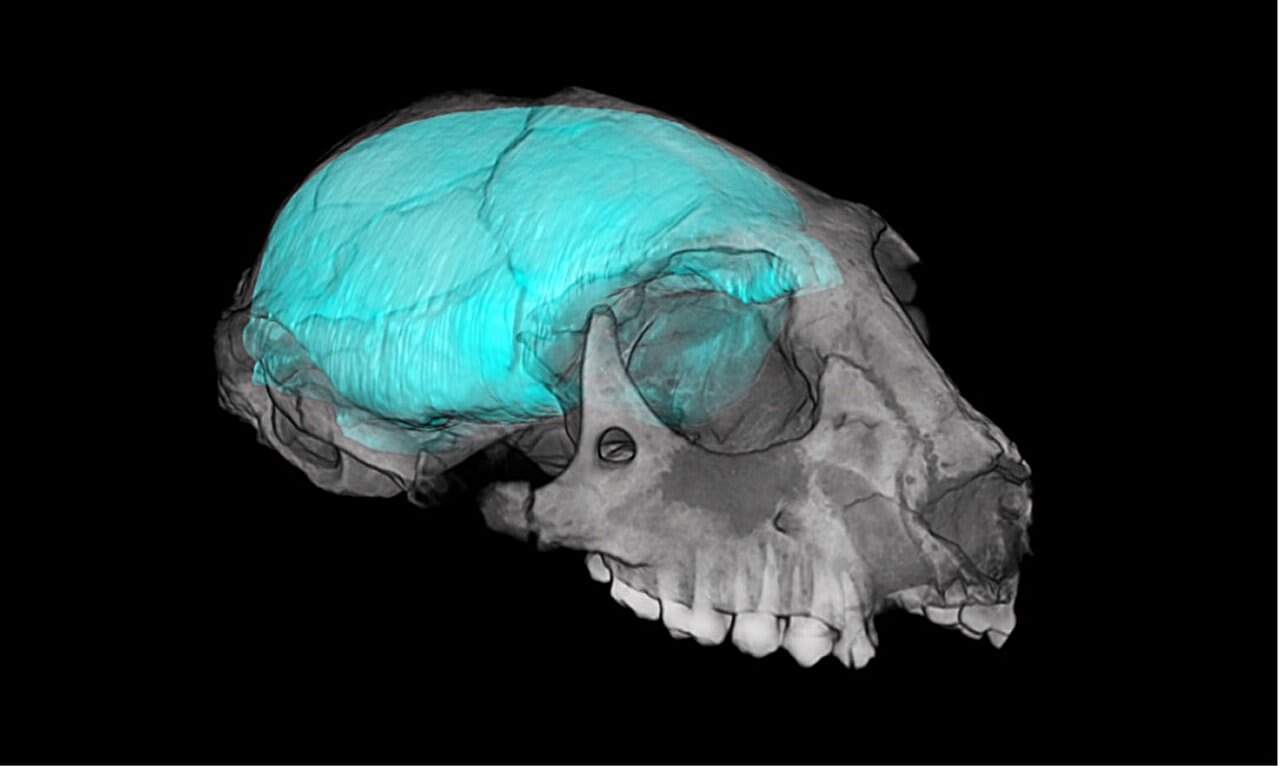
miragenews+1miragenews+1miragenews+1A new study published Thursday in the journal Science overturns a long-held assumption about how primates — including humans — came to have such large and complex brains. Rather than independent expansion of the frontal lobe, the region most often linked to higher reasoning, the research finds that vision was the primary driver of primate neocortex evolution over the past 56 million years.miragenews+2
The research, led by Richard F. Kay, a professor emeritus of evolutionary anthropology at Duke University, used high-resolution micro-CT scans of primate skulls — many from the Duke Lemur Center Museum of Natural History — to create virtual models of ancient brain cases. By comparing volumes and surface areas across living and extinct species, the team found that the frontal lobe grew gradually and predictably as overall brain size increased, following the same scaling pattern from tree shrews to humans.phys+1
"Everything from humans down to tree shrews, they all fall on the same line: Relative to the size of the brain, the proportion of the frontal lobe is a constant," Kay said.miragenews
The study involved collaboration with Montana State University paleobiologist Chris Organ, who said the findings show that "the enlarged brains of monkeys, apes and humans are intimately tied to vision."montana
The occipital, parietal, and temporal regions — areas heavily devoted to visual processing — expanded rapidly and disproportionately in tarsiers and anthropoids, the group that includes monkeys, apes, and humans. Those increases occurred along the same branches of the primate family tree where the optic nerve grew larger, indicating more visual information was flowing into the brain.phys+1
To measure visual input in ancient primates, the team used the size of the optic foramen — the bony opening through which the optic nerve passes — as a proxy. The two groups with the largest, most vision-dominated neocortices also had the largest optic foramina, and the visual processing regions appear to have grown even faster than the nerve feeding them.miragenews
The findings suggest the large brains characteristic of anthropoids are an ancient feature dating back at least 33 million years, rooted in high-acuity vision rather than selection for an enlarged frontal cortex alone.phys+1
"When we let the fossils speak quantitatively rather than relying on impressions of their shape, the enlarged brains of monkeys, apes and humans turn out to be tied to vision much more than to the frontal lobe, which simply kept pace with overall brain size," Kay said.miragenews+1