Newsletter Subscribe
Enter your email address below and subscribe to our newsletter
[forminator_form id="25163"]

All voices matter

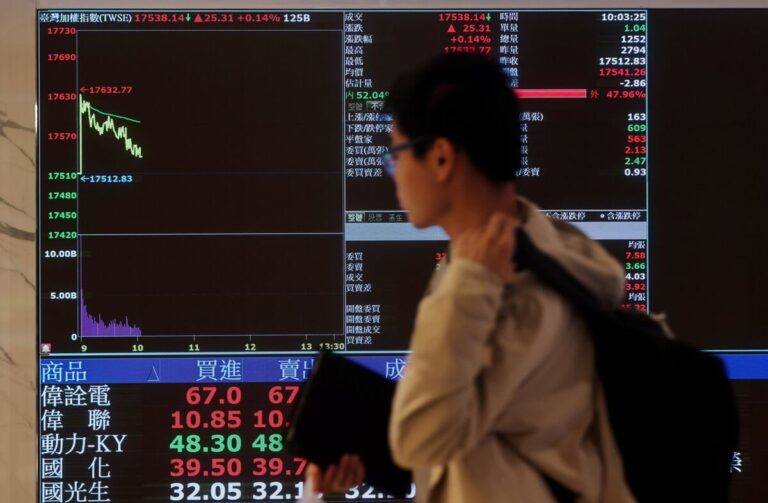
cryptobriefing+1nytimes+1reutersJapan's benchmark 10-year government bond yield climbed to 2.95% on August 31, its highest level since September 1996, as Federal Reserve Chair Kevin Warsh's hawkish remarks at the Jackson Hole Economic Symposium widened the gap between U.S. and Japanese interest rates and sent the yen sliding toward the 160-per-dollar mark.cryptobriefing+1
The move caps a turbulent stretch for Japanese government bonds that had already been under pressure from inflation concerns and expectations of further Bank of Japan tightening. It also reflects a broader pattern of rising sovereign borrowing costs across advanced economies, with median financing costs among G7 nations climbing to levels not seen in two decades.reuters+1
Speaking on August 28 in Wyoming, Warsh delivered his clearest signal yet that additional rate increases remain on the table. "We must be confident that underlying inflation is moving to our objective, clearly and at sufficient speed. Otherwise, we have work to do," he said, according to Reuters . With PCE inflation still running at 3.7%, well above the Fed's 2% target, futures markets repriced the probability of a September rate hike to roughly 60%, up from 35% before the speech.reuters+1
For Japan, every basis point the Fed adds to U.S. rates widens the interest rate differential that pulls capital out of yen-denominated assets. USD/JPY pushed through the psychologically important 160 level on August 28, trading near 159.85 to 160.20 in subsequent sessions.mtfxgroup+2
Japanese authorities have already spent heavily to slow the yen's decline. A coordinated U.S.-Japan intervention beginning July 30 — the first such joint action since 1998 — briefly pushed the currency to around 155 per dollar, according to The New York Times. Morgan Stanley estimated Japan's Ministry of Finance sold roughly $85 billion in dollars during those operations. But the rally proved short-lived, and traders have since pushed the yen back toward pre-intervention levels, a dynamic that CNBC reported has "turbo-charged" carry trades rather than deterring them.cnbc+2
Japan's yield surge is not isolated. U.S. national debt recently topped $40 trillion, France's 10-year yield has climbed above eurozone-crisis levels, and Bank of America projects record U.S. investment-grade corporate bond issuance of $2.1 trillion this year, driven partly by borrowing to fund artificial intelligence infrastructure. Anoop Singh, a former IMF Asia-Pacific director, warned that the next major financial shock is likely to originate in advanced-economy sovereign bond markets.sedaily
The September FOMC meeting is now the focal point. Whether Warsh follows through on his hawkish rhetoric — amid pressure from the Trump administration, which has called for rate cuts ahead of November's midterm elections — will determine how much further the strain on Japanese bonds and the yen intensifies.reuters+1