Newsletter Subscribe
Enter your email address below and subscribe to our newsletter
[forminator_form id="25163"]

All voices matter
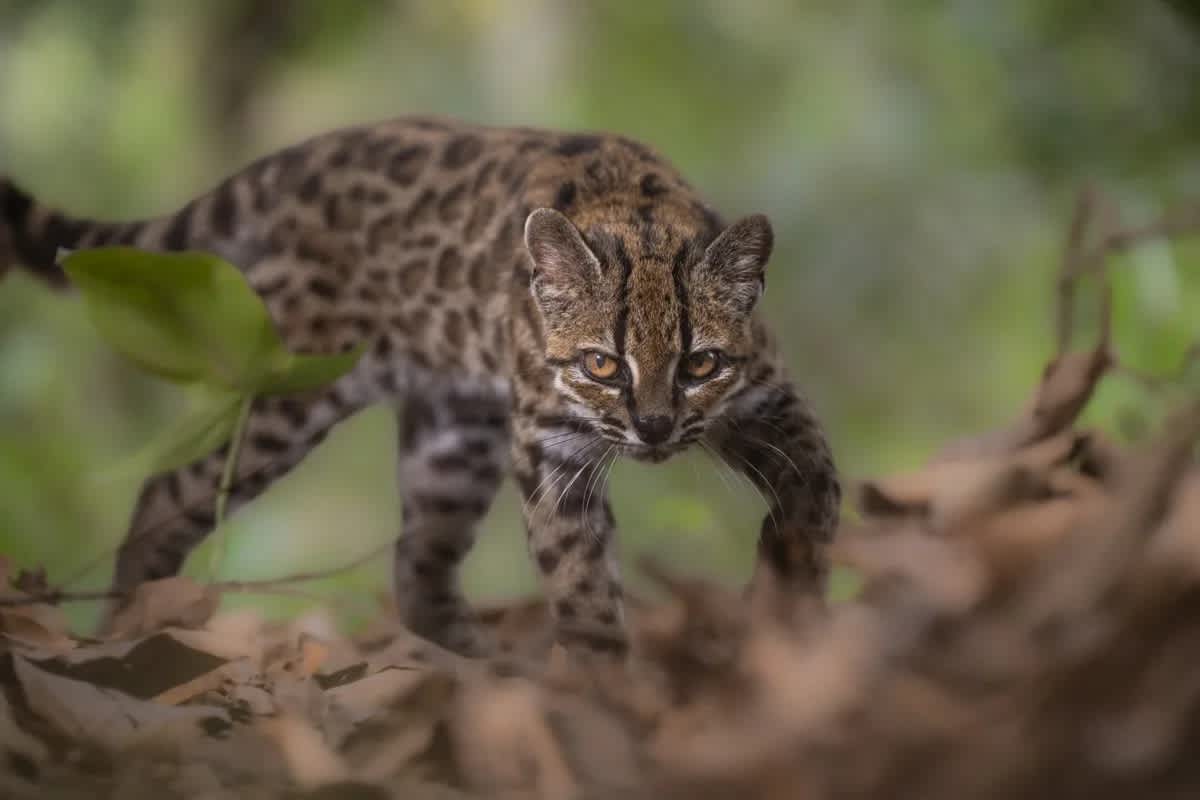
reuters+1reuters+1reutersA small, spotted wild cat living in Bolivia's cloud forests has been formally identified as a species entirely new to science — the first living cat species to be named and described in more than a century.
The feline, called Leopardus tilcayo or the tilcayo cat, was described Thursday in the journal Current Biology by an international team of researchers who analyzed the complete genomes of 38 cats across South America. Smaller than a typical house cat at roughly 18 inches long and 3 pounds, the tilcayo inhabits the Yungas, a mountainous cloud-forest region on the eastern slopes of the Andes where the mountains meet the Amazon basin.reuters+1
"No one else had named it. No one else had described it," said Paola Nogales-Ascarrunz, a National Geographic Explorer and co-lead author of the study who leads Bolivia's Felid Research and Conservation Program.nbcnews
The discovery traces back to an unusual encounter. A local family found one of the animals as a kitten near a forest road and kept it at home, believing it to be a domestic cat. After about a year of feeding it noodles, rice, and eggs, the man realized the animal was wild and brought it to the Senda Verde Wildlife Sanctuary in Bolivia. The male cat, now around 10 years old, became a key specimen in the research.nationalgeographic+1
Nogales-Ascarrunz noticed the cat's markings did not match descriptions of known tiger cat species, most of which were based on Brazilian specimens. "If you look at the spots or the tail, they really don't match," she said. Initial genetic testing produced confusing results — the DNA did not align with any recognized species. Years later, with improved genomic techniques, the team confirmed the tilcayo had diverged from its closest relatives approximately 1.4 million years ago, an evolutionary distance comparable to that between modern lions and extinct cave lions.nbcnews+2
The genomic analysis revealed that tiger cats — once classified as a single species — actually comprise five genetically distinct species. The study also identified a new subspecies in Peru, named Leopardus tigrinus antisuyo after the region of the old Inca Empire. Findings further hint that the margay, long assumed to be one species spread from Mexico to Argentina, may itself be multiple species.gizmodo+2
"We never expected this Bolivian tiger cat to be a separate species, and no one had ever proposed it as a different animal, subspecies or otherwise," said co-lead author Jonas Lescroart of the University of Antwerp.reuters
The reclassification carries direct consequences for conservation. The IUCN Red List currently treats tiger cats as two vulnerable species with declining populations, but the researchers have submitted their findings for reassessment. Species such as the tilcayo could be classified as endangered when evaluated independently. The Yungas forests face mounting pressure from deforestation, agricultural expansion, fires, and mining.livescience+1
"There are many undiscovered species out there in the world," said senior author Eduardo Eizirik of the Pontifical Catholic University of Rio Grande do Sul in Brazil, "and they are at risk of disappearing before we even discover them."reuters