Newsletter Subscribe
Enter your email address below and subscribe to our newsletter
[forminator_form id="25163"]

All voices matter
phys+1phys+1phys+1Researchers at the University of South Carolina have developed a nanoparticle-based therapy that reversed cognitive decline in mice with Alzheimer's disease by converting brain support cells into functioning neurons — a approach that avoids permanent genetic modifications and could chart a path toward regenerative treatments for the most common form of dementia.
The treatment, described in a paper published Wednesday in Cell Biomaterials, uses a polymer nanogel system called Nano-ERASER that delivers antibodies across the blood-brain barrier and into astrocytes, star-shaped cells that support neural function. Once inside, the antibodies degrade a protein called PTBP1, triggering the astrocytes to transform into neurons.sci+2
Unlike CRISPR-based gene-editing tools, Nano-ERASER does not alter DNA, making its reprogramming reversible. "We hope this can be more effective and also safer," said Peisheng Xu, a professor of pharmaceutics at the University of South Carolina and the study's corresponding author. "We don't need to worry about the potential side effects caused at the genetic level."phys
The team first tested the system on human astrocyte cultures and brain organoids designed to model Alzheimer's disease. In both cases, PTBP1 levels dropped and the converted cells proved to be functional neurons.sci+1
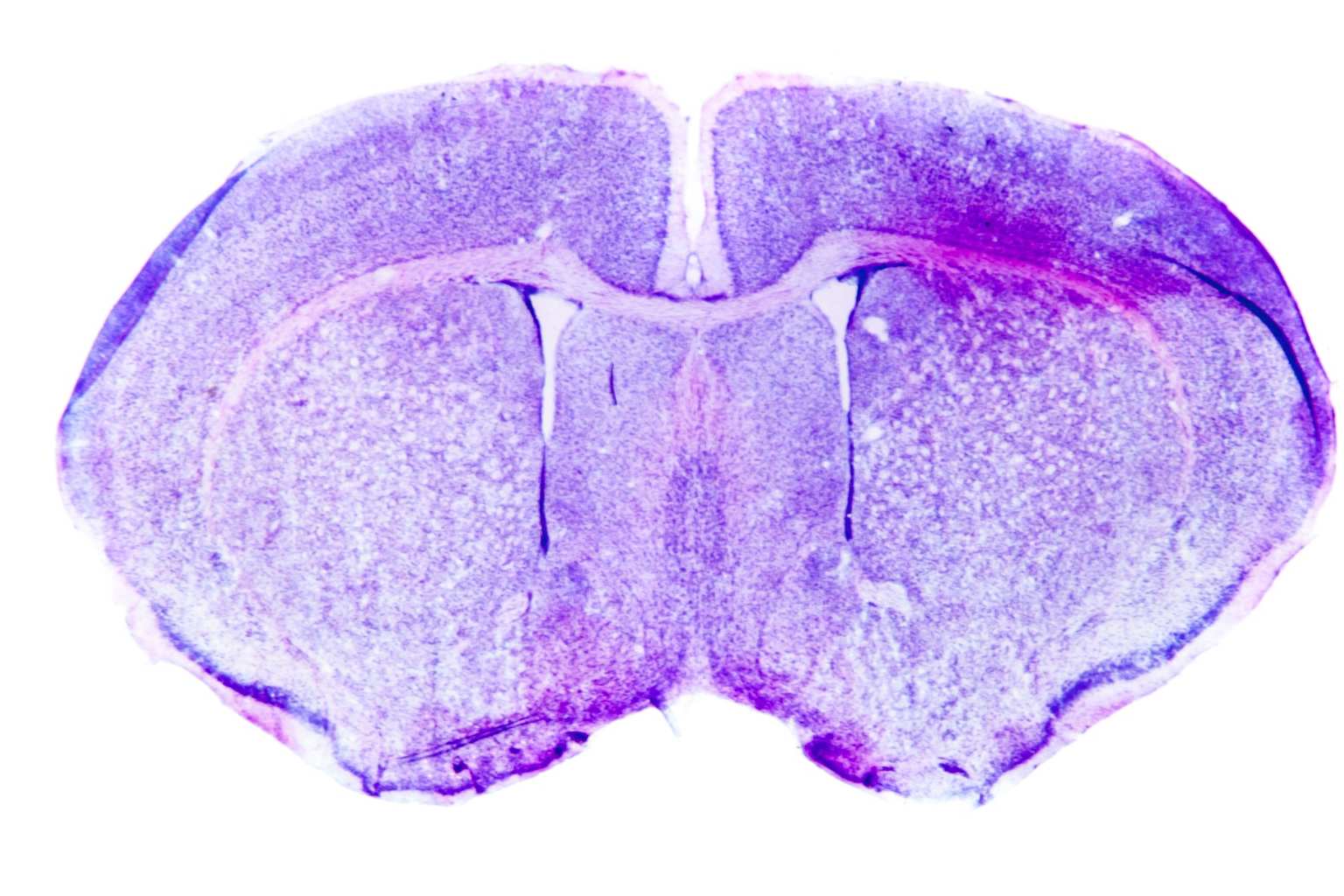
When the researchers treated mice with Alzheimer's, the animals showed recovered nesting skills and navigated a water maze more efficiently over several weeks, indicating improved learning and memory. Their brains also exhibited higher neuron density, reduced neuroinflammation, and lower amyloid-beta buildup.phys+1
"After just two injections, these mice became smarter," Xu said. "Even after one injection, we already saw these mice's behavior differ from that of untreated mice."phys
The findings add weight to a disputed question in regenerative neuroscience: whether suppressing PTBP1 alone can drive neuroregeneration in living animals. Previous research had cast doubt on this mechanism.sci
Xu emphasized that the study does not prove Nano-ERASER would work in humans but called it "a roadmap for a potential cure." The team plans to evaluate longer-term efficacy, test the platform in nonhuman primates, and eventually pursue human clinical trials.eurekalert+1