Newsletter Subscribe
Enter your email address below and subscribe to our newsletter
[forminator_form id="25163"]

All voices matter
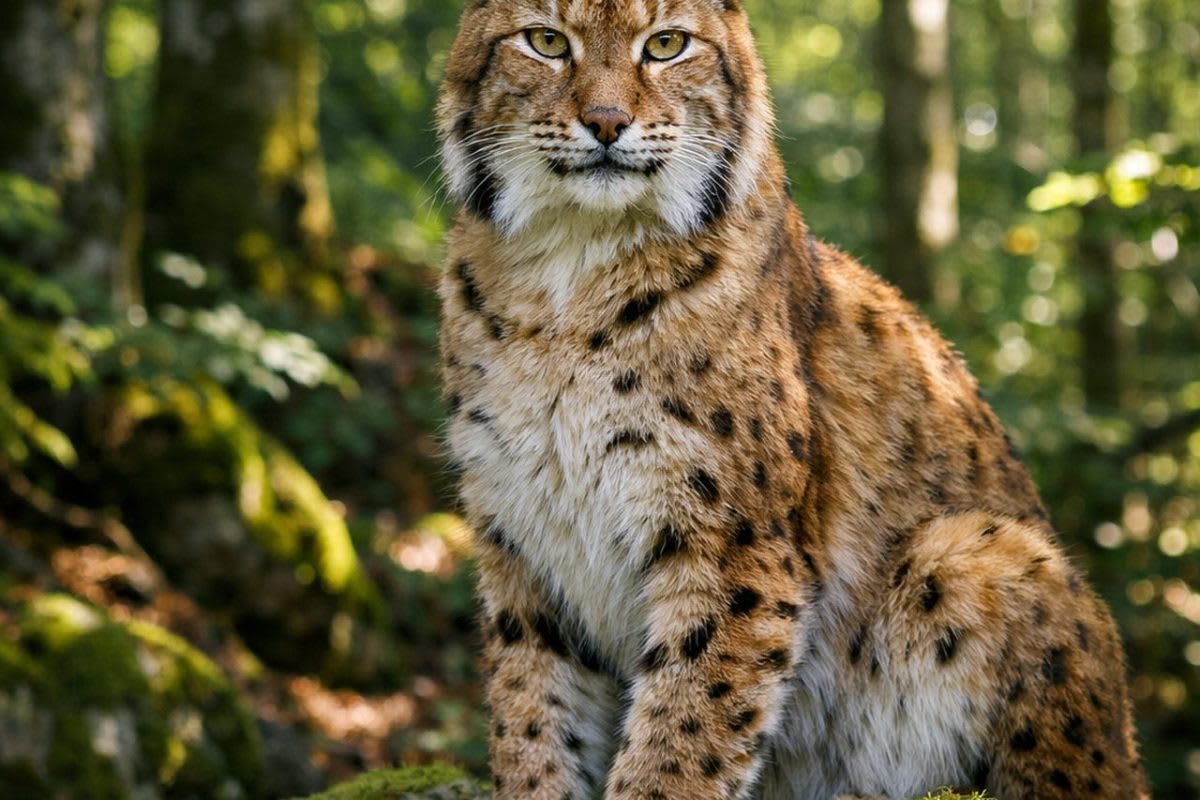
nature.com.nature.com.nature.com.A single-letter mutation in a hormone gene has been killing young Eurasian lynx in northeastern Switzerland, according to a study published November 13, 2026, in Nature Ecology & Evolution. Researchers led by the University of Bern's Institute for Fish and Wildlife Health identified a recessive loss-of-function variant in the FGF23 gene. Animals that inherit two copies develop fatal mineralization of their organs. The authors traced the allele back to the population used to found the region's lynx and say it spread through founder effects and inbreeding.nature.com
The team describes the finding as "the first direct link between reintroduction history and a lethal genetic disease in the wild." They note that no causal variant for a lethal disease had previously been identified in a wild population.nature.com
A review of 421 lynx post-mortem records from 2000 to 2023 turned up nine young animals, found between 2012 and 2022, with the same pattern of heavy mineralization in the kidneys, lungs and stomach. Pathologists judged the damage incompatible with normal organ function. Whole-genome sequencing pointed to one missense variant that swaps leucine for proline at position 13 of the FGF23 protein's signal peptide. In cell experiments, the mutant protein stayed inside cells instead of being secreted. FGF23 regulates phosphate balance in the body. In humans, loss-of-function mutations in the gene cause familial tumoral calcinosis, a disorder in which soft tissues calcify.bioengineer.org+1
The researchers genotyped 331 lynx sampled between 1981 and early 2026 and found a perfect match between genotype and disease. Of those animals, 241 had two normal copies and 78 were healthy carriers. All 12 animals with two mutant copies had the disease, including two cases found in 2024 and a 1999 specimen from southwestern Switzerland.nature.com
Lynx disappeared from central Europe and were brought back to Switzerland in the 1970s, when about 30 animals were moved from the Carpathians. The country now has roughly 360 lynx, but heterozygosity, a measure of genetic diversity, is about 30% lower than in the source population. Between 2001 and 2008, managers moved 12 lynx from the Alps and the Jura Mountains to northeastern Switzerland. Only seven of them are confirmed to have founded the new population.nature.com
The allele had been present in the Alpine population for at least 30 years. It only became visible in the northeast because most of the founders there were carriers, and they then inbred in a group of fewer than 25 independent individuals. Between 2012 and 2025, 23 of 47 healthy lynx sampled in the northeast were carriers.bioengineer.org+1
An earlier preprint of the work found inbreeding coefficients above 0.4 in all three Swiss lynx populations. The authors call for genetically diverse source populations, genomic screening of animals before they are moved, wildlife corridors and continued health surveillance. The study, they write, emphasizes "the vulnerability of small, isolated populations following reintroduction".biorxiv.org+2