Newsletter Subscribe
Enter your email address below and subscribe to our newsletter
[forminator_form id="25163"]

All voices matter
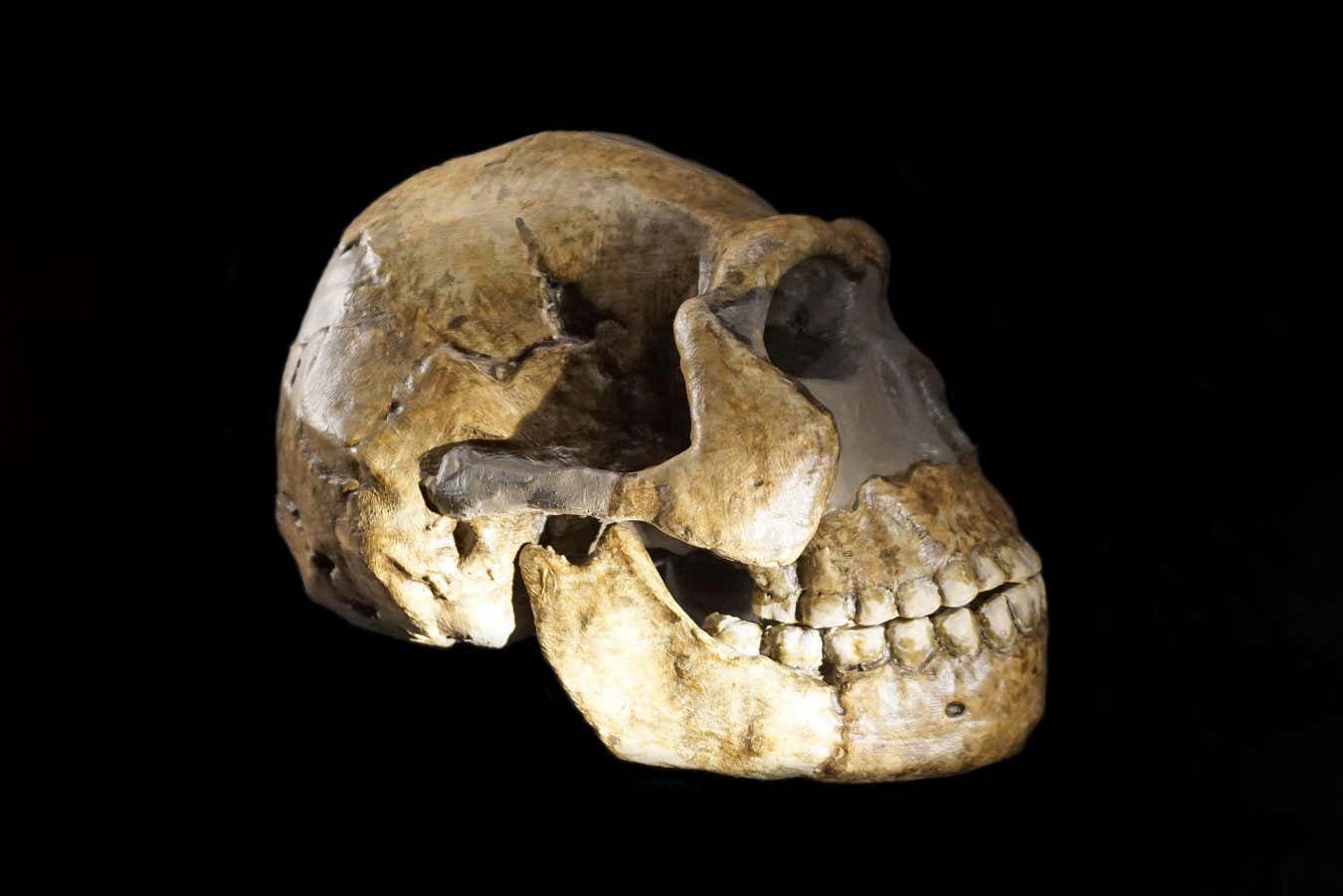
cell+1newscientist+1science+1The first-ever protein analysis of Homo naledi fossils has revealed that all known individuals recovered from South Africa's Rising Star Cave system appear to be female, raising new questions about the behavior and social structure of this enigmatic human relative.
The study, published Tuesday in the journal Cell, analyzed 23 teeth from at least 20 different Homo naledi individuals found in the cave's Dinaledi Chamber. An international team from the University of York, the University of Copenhagen, and more than 10 other institutions searched the tooth enamel for Amelogenin-Y, a protein encoded exclusively by the male Y chromosome. None of the specimens showed any trace of the male marker.mpg+2
"The lack of male markers within the group is truly fascinating," said Dr. Marc Dickinson from the University of York's Department of Chemistry. "These findings offer rare insights into a culture that has, until now, been difficult to access directly".phys
Scientists had long noted that the adult fossils from the Dinaledi Chamber looked remarkably similar, showing almost none of the physical variation expected between males and females. The new proteomic analysis offers an explanation: they may all belong to one sex.phys
The findings carry two possible interpretations, according to the researchers. If the chamber was reserved exclusively for females, it could imply complex, symbolic mortuary practices previously thought unique to modern humans. Lee Berger, who led the original discovery of Homo naledi, has argued the results support his theory that the species engaged in intentional, sex-based burial.newscientist+2
However, the team cautioned that there may be a biological explanation. The Homo naledi population may have been so isolated that the AMELY gene mutated or was deleted entirely, meaning males were present but their teeth lacked the typical genetic signature. Such deletions have been observed in living humans and even in Neanderthal DNA.science+2
Palesa Madupe, who completed the work during postdoctoral research at the University of Copenhagen, said dental enamel's durability makes it "ideal" for preserving genetic information across deep time. She added that the study "helps explain the long-standing mystery of why Homo naledi lacked significant variation".phys
Homo naledi, which lived between 335,000 and 241,000 years ago, has puzzled researchers since its discovery in 2013. As the largest extinct hominin population ever to undergo protein analysis, the Rising Star fossils now present a new challenge: determining whether the all-female composition reflects ancient cultural practices or the genetic peculiarities of a small, isolated species.mezha+3