Newsletter Subscribe
Enter your email address below and subscribe to our newsletter
[forminator_form id="25163"]

All voices matter
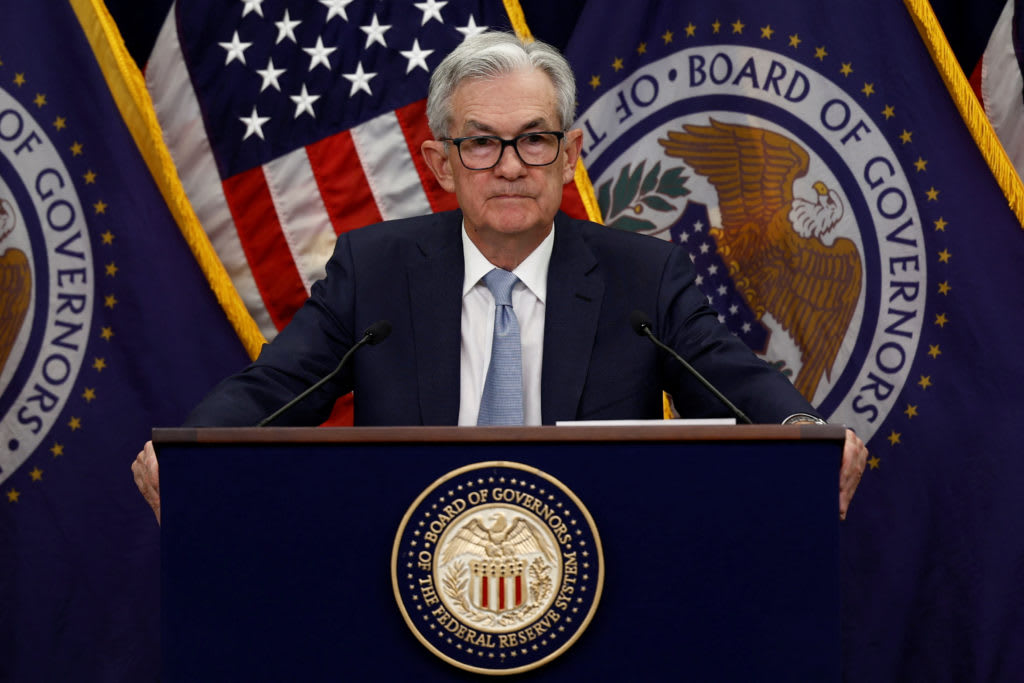
bloomberg+1businessinsider+1bloombergGlobal markets found fragile footing on Wednesday as a pause in surging oil prices and a pullback in bond yields offered relief ahead of the Federal Reserve's interest rate decision, widely expected to deliver the first hike since 2023.
The pan-European STOXX 600 rose 0.4%, with Germany's DAX up 0.4% and Spain's IBEX gaining 0.6%, according to Reuters. In Asia, MSCI's equity gauge rose 0.2%, snapping a four-day losing streak, while Japan's Topix climbed 0.5% and Australia's S&P/ASX 200 added 0.3%. S&P 500 futures edged up modestly, with Nasdaq futures also pointing higher.bloomberg+2
Markets are pricing in a greater than 90% probability of a 25-basis-point increase when the Fed announces its decision at 2 p.m. ET, according to the CME's FedWatch tool. The move would mark a sharp reversal from the start of the year, when investors had expected two rate cuts in 2026. Instead, hotter-than-expected inflation — fueled by a roughly 20% surge in Brent crude this month — and concerns over government budgets have pushed policymakers toward tightening.businessinsider+2
The 10-year Treasury yield, which breached 5% on Tuesday for the first time since 2007, eased to 4.98% in Asian trading Wednesday. Brent crude slipped 0.6% to around $108 a barrel as supply-disruption-driven gains looked stretched.bloomberg+1
The rate decision will double as a credibility test for Fed Chair Kevin Warsh, who faces pressure from multiple directions. President Trump reiterated on Sunday his preference for the lowest interest rates in the world, and Fed Governor Stephen Miran argued on Tuesday that a hike would be a mistake. Yet Warsh, who before taking office criticized his predecessor Jerome Powell for cutting rates too slowly, risks appearing politically compromised if he holds steady amid elevated inflation.xtb+1
Peter Dragicevich, Asia Pacific currency strategist at Corpay, said so much tightening is already priced in that Warsh may struggle to sound more hawkish than the market expects. "A burst of volatility is likely post the Fed announcement, and we see risks the dollar weakens after the event," he said.bloomberg
For investors bracing for fallout, historical data offers some reassurance. Across six Fed tightening cycles since 1994, stocks have averaged negative returns in the initial four months before turning positive, with the S&P 500 averaging a 6.7% gain and a median return of 10.7% twelve months after the first hike, according to LPL Financial data. Citi Citigroup Inc. strategists echoed that finding, noting that global equities "tend to wobble around the start of Fed hiking cycles, while still rising on average 6-12 months later," and maintained their call for earnings-driven gains through mid-2027.inc+1
Still, the equity risk premium — the gap between the S&P 500's earnings yield and the 10-year Treasury yield — sits at its lowest level since 2002, meaning stocks have little cushion if yields continue to climb.businessinsider