Newsletter Subscribe
Enter your email address below and subscribe to our newsletter
[forminator_form id="25163"]

All voices matter
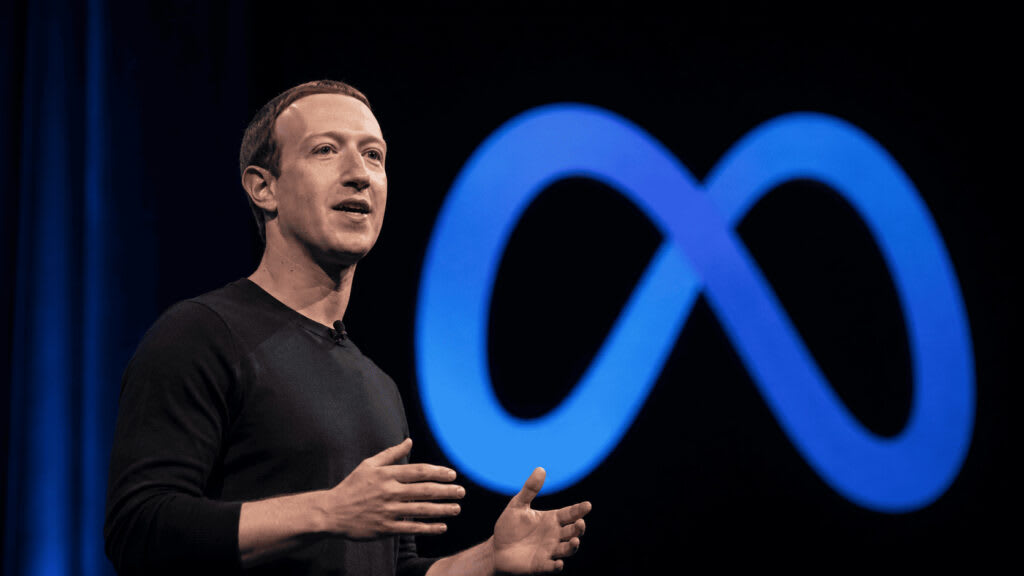
bbc+1wionewsbbc+1Meta Platforms CEO Mark Zuckerberg published a sweeping 6,500-word open letter on Monday titled "The Future is for Everyone: The Path to a Positive AI Future," arguing that broadly distributing superintelligent AI is not just an economic opportunity but a safety mechanism against dangerous concentrations of power. The essay was released alongside Muse Glimmer, a new open-weight AI model that can run on a single consumer graphics card.bbc+1
"We propose a philosophy based on individual empowerment as the source of prosperity, invention as the primary purpose of superintelligence, and balance of power as the foundation of safety," Zuckerberg wrote.wionews
The manifesto envisions a future where every person has access to a "personal superintelligence" — AI-powered tutors, lawyers, and agents working on their behalf around the clock. Zuckerberg also used the essay to lobby Washington directly, arguing that U.S. restrictions on open-source AI and data distillation risk ceding ground to China.bastillepost
Muse Glimmer is a 30-billion-parameter multimodal model released under the permissive Apache 2.0 licence, supporting over 100 languages and fitting under 20GB when quantized — small enough for a desktop GPU. But Meta's more powerful model, Muse Spark, remains locked behind its APIs, accessible only through the company's own infrastructure.techcrunch+2
This dual approach has drawn scrutiny. As TechCrunch's Equity podcast noted, Zuckerberg's vision of AI "for everyone" comes "with some asterisks." Meta is open-sourcing the student model while keeping the teacher proprietary — a tension the essay itself does not fully address.techcrunch
Ben Goertzel, CEO of SingularityNET and often called the "Father of AGI," offered pointed criticism in an interview with Benzinga. He said Zuckerberg performs "this slide, smoothly, and I suspect not entirely by accident, from 'distributed power' to 'distributed access,' and those are just not the same animal."benzinga
Goertzel argued that billions of users receiving AI assistants that run on Meta's data centers, trained with Meta's methods, and governed by Meta's board amounts to "the old client-server internet wearing a friendlier UI."benzinga
The BBC reported that the manifesto fits a growing pattern of tech executives writing lengthy essays to shape public perception of AI at a moment when regulators and the public are increasingly skeptical. Economics blogger Noah Smith told the BBC that the stakes justify the format: "I think they all feel like it's such an important moment that it's incumbent upon them to do whatever they can to shape the direction that this technology is going."bbc
The essay also carries commercial logic. Meta earns revenue through advertising, not by selling AI model access — meaning open weights commoditize the layer its rivals are trying to monetize. Meta has committed up to $145 billion in AI infrastructure spending this year and announced a $1 billion community fund for regions hosting its data centers.wionews+1
The manifesto's defence of model distillation arrives weeks after the Trump administration warned that "open source is not open season on American IP," threatening sanctions against a Chinese lab accused of covertly distilling a U.S. model. Zuckerberg wrote: "Some have tried to frame distillation as harmful, but I think it is important to protect the principle that you can learn from anything you can observe."bastillepost+1
Whether the argument is more or less persuasive given that its author benefits either way, as WION News observed, "depends on how much weight you give to the fact that the person making it benefits either way."wionews