Newsletter Subscribe
Enter your email address below and subscribe to our newsletter
[forminator_form id="25163"]

All voices matter
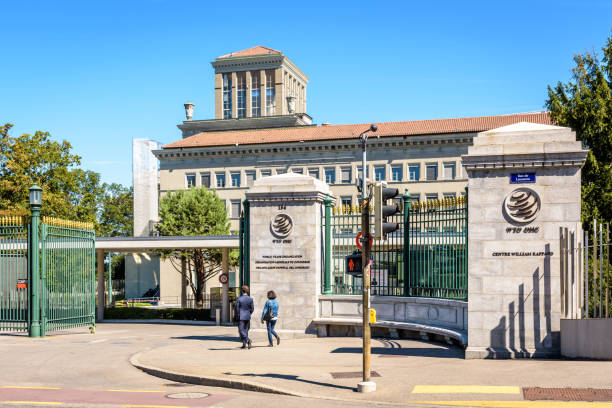
thefact+1thefactthefact+1The World Trade Organization released its World Trade Report 2026 on Tuesday, warning that failure to modernize the global trading system could shrink world output by as much as 10%, while strengthening multilateral cooperation could add roughly $3 trillion to global GDP by 2050.thefact+1
The report, titled "A Critical Juncture for the World Trading System," describes the current moment as the most serious and sustained disruption to rules-based trade in the system's 80-year history. It frames escalating tariff conflicts as a global "Prisoner's Dilemma," where each government has an incentive to protect its own market, but all end up worse off when everyone does the same.economictimes.indiatimes+1
The WTO lays out three scenarios for the future of global trade. Under a strengthened multilateral framework — with broader market-opening commitments, new disciplines in digital trade and services, and wider membership — global GDP could rise 2.9% and exports could climb 17.9% by 2050.news.cgtn+1
The alternatives are far grimmer. A "geo-fragmented world" split along geopolitical lines would see GDP fall 5.1% and exports drop 18.6%. A patchwork of bilateral free-trade agreements replacing multilateral cooperation would fare worse still, with GDP down 6.9% and exports down 26.9%. Together, the gap between the best and worst outcomes amounts to roughly 5 to 10% of global real GDP.thefact+1
The report highlights a stark inequality in the potential fallout. Least-developed countries, which together account for less than 1% of world trade, stand to lose disproportionately from fragmentation — nearly four times more than wealthier economies. Conversely, under the cooperation scenario, their GDP could rise by 7.7% from lower tariffs and trade costs.newsbytesapp+1
WTO Director-General Ngozi Okonjo-Iweala said the founding logic of the system — that economies benefit more from cooperating than acting alone — "remains just as relevant today". She acknowledged, however, that the global trading landscape has changed and that the status quo cannot hold.thefact
The report identifies four forces driving pressure on the system: shifts in economic power, growing use of industrial policy alongside level-playing-field concerns, changes in trade patterns from digitalization and global value chains, and heightened geopolitical tension. Rather than prescribing a specific reform roadmap, the WTO concludes that protecting past gains "does not mean keeping things as they are" — the task is to adapt cooperation to a more multipolar world while preserving the openness and predictability that made the system work.thefact