Newsletter Subscribe
Enter your email address below and subscribe to our newsletter
[forminator_form id="25163"]

All voices matter
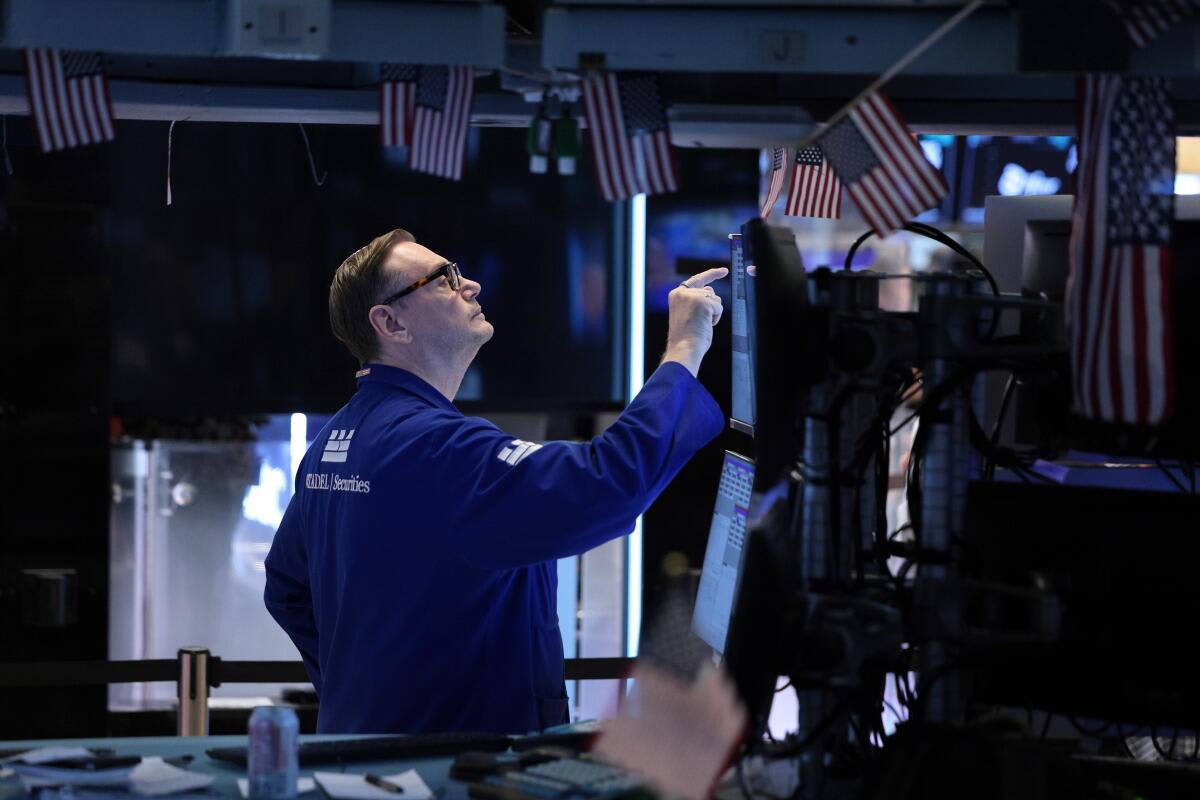
capitalgazette.com.reuters.com.reuters.com.businesstimes.com.sg.Investors have spent the week pulling money out of artificial intelligence stocks. They are betting that the Democratic Party's sweep in the Nov. 3 midterm elections will slow construction of the data centers behind the AI boom. The Washington Post reported that Democrats, emboldened by their landslide, now control Washington and several key state capitals, and that this has arrived alongside a sudden chill in financing. The combination threatens a boom that has been driving U.S. economic growth and stock values.washingtonpost.com
On Thursday, Nov. 5, the Nasdaq Composite fell 5.56%, its steepest drop in 19 months. Democrats had flipped seven Senate seats, gained at least 39 House seats and won five governorships, Reuters Thomson Reuters Corporation reported. Chipmakers took the hardest hits. Nvidia lost 9.3%, AMD Advanced Micro Devices, Inc. dropped 17.3% and Micron fell 17.5%, according to CNBC Comcast Corporation . Data-center-heavy cloud providers such as CoreWeave also declined. AI shares bounced back partly on Friday, the AP reported.reuters.com+2
The worries have specific causes. Goldman Sachs estimated that Democratic statehouse wins in Texas, Michigan and Georgia could put about 45% of planned U.S. data center capacity at risk, Reuters reported. Gina Hinojosa, the governor-elect of Texas, campaigned on a moratorium on new data center approvals. Congressional Democrats are also preparing bills for when they take control of Congress in January. The bills would protect consumers from higher electricity costs tied to data centers, require independent testing of advanced AI systems and clarify when AI companies are liable for harm their products cause.reuters.com+1
On Friday, IMF Managing Director Kristalina Georgieva said central bankers will need to account for weaker AI-driven growth as they fight inflation. "Should there be a slowdown in the AI-driven growth impulse, it would need to be factored in as central banks assess the necessary steps in the fight against stubborn inflation," she said, according to the Business Times. Under a downside scenario the IMF published in October, a sharp cut in AI investment could leave global GDP 1.1% below the baseline forecast by 2028 and U.S. output 1.8% lower, The Nation reported.nationthailand.com+1
The sell-off spread to Asia. South Korea's Kospi fell nearly 11% over the two sessions after the election, and Samsung Electronics and SK Hynix dropped sharply, BigGo Finance reported. Semiconductors made up 49% of South Korea's exports in October. Forecasts for the country's growth next year now range from 2.2% to 2.9%, the top end being the Bank of Korea's estimate.finance.biggo.com
Not everyone expects the curbs to arrive. Kim Mi-ru of the Korea Development Institute said construction already underway is hard to stop, adding, "The problem is the year after next." Seoul's finance minister, Lee Hyung-il, said experts expect AI investment to continue and that "the fundamentals of our economy are more solid than ever," according to the same report.finance.biggo.com