Newsletter Subscribe
Enter your email address below and subscribe to our newsletter
[forminator_form id="25163"]

All voices matter
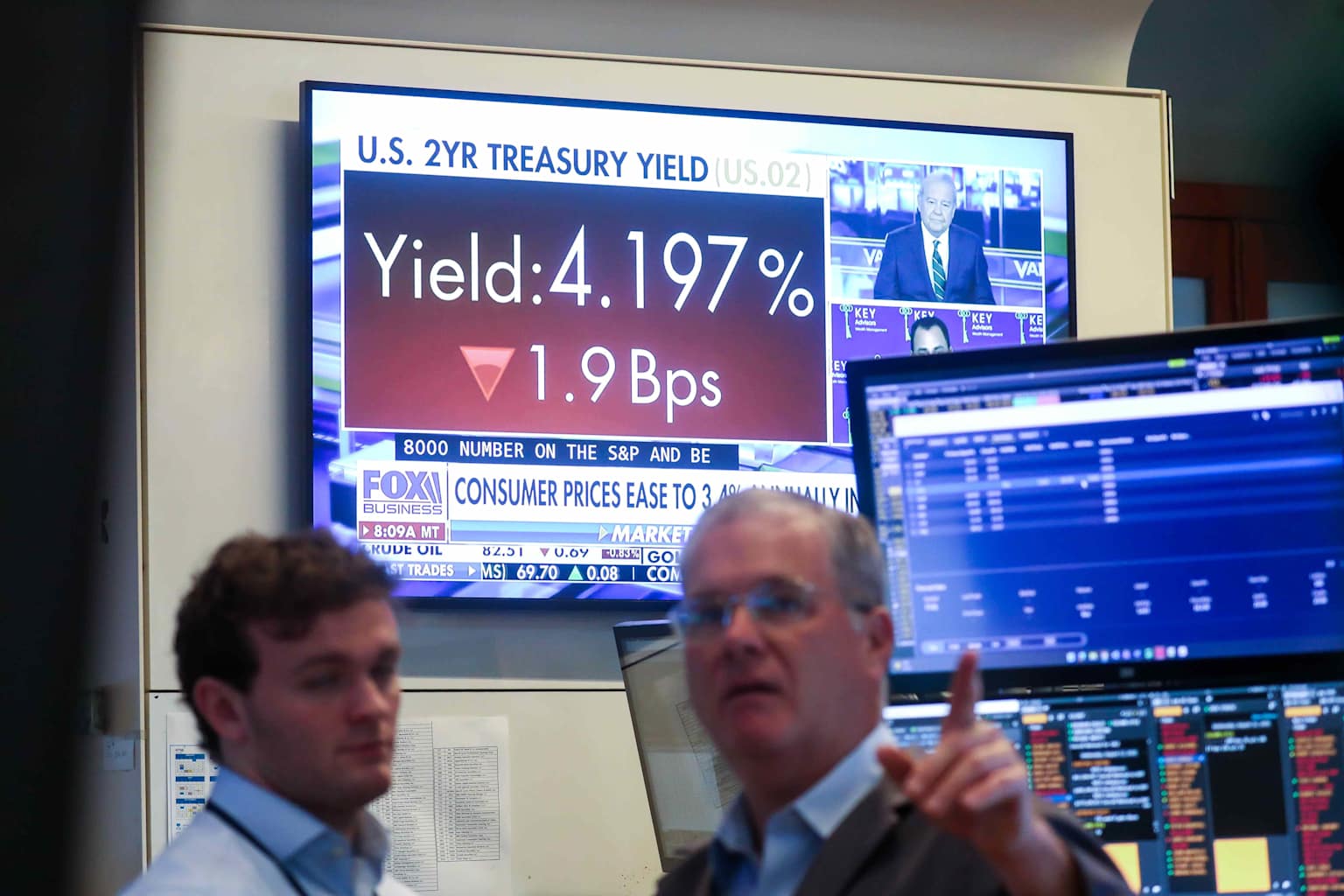
wsj+1finance.yahoo+1reuters+1The 30-year U.S. Treasury yield surged to 5.34% on Tuesday, its highest level since 2007, as a sweeping global bond selloff driven by inflation fears, ballooning fiscal deficits, and geopolitical turmoil sent long-term borrowing costs soaring across major economies.finance.yahoo+2
The sell-off forced governments from Washington to Tokyo to confront sharply higher financing costs, with ripple effects already reaching mortgage rates, corporate loans, and consumer credit. By Wednesday, yields had stabilized somewhat after the U.S. Treasury announced it would at least double its bond buyback program, easing some pressure on the long end of the curve.finance.yahoo+1
The pain extended well beyond U.S. borders. France and Germany saw 10-year bond yields climb to their highest since 2008 and 2011, respectively, while Japan's 10-year yield hit a 30-year high. The U.K.'s long-dated gilt yields neared 6%.kucoin+2
Reuters Thomson Reuters Corporation reported that long-term borrowing costs from the U.S. to Germany and Japan hit their highest in decades on Tuesday "due to ballooning government debt and geopolitics, raising borrowing costs for companies and households and complicating policy."reuters
"The market is responding to a world of greater fiscal, geopolitical and policy uncertainty by demanding higher compensation for holding long-dated debt," Jonas Goltermann, chief markets economist at Capital Economics, said in a note.finance.yahoo
Analysts point to a confluence of forces. The U.S.-Israeli war with Iran has pushed Brent crude above $91 per barrel, reigniting inflation concerns. Fiscal deficits are expanding procyclically — the U.S. annual deficit is nearing $2 trillion and national debt approaching $40 trillion — while interest payments on public debt have reached $1.17 trillion this fiscal year, up 15% year-over-year.investopedia+3
Simultaneously, tech companies issuing massive volumes of long-term corporate bonds to finance AI infrastructure are competing directly with government debt for buyers. Barclays forecasts U.S. investment-grade corporate bond issuance will reach a record $1.9 trillion this year.asiae
The shift in the buyer base compounds the problem. Traditional price-insensitive holders like central banks are retreating, leaving governments reliant on private investors who demand higher yields. Federal Reserve officials discussed this structural change at the June FOMC meeting.kucoin+1
Fed Chairman Kevin Warsh's decision to reduce forward guidance has added uncertainty, particularly for long-duration bonds. "The further you go out on the curve, the less uncertainty you want," said Kevin Flanagan, head of fixed income strategy at WisdomTree.investopedia+1
U.S. equities fell Tuesday, with the S&P 500 dropping 0.5% and the Nasdaq Composite declining 1% as investors weighed whether sustainably higher borrowing costs would erode corporate profitability.finance.yahoo
For the Trump administration facing midterm elections in November, the elevated yields present a political challenge as higher government financing costs transmit directly to consumer borrowing rates.kucoin+1