



Newsletter Subscribe
Enter your email address below and subscribe to our newsletter
[forminator_form id="25163"]

All voices matter
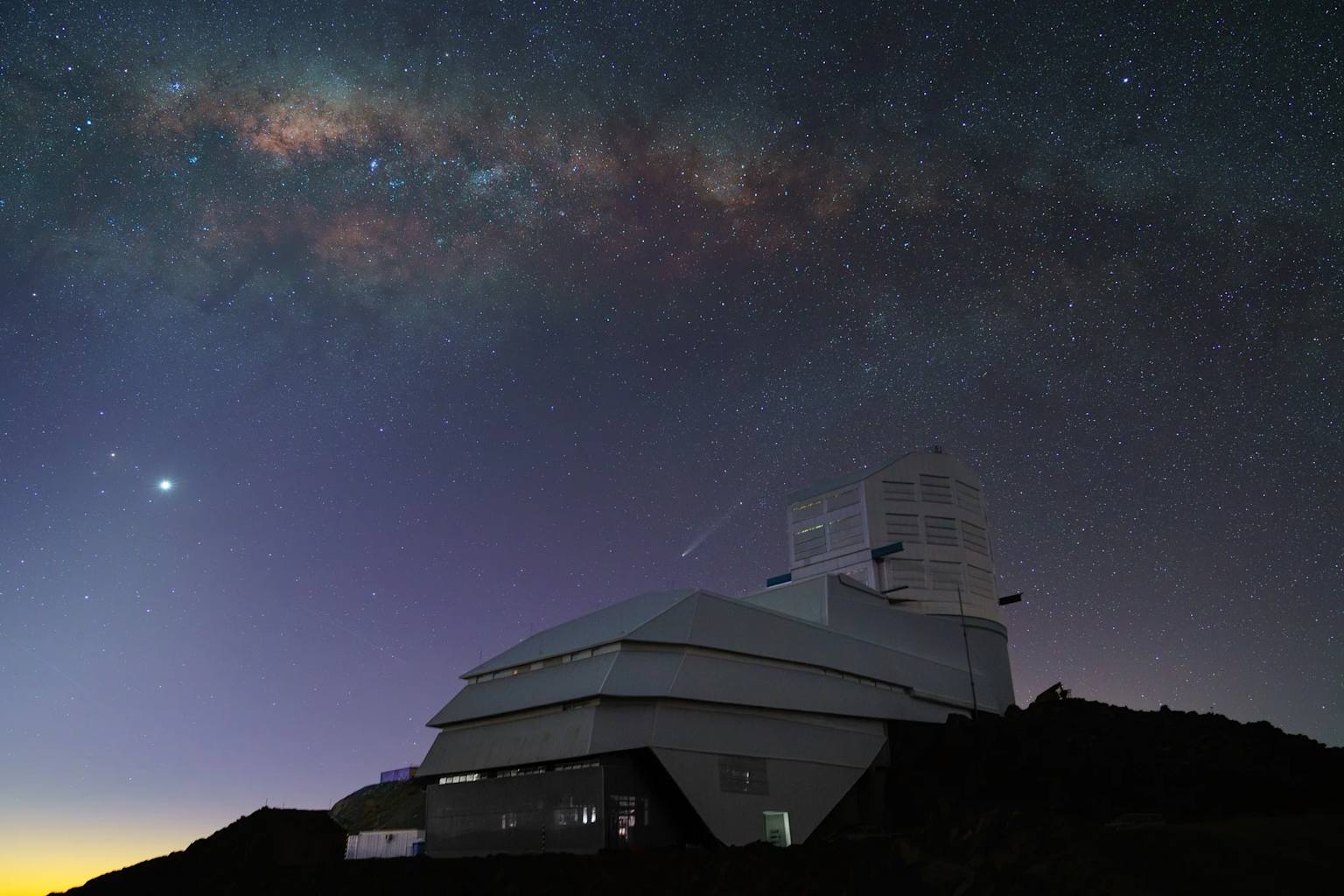
rubinobservatory.org.nsf.gov.space.com+1.The NSF–DOE Vera C. Rubin Observatory has found an icy world orbiting beyond Pluto that may be one of the largest dwarf planet candidates ever discovered in the outer solar system. The International Astronomical Union's Minor Planet Center announced the object, provisionally designated 2026 ED138, on Oct. 27, according to Rubin Observatory. The object is about 46 astronomical units from the Sun, and the team estimates it is 600 to 1,500 kilometers across. Icy bodies that large are expected to be round, which is the main physical test for a dwarf planet.rubinobservatory.org
Mario Jurić of the University of Washington, Rubin's solar system lead scientist, presented the results with discoverer Matthew Holman at the American Astronomical Society's Division for Planetary Sciences meeting in Spokane, Washington, GeekWire reported. If confirmed, ED138 would join the five dwarf planets the IAU recognizes: Pluto, Ceres, Eris, Haumea and Makemake.nsf.gov+1
On the evening of Oct. 13, Holman, of the Center for Astrophysics | Harvard & Smithsonian, was running Rubin data through search code he built with colleague Kevin Napier. The software compares billions of detections to find the ones that belong to the same moving objectrubinobservatory.org. "My first reaction was one of excited disbelief," Holman said. "Objects like this are very rare, so I immediately started checking whether I or the code had done something wrong."
Rubin's telescope had imaged the object 30 times on 20 nights between March 4 and July 11. Archival images from the Dark Energy Camera in Chile, found by the Asteroid Institute's ADAM Precovery service, go back to 2016. Together they give scientists more than a decade of the object's orbit. The object sits near the plane of the Milky Way, where millions of background stars probably kept it hidden until now. Its orbit is tilted almost 25 degrees, which suggests Neptune's gravity pushed it out of its original path.rubinobservatory.org+1
The wide size range comes from not knowing how reflective the surface is. "It could either be a very reflective object that's smaller or a very dark object that's bigger," Holman told GBH. Infrared observations are needed to pin down its size, and that is the kind of work NASA's James Webb Space Telescope is built for, Space.com noted. Jurić added that stellar occultations, thermal measurements and light curves could help show whether the object is round.space.com+2
ED138 is the latest of many Rubin discoveries. In April, the team submitted more than 11,000 new asteroids, including about 380 trans-Neptunian objects, before the Legacy Survey of Space and Time began in June. "Rubin will image the whole southern sky again and again for ten years, so any others hiding in the places earlier surveys skipped are now within reach," Holman said.rubinobservatory.org


