Newsletter Subscribe
Enter your email address below and subscribe to our newsletter
[forminator_form id="25163"]

All voices matter
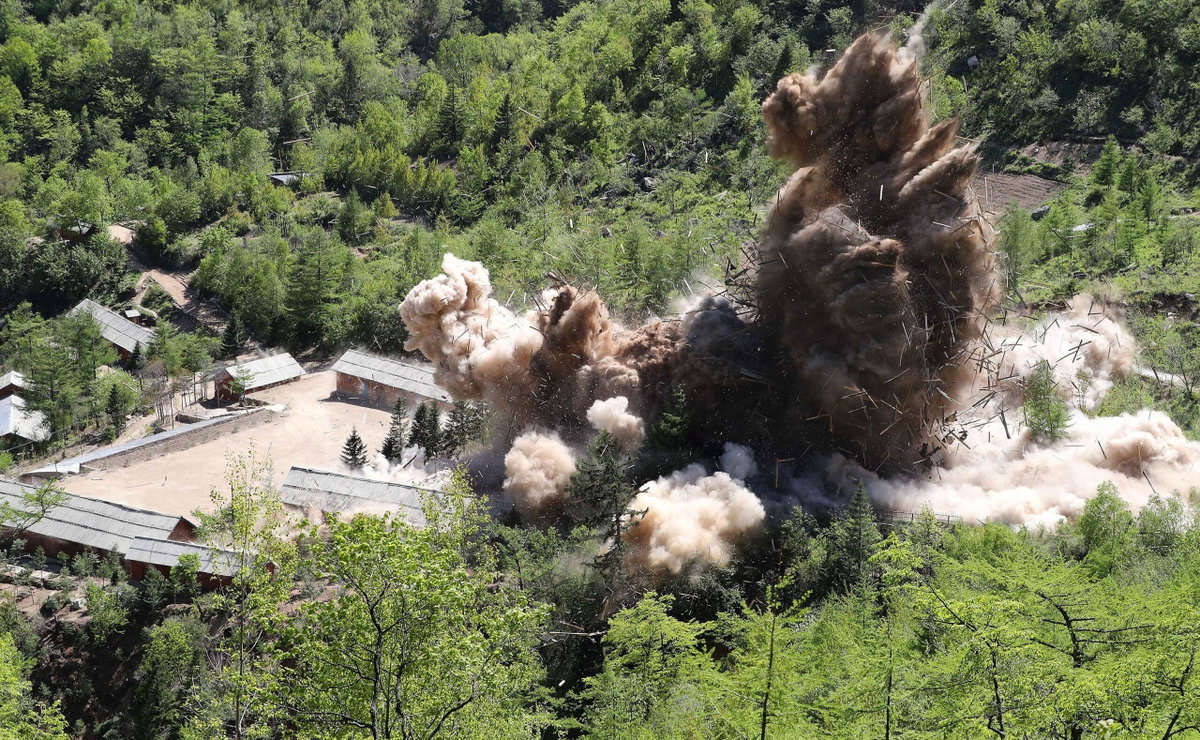
cnn+1sciencealert+1scientificamerican+1Underground nuclear tests at North Korea's Punggye-ri site beneath Mount Mantap have reactivated dormant fault lines, producing nearly 1,400 earthquakes between 2008 and 2025 — with seismic activity continuing to intensify years after the final detonation, according to a study published Thursday in the journal Science.cnn+1
The research, led by Xingli Fan of Chengdu University of Technology and Kwang-Hee Kim of South Korea's Pusan National University, analyzed 17 years of seismic data from monitoring stations in China and South Korea. The team identified 1,399 previously unrecognized earthquakes near Mount Mantap, a region where major catalogs recorded no crustal earthquakes within 50 kilometers of the site between 1904 and 2017.sciencealert+1
North Korea conducted six underground nuclear tests at Punggye-ri between 2006 and 2017. The final test on September 3, 2017, was by far the most powerful, with an estimated yield of 100 to 250 kilotons — at least 10 times the energy of the Hiroshima bomb. The U.S. Geological Survey registered it as a magnitude 6.3 seismic event.gizmodo+1
Unlike typical post-explosion patterns, where tremors fade within days or weeks, seismic activity at Mount Mantap began roughly three weeks after the 2017 test and has been escalating ever since. "Instead of being strongest immediately after the explosion and then fading, the activity increased over several years," Kim told ScienceAlert.sciencealert
When the team plotted the precise locations of 955 earthquakes, they clustered along two parallel fault structures extending north-northwest from the test site — evidence that the blasts reactivated preexisting fractures in what had been stable continental crust.dongascience+1
Columbia University seismologist Paul Richards, who was not involved in the research, called the situation "potentially dangerous," asking: "Will it lead to even bigger earthquakes?" The longer of the two fault structures extends about 24 kilometers; if it ruptured along its full length, the researchers estimate it could theoretically produce a magnitude 6.4 earthquake.scientificamerican+1
Sunyoung Park, a geophysicist at the University of Chicago, said the explosions likely fractured rock and created pathways for water infiltration, which increases pore pressure and makes faults easier to slip — a process that unfolds over years.cnn
The findings carry implications beyond geology. The researchers warned that persistent seismicity "may complicate attribution and blur distinctions between explosion-related and tectonic events" — a challenge for verification under the Comprehensive Nuclear-Test-Ban Treaty. The International Atomic Energy Agency reported that North Korea began restoring test tunnels at Punggye-ri in March 2022, and a 2025 U.S. Defense Intelligence Agency report stated the site had been restored.gizmodo+2
"The Earth's crust has a long memory," Park said.cnn