Newsletter Subscribe
Enter your email address below and subscribe to our newsletter
[forminator_form id="25163"]

All voices matter
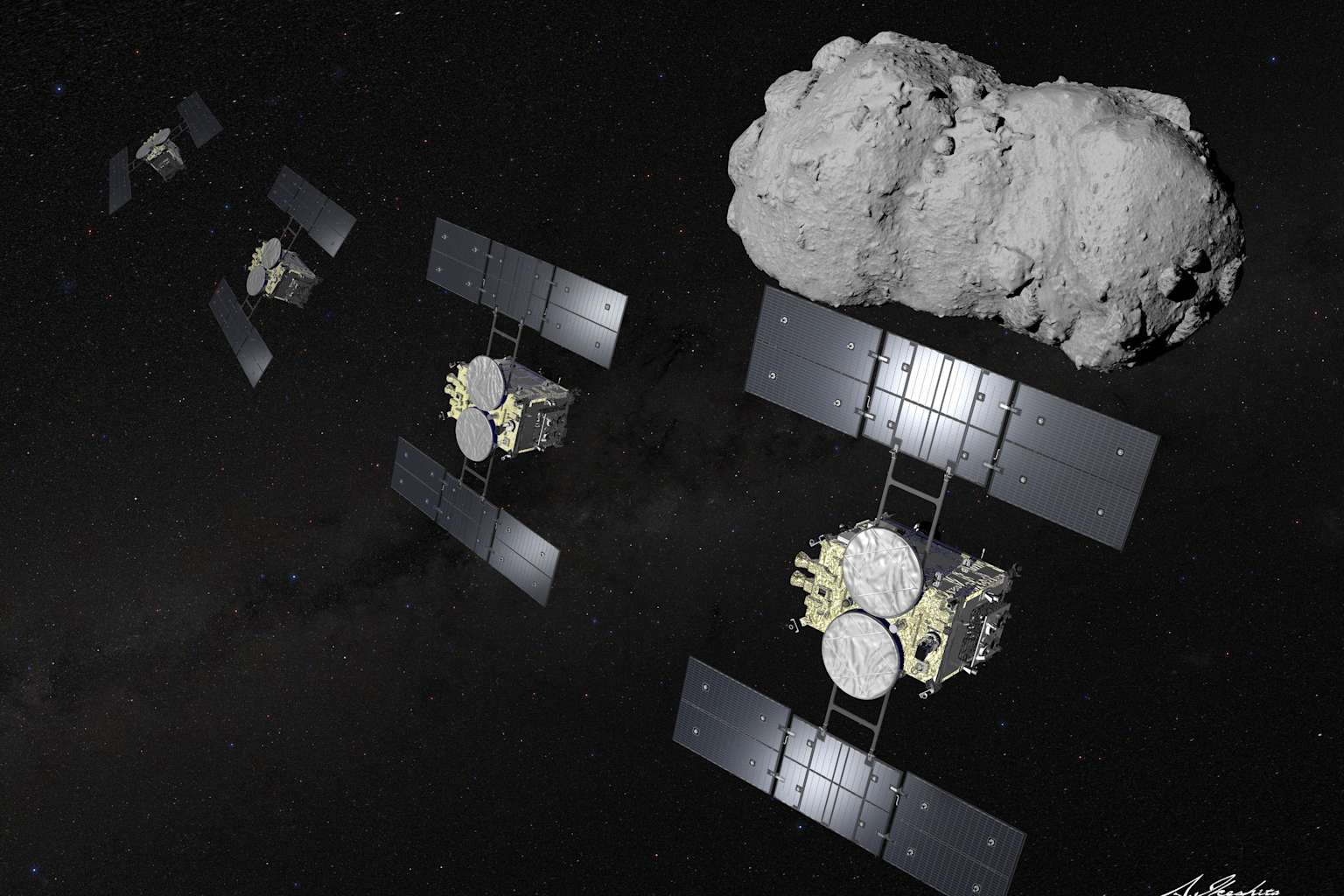
japantimes+1global.jaxa+1isas.jaxa+1Japan's Hayabusa2 spacecraft flew past the asteroid Torifune on Sunday evening, passing within close range of the roughly 450-meter-wide space rock at a relative speed of about 5 kilometers per second — approximately 18,000 kilometers per hour — in a maneuver designed to advance planetary defense technology.nhk+1
The flyby took place at around 6:30 p.m. Japan Standard Time on July 5, with the probe approaching as close as approximately 800 meters from the asteroid's center, according to the Japan Aerospace Exploration Agency (JAXA). During the encounter, Hayabusa2's onboard camera attempted to photograph Torifune from less than 1 kilometer away while hurtling past at high speed — one of the closest encounters ever attempted by a spacecraft of its kind.japantimes+3
JAXA said the flyby aimed to demonstrate high-precision orbital guidance and develop technology applicable to intentionally altering an asteroid's orbit, a capability central to planetary defense — the effort to protect Earth from potential asteroid impacts. The agency plans to obtain a range of science data in addition to images captured during the pass.global.jaxa+1
The encounter marks a new chapter for Hayabusa2, which completed its primary mission in December 2020 when it delivered a capsule containing samples from the asteroid Ryugu back to Earth. Since then, the spacecraft has been operating on an extended mission, with Torifune serving as a key waypoint before its planned rendezvous with the much smaller asteroid 1998 KY26 in 2031. Two Earth swing-bys in 2027 and 2028 are also planned along the route.isas.jaxa+2
The mission positions Japan alongside the United States, which demonstrated asteroid deflection technology with NASA's DART mission in 2022, in the growing field of planetary defense. JAXA has stated its goal is to use the success of this flyby to contribute to future efforts to alter the trajectories of asteroids that may threaten Earth.nhk+1
Confirmation of the flyby's full results, including images of Torifune, is expected in the coming days as data is transmitted back across the vast distance of deep space.