Newsletter Subscribe
Enter your email address below and subscribe to our newsletter
[forminator_form id="25163"]

All voices matter
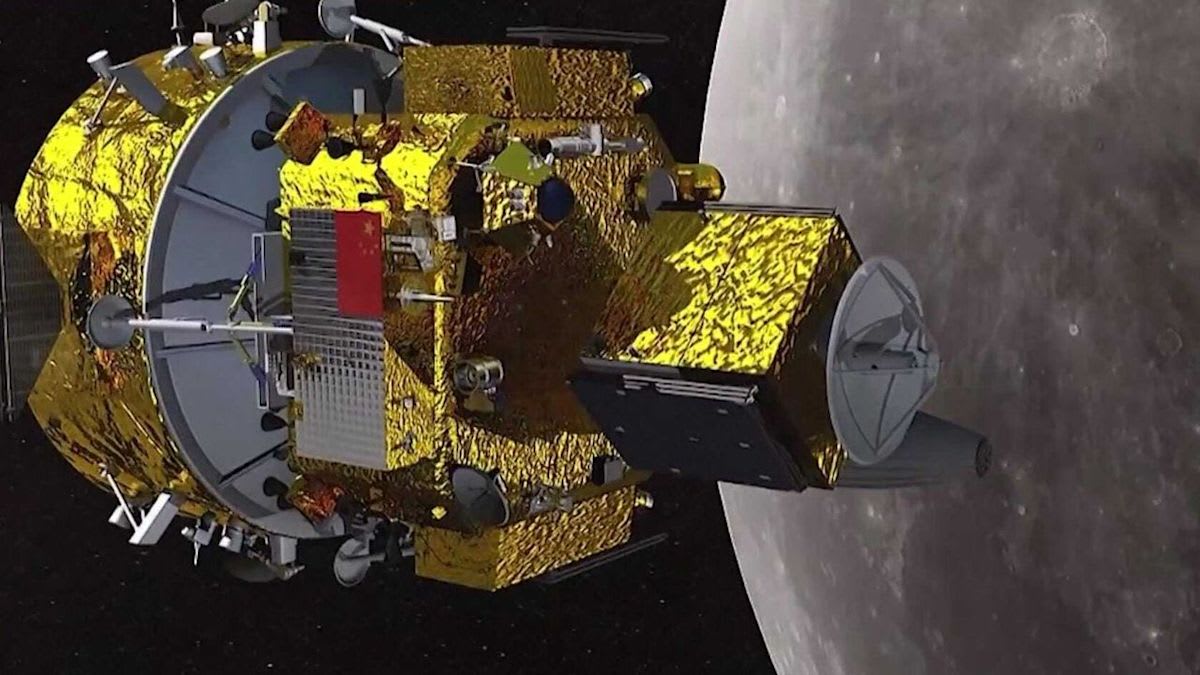
spacenews+1spacespaceChina is poised to launch its Chang'e 7 lunar probe on Monday, August 24, in what scientists are calling the most ambitious robotic moon mission ever attempted. The spacecraft, mounted atop a Long March 5 rocket, was rolled out to the launch pad at Wenchang Space Launch Site on Wednesday and is targeting a launch window opening at 0000 UTC on August 24.spacenews+2
Chang'e 7 comprises an orbiter, lander, rover, and mini-hopping probe — a combination unprecedented in lunar exploration. After several months in lunar orbit, the lander is set to touch down on the illuminated rim of Shackleton Crater near the moon's south pole.space+1
The mission's primary objective is to search for water ice in permanently shadowed craters. The hopper will use active shock-absorption technology to leap from sunlit areas into dark craters where water ice may exist. "Now China is going to look for it. And we're using many methods, from searching the surface to exploring inside craters," said Ye Peijian, an academician with the Chinese Academy of Sciences, in comments to China Central Television.space
James Head, a moon scientist at Brown University, described the mission's scope in stark terms: "Chang'e-7 is the most ambitious, comprehensive, and complex robotic lunar mission ever attempted by any nation or entity".space
The spacecraft carries instruments from multiple nations, including a Russian dust-detection suite, an Italian laser retroreflector, a Thai-Chinese cosmic ray detector, a Swiss Earth radiation spectrometer, and a camera jointly developed by the Bahrain and Egyptian space agencies. A compact wide-field optical telescope built by the International Lunar Observatory Association and the University of Hong Kong will attempt the first astronomical color imagery from the lunar surface.space
Chang'e 7 is the first of two robotic precursor missions — with Chang'e 8 planned for around 2028 — designed to support China's International Lunar Research Station. Together, they lay the groundwork for what Zhang Jingbo, a spokesman for the China Manned Space Agency, described as the goal of "achieving the first Chinese landing on the moon by 2030".space
The launch comes amid growing public excitement around China's space program. On Hainan island, where Wenchang is located, space launches have become tourist attractions, drawing thousands to nearby beaches. The interest extends beyond launch-watching — from spacesuit costume rentals at Inner Mongolia's volcanic parks to giant astronaut sculptures in Beijing's art districts, space exploration has become woven into Chinese popular culture.asiaone