Newsletter Subscribe
Enter your email address below and subscribe to our newsletter
[forminator_form id="25163"]

All voices matter
WTAQ News Talk | 97.5 FM · 1360 AM | Green Bay, WI+1aerotime.aero+1fl360aero.comThe race to build autonomous fighter jets capable of flying alongside crewed warplanes has become one of the most fiercely contested competitions in the defense industry, with Boeing , Anduril, General Atomics, Airbus, and a growing field of rivals all vying for contracts that could be worth billions of dollars.
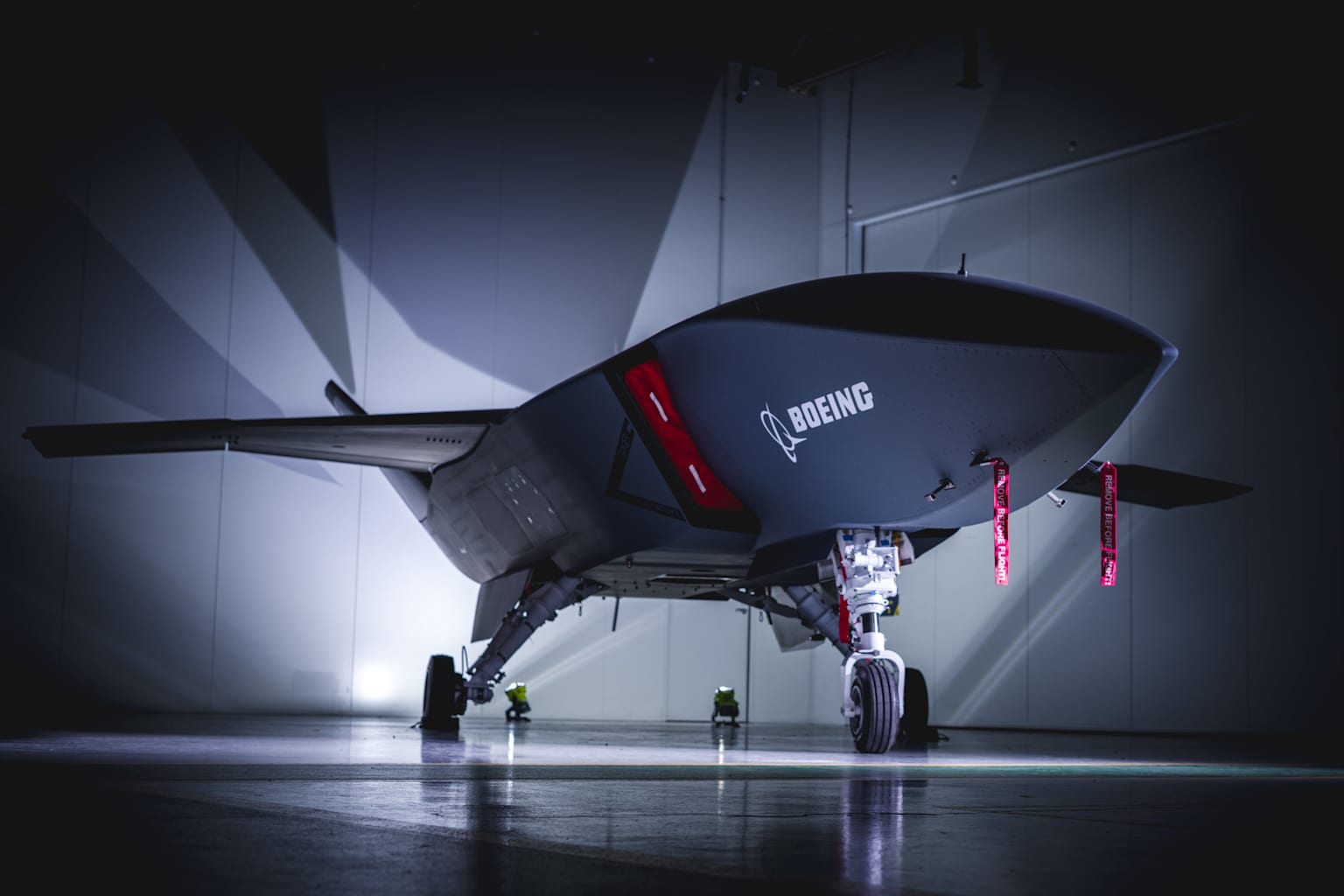
At the Farnborough Airshow, which opened on July 20 and runs through July 24, Boeing displayed a working MQ-28 Ghost Bat — the only operational aircraft in its class on the show floor — while competitors showcased full-scale models and concepts for so-called Collaborative Combat Aircraft, or CCAs, designed to serve as robotic wingmen to piloted fighter jets.WTAQ News Talk | 97.5 FM · 1360 AM | Green Bay, WI+1
Boeing's Ghost Bat, developed with the Royal Australian Air Force since 2017, has logged more than 100 test flights and completed a live-fire test against an aerial target in December, according to the company. "We've got the most mature collaborative combat aircraft," Bernd Peters, Boeing's vice president of development and strategy, told Reuters.WTAQ News Talk | 97.5 FM · 1360 AM | Green Bay, WI
Yet Germany — one of the largest prospective buyers — has slowed what initially appeared to be a fast track toward Boeing. After German Defense Minister Boris Pistorius said in March that the Ghost Bat was "under consideration," Rheinmetall announced a partnership with Boeing to offer the aircraft to the Luftwaffe with a 2029 target. However, according to German defense outlet Hartpunkt, the procurement process was expanded to include an additional review round, with a direct award taken off the table and at least three candidates — including the Ghost Bat, the Kratos XQ-58A Valkyrie offered by Airbus, and an unidentified third contender — placed under further evaluation.aerotime.aero+3
German legislators in July approved the CCA procurement as part of a broader defense modernization package, each contract capped at €1 billion with parliamentary sign-off required for additional spending.Table.Briefings+1
The competition extends well beyond Boeing. The U.S. Air Force in June awarded CCA production contracts to General Atomics and Anduril, selecting their designs over bids from Boeing, Lockheed Martin , and Northrop Grumman . Anduril senior vice president Jason Levin told Reuters at Farnborough: "In two years, we have surpassed what a lot of other companies have been working on for many years".GovConFeed+1
Airbus unveiled its U760 Ravenstorm concept at the Berlin Air Show in June, a 13-meter, six-ton drone targeting initial operational capability in the early 2030s. In the nearer term, Airbus plans to fly two XQ-58A Valkyries equipped with its European-made MARS mission system later this year, aiming to deliver a combat-ready system to the Luftwaffe by 2029. BAE Systems also entered the fray at Farnborough, unveiling the Brontanax prototype, which it says could enter service by 2030.Reuters+5
Germany's urgency has grown since Berlin and Paris pulled the plug on the long-troubled Future Combat Air System in June, a €100 billion next-generation fighter jet initiative that collapsed over disputes between Airbus and Dassault Aviation . With the Luftwaffe seeking as many as 400 uncrewed combat aircraft, the German program represents one of the largest drone fighter procurement efforts outside the United States.Reuters+3
"It's real hardware you see in front of you," Peters said of the Ghost Bat. But with Germany now reviewing a wider field, who builds Europe's robotic wingmen remains an open contest.WTAQ News Talk | 97.5 FM · 1360 AM | Green Bay, WI