Newsletter Subscribe
Enter your email address below and subscribe to our newsletter

All voices matter

globalbankingandfinance+1bloombergglobalbankingandfinanceGlobal investors are reassessing Chinese assets as a buffer against volatility, as the country's bond market, currency, and equities break step with turbulent global trends driven by the Middle East conflict and AI-fuelled rallies elsewhere.
Since the Iran war began at the end of February, China's bond market has been the world's strongest performer, with benchmark 10-year sovereign yields falling almost 10 basis points to 1.73%, compared with a 51-basis-point rise in U.S. Treasury yields over the same period, according to Reuters. The yuan is the only major currency to have gained against the dollar over the past 12 months, rising 5.4% despite broad dollar strength and ultra-low domestic yields.globalbankingandfinance+1
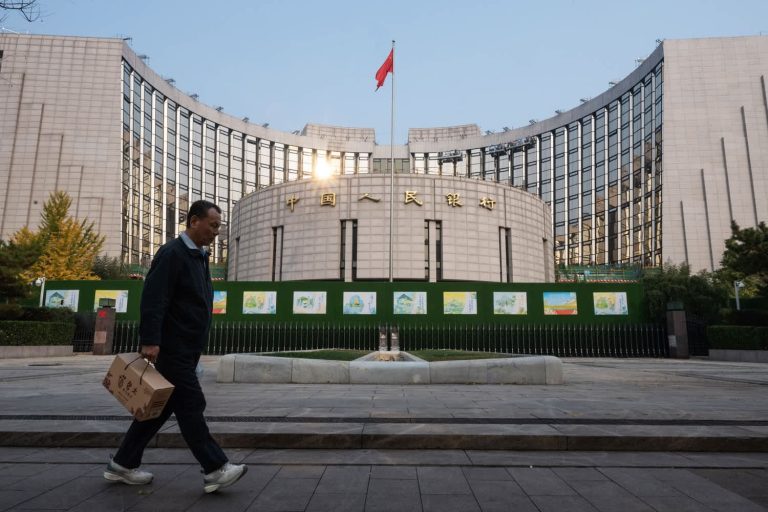
The bond market logged net foreign inflows for the first time in more than a year in May, with global holdings of Chinese interbank bonds rising by 90 billion yuan ($13.3 billion), according to data from the People's Bank of China's Shanghai office. Mainland blue-chip stocks posted an almost 11% first-half rise in dollar terms, boosted by the stronger currency.bloomberg+1
Unlike the S&P 500 or South Korea's Kospi — which surged 110% in dollar terms in the first half, powered by AI enthusiasm — China's gains have come from policy stability rather than momentum trading. "The role of China in portfolios is evolving from a simple emerging-market growth allocation toward a more nuanced source of diversification," said Christopher Hamilton, head of client investment solutions for Asia Pacific ex-Japan at Invesco , which manages about $2.2 trillion in global assets.globalbankingandfinance
Analysts attribute the yuan's resilience to deliberate signalling from Beijing. "Yuan strength is sort of detached from traditional bog-standard long-run drivers like how the economy is doing," said Kelvin Lam, senior economist at Pantheon Macroeconomics. "Instead, it is policy driven — the intention from the authorities to project currency stability at a time of global chaos".reuters+1
Not everyone is convinced. Manulife John Hancock Investments has been neutral to underweight China equities in some strategies, citing a lack of earnings growth compared with South Korea or Taiwan, according to co-chief investment strategist Matthew Miskin. Tom Graff, chief investment officer at Facet, said his firm is "primarily thinking about risks around the AI trade and the U.S. dollar" and that developed markets "can serve that purpose just fine".globalbankingandfinance
Still, many investors are drawn to the structural forces behind China's divergence. "Now, in addition, you've got an actual economic decoupling that's happening," said Phillip Wool, head of portfolio management at Rayliant Investment Research.globalbankingandfinance