Newsletter Subscribe
Enter your email address below and subscribe to our newsletter
[forminator_form id="25163"]

All voices matter
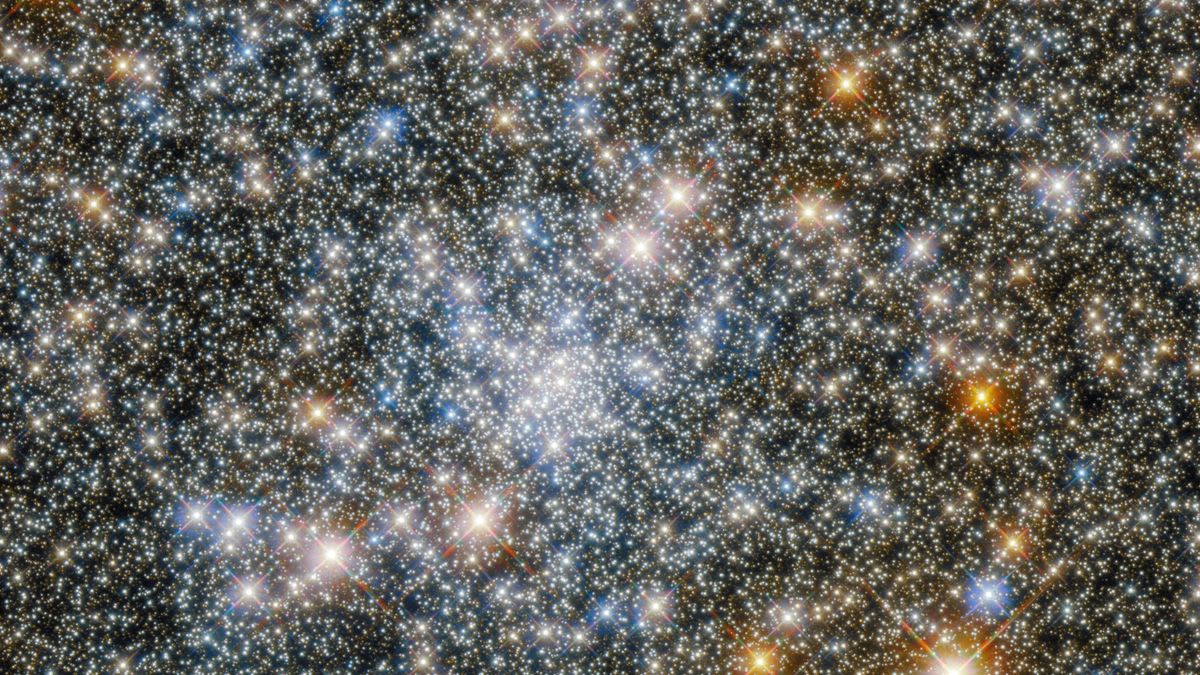
esahubble.org+1.science.nasa.gov.science.nasa.gov.A new image from the NASA/ESA Hubble Space Telescope shows the globular cluster Messier 30 (M30), a dense, ancient group of stars that astronomers say can help explain how the Milky Way developed. ESA released the image on Nov. 5, 2026 as its ESA/Hubble Picture of the Month, and NASA published it on Nov. 6. The cluster, also known as NGC 7099, sits about 27,500 light-years away in the constellation Capricornus.nasa.gov+2
The cluster is named for French astronomer Charles Messier, who listed it among the fuzzy objects that early telescope users could mistake for comets.nasa.gov
The new view combines data from three Hubble observing programs and covers ultraviolet, visible and near-infrared light. The first, led by Ata Sarajedini, used the Advanced Camera for Surveys to study dozens of Milky Way globular clusters in red and near-infrared light, picking up stars as small as 20% of the Sun's mass. A second program, led by Giampaolo Piotto, used Wide Field Camera 3 with filters for bluer light. That data helped researchers study "blue straggler" stars and the multiple stellar populations that can live within one cluster. A third program, led by Mattia Libralato, tracked how those populations moved over the 15 years since Hubble first observed them.science.nasa.gov
An earlier Hubble image of M30, made only from Advanced Camera for Surveys data, showed several hundred thousand stars in a cluster about 90 light-years across that formed 13 billion years ago.science.nasa.gov
Globular clusters are roughly spherical groups of tens of thousands to millions of stars. They usually orbit in a galaxy's halo, and the Milky Way has at least 150 of them, according to ESA/Hubble. Astronomers estimate their ages at 11.5 billion to 13.5 billion years, so some are nearly as old as the universe. Clusters that formed inside the galaxy can act as time capsules that preserve its early chemistry.esahubble.org+1
These clusters have shaped what astronomers know about the galaxy for more than a century. Harlow Shapley used variable stars in globular clusters to show that the Sun is not at the center of the Milky Way. His distance measurements were wrong, though, and led him to think the galaxy was about twice its actual size.science.nasa.gov
M30 may not have formed in the Milky Way at all. Researchers have found that it and many other globular clusters orbit in the opposite direction to the galaxy's spin. That suggests the Milky Way may have captured them long ago.science.nasa.gov