


Newsletter Subscribe
Enter your email address below and subscribe to our newsletter
[forminator_form id="25163"]

All voices matter

NASA's Hubble Space Telescope has uncovered definitive evidence that the young Milky Way absorbed a dwarf galaxy approximately 11.8 billion years ago, pushing back the known timeline of our galaxy's formation by 1.8 billion years. The findings, published Monday in…
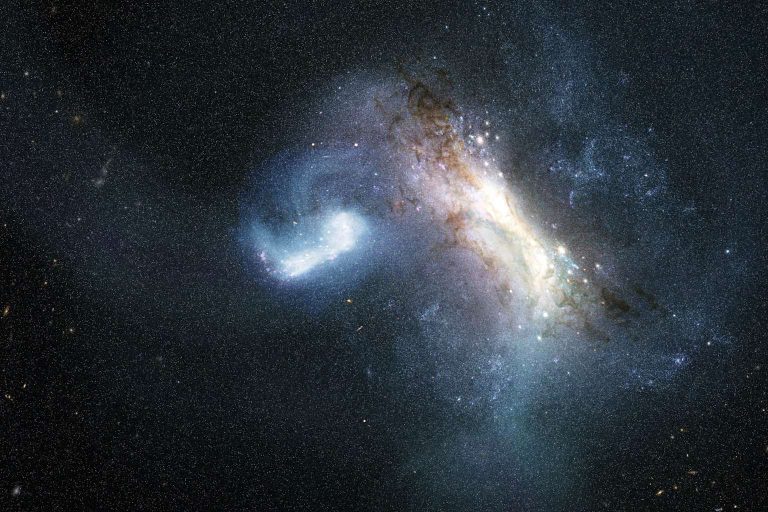
NASA's Hubble Space Telescope has provided what researchers call "definitive evidence" that the Milky Way consumed a dwarf galaxy approximately 11.8 billion years ago — the earliest large merger in our galaxy's known history. The findings, published Monday in Nature…
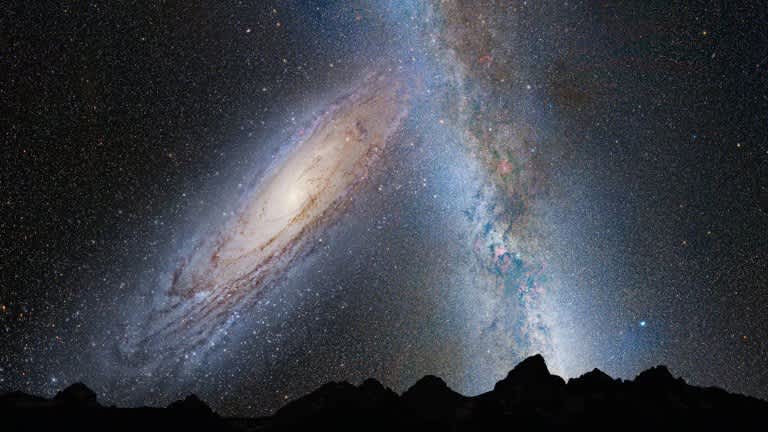
The Milky Way's stellar disc was dramatically reoriented — flipping more than 90 degrees — following a head-on collision with a massive dwarf galaxy roughly 10 to 11 billion years ago, according to new research from Durham University presented this…

NASA's Chandra X-ray Observatory and ESA's XMM-Newton have found that two of the Milky Way's outer spiral arms lie up to 10% farther from Earth than astronomers previously believed, a discovery that may prompt revisions to models of our galaxy's…

Researchers using NASA's James Webb Space Telescope and Hubble Space Telescope have confirmed the existence of a new class of objects within the Milky Way called "bulge fossil fragments," with the stellar system Terzan 5 serving as the prototype. The…

Astronomers using NASA's Chandra X-ray Observatory may have identified a new supernova remnant in one of the most crowded and extreme environments in the Milky Way — the region surrounding the galaxy's central supermassive black hole. The findings, published in…