Newsletter Subscribe
Enter your email address below and subscribe to our newsletter
[forminator_form id="25163"]

All voices matter
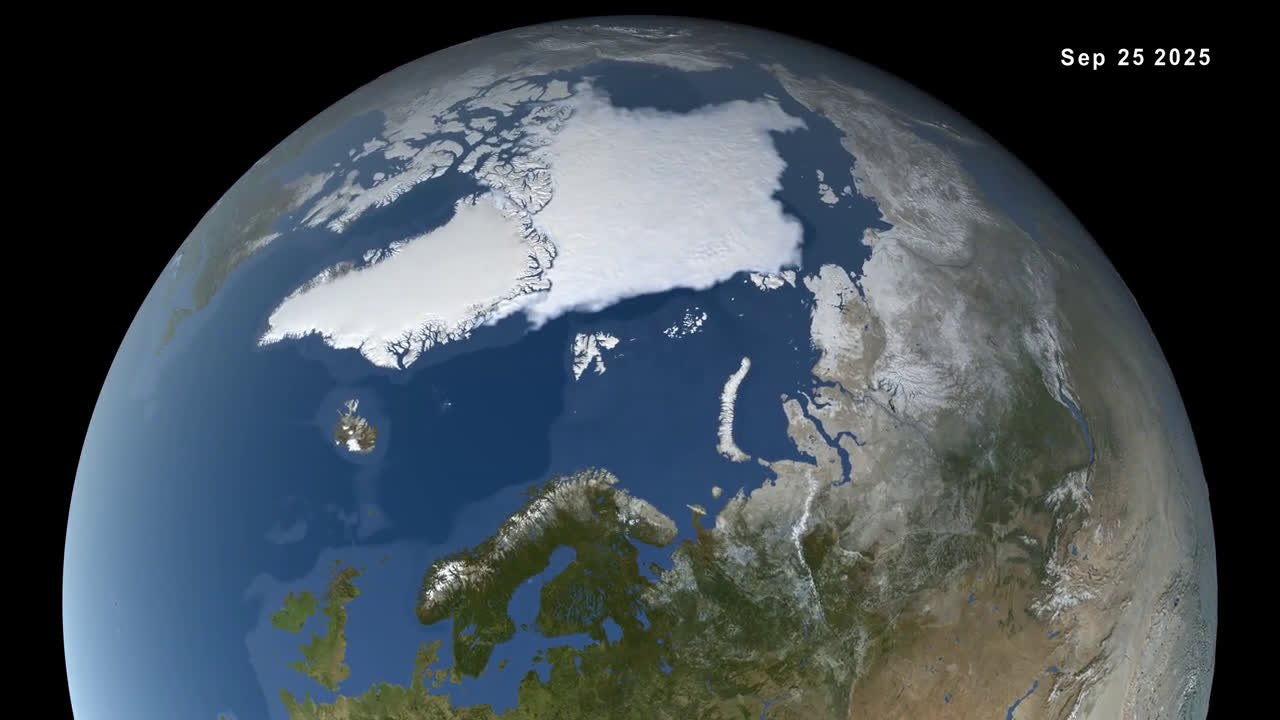
physphysphysA new study published in the Proceedings of the National Academy of Sciences confirms that Arctic winter sea ice has resumed its long-term decline after what scientists say was only a temporary pause in the early 2020s. The research, led by the University of Southampton and the National Oceanography Center, found that record lows in 2025 and 2026 have reshaped the trajectory of ice loss in the region.
Between 2024 and 2025, Arctic sea ice extent during the winter peak phase — February to March — fell by 5.8%, the largest year-to-year wintertime decline in the satellite record dating back to 1978. In 2026, peak-phase sea ice recovered slightly but remained the second-lowest extent ever recorded.miragenews+1
The 2025 winter maximum, measured on March 21, came in at 14.45 million square kilometers — the lowest since continuous satellite monitoring began in 1979. The 2026 maximum, reached on March 15, was 14.29 million square kilometers, statistically tying 2025 for the record low, according to NASA and the National Snow and Ice Data Center.phys+2
"This sharp drop changes the way we interpret recent Arctic winter sea ice change," said Dr. Duo Chan, lead author and researcher at the University of Southampton's School of Ocean and Earth Science. "What looked like a pause in the early 2020s now appears to have been a temporary slowdown within a longer-term decline associated with global warming."phys
The team compared satellite observations with climate model simulations to assess what typically follows such a sharp drop. Co-author Professor Simon Josey of the National Oceanography Center said the model analogs suggest that "Arctic winter sea ice is more likely to fluctuate around a lower level over the next few years than to quickly rebound to early 2020s conditions."phys
Winter sea ice acts as a barrier between the relatively warm Arctic Ocean and the colder atmosphere above it. Reduced coverage allows more ocean heat and moisture to escape into the atmosphere, potentially affecting storm patterns and weather at lower latitudes.phys
The findings carry implications for how short-term variability in ice cover is interpreted. Earlier analyses had suggested the rate of winter ice loss was weakening, leading some to question whether the decline had stalled. By incorporating the 2025 and 2026 data into 20-year trend calculations, the researchers found that long-term decline had returned to statistical significance.miragenews+1
"Short-term recoveries can temporarily obscure the longer-term direction of Arctic sea ice change," Dr. Chan said. "The low winter sea ice extents in 2025 and 2026 clearly show that Arctic sea ice loss has not stopped — it is continuing in a warming climate."phys