Newsletter Subscribe
Enter your email address below and subscribe to our newsletter
[forminator_form id="25163"]

All voices matter
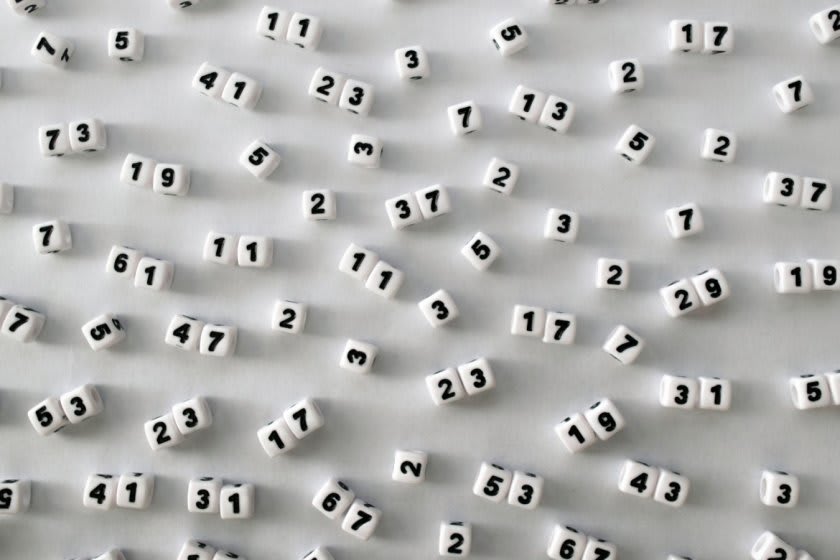
alpo.ge.newscientist.com+1.scientificamerican.com+1.Levent Alpöge, a mathematician at Anthropic, said on Friday, November 20, that he believes he has proved the Riemann hypothesis with help from the company's Claude AI model. "I believe I have, working with Claude, discovered a proof of the Riemann Hypothesis," he wrote in a statement posted on his website. He added that the method "easily extends" to the Generalized Riemann Hypothesis and that he expects it to reach the Extended Riemann Hypothesis "with more time."alpo.ge
Bernhard Riemann proposed the hypothesis in 1859. It is one of the Clay Mathematics Institute's Millennium Prize Problems, which come with a $1 million reward for an accepted solution, New Scientist reported. The claim has not been independently verified.newscientist.com
Alpöge did not post a conventional paper. Instead, his statement links to a formalization in Lean, a proof-checking language, split into 14 archive parts. He wrote that it would be "obviously inappropriate to attempt to post some massive unreadable travesty of 'slop'" and said a draft of the full argument ran past 250,000 pages. He plans to simplify the argument, give talks on it and write it up properly.alpo.ge
Scientific American reported that experts still need to check two things. The first is whether the hypothesis has been stated correctly in the code, and the second is whether the proof itself is sound. Kevin Buzzard of Imperial College London reacted with caution. "Let's see if it compiles first," he told New Scientist.scientificamerican.com+1
Alpöge wrote that he steered the work toward combining two ideas from a simplified "toy" setting, and that "Claude far outpaced me near the finish line." The argument builds on Stepanov's method for function fields. It uses a chain of theta lifts to imitate multiplicity, and Claude proposed a chain length of $$\sqrt{X}$$, according to his statement. He also admitted he is presenting a complete argument "before having mastered a massive neighbourhood around its mathematics."alpo.ge
James McKee of Royal Holloway University of London said many results depend on the generalized hypothesis, so a proof would turn them into theorems. "It is both a wonderful time and a terrible time to be a research mathematician," he told New Scientist.newscientist.com
The claim comes after months of AI-assisted results. In July, Alpöge posted a Claude-generated counterexample to the Jacobian conjecture, Scientific American noted. In August, Anthropic announced earlier work on the Riemann hypothesis that did not amount to a full proof, New Scientist reported.scientificamerican.com+1
Alpöge wrote that the breakthrough came "late Sunday night" and that he consulted Anthropic CEO Dario Amodei about announcing it. He called the timing "horrible" and said "there was a constraint to respect," according to his statement. New Scientist reported that Anthropic listed on the stock market on November 19, and that Alpöge seemed to suggest he waited until afterward to announce. Alpöge called the "obvious cynical view" about the timing false.alpo.ge