Newsletter Subscribe
Enter your email address below and subscribe to our newsletter
[forminator_form id="25163"]

All voices matter
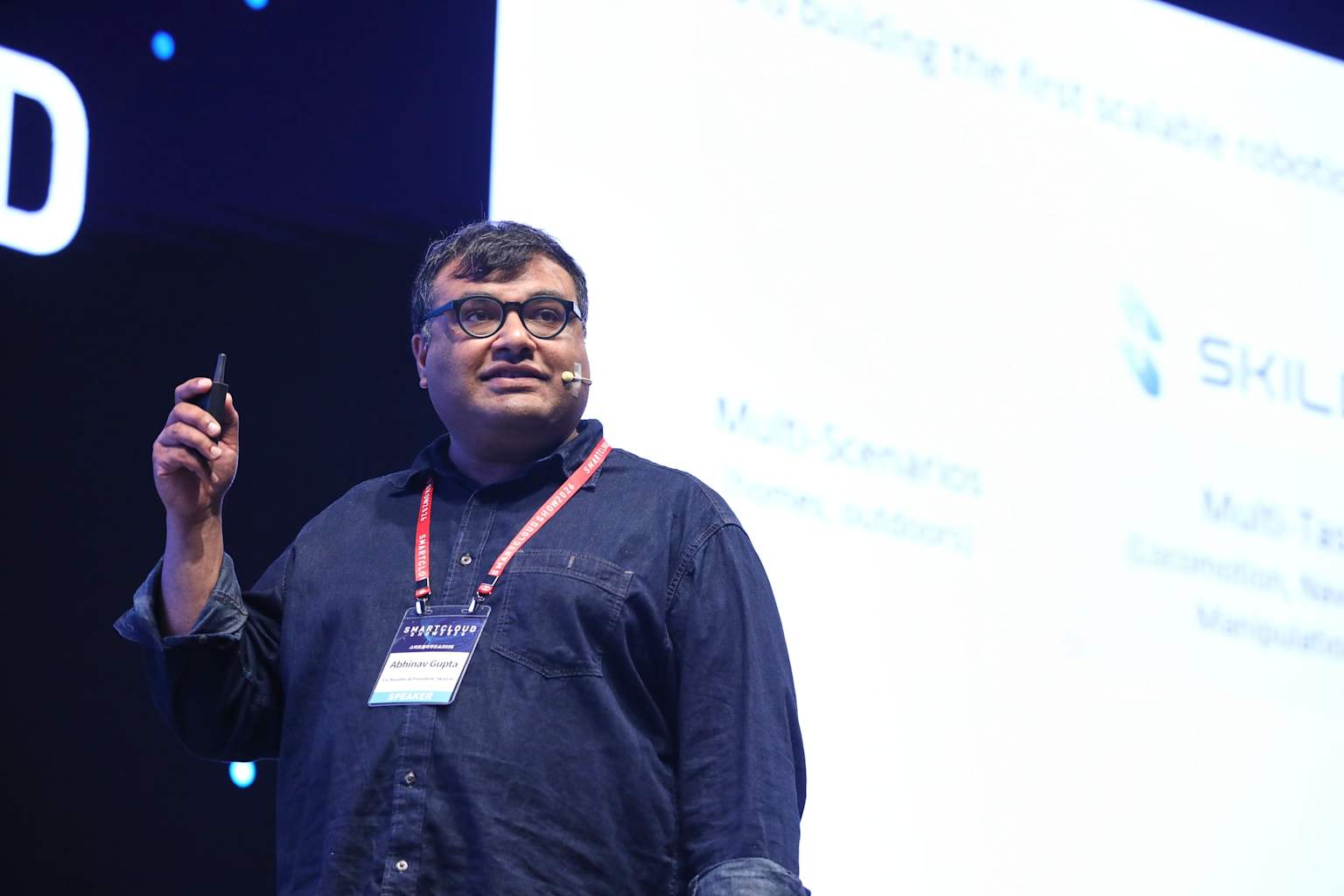
biz.chosun+1x+1biz.chosunSkild AI unveiled S1, a general-purpose robotics foundation model that can teach robots previously unseen tasks from a single video demonstration, with no fine-tuning required. Co-founder Abhinav Gupta declared at SMARTCLOUD SHOW 2026 in Seoul on Wednesday that the "ChatGPT moment" for physical AI is arriving.
The S1 model, announced August 25, represents what the Pittsburgh-based company calls in-context learning for robot manipulation. A robot watches one video of a human performing a task — lasting up to 10 minutes — and then executes it in real time without any task-specific training. In Skild's internal benchmarks, S1 achieved a 66 percent success rate on unseen tasks compared to 9 percent for a language-prompted visual-language-action model at the same training scale. In real-world tests, robots running S1 achieved task completion rates between 60 and 80 percent within hours.biz.chosun+3
Demonstrated tasks include flipping pancakes, making pour-over coffee, potting plants, and assembling kits. In one test, a robot began autonomously potting a plant just 11 minutes after watching the human demonstration.x
Speaking at the Seoul conference, Gupta said the biggest bottleneck in robotics is not hardware but data. He noted that Skild AI has secured 100 to 1,000 times more training data than competitors by combining video data, synthetic simulation data, teleoperation, and on-robot field learning.biz.chosun
Robots equipped with Skild AI's foundation model are already deployed at industrial sites. At Nvidia's Houston plant, robots perform precise work such as tightening GPU screws. At a Foxconn Hon Hai Precision Industry Co., Ltd. plant, robots assembled more than 16,000 GPUs in a month, raising the factory's level of automation.biz.chosun
Gupta emphasized that Skild's model is not limited to humanoid robots but works across bipedal, quadrupedal, wheeled, and manipulator platforms — what the company calls an "omni-bodied brain". Unlike competitors whose robot brains are tailored to specific hardware, he said, Skild's system detects hardware changes and continues working even when components are switched.cryptobriefing+1
Skild AI, valued at more than $14 billion after raising $1.4 billion in a Series C led by SoftBank in January, has now raised over $1.8 billion total. Sequoia Capital's Alfred Lin called single-prompt execution of long-horizon tasks "a game changer".techcrunch+3