


Newsletter Subscribe
Enter your email address below and subscribe to our newsletter
[forminator_form id="25163"]

All voices matter
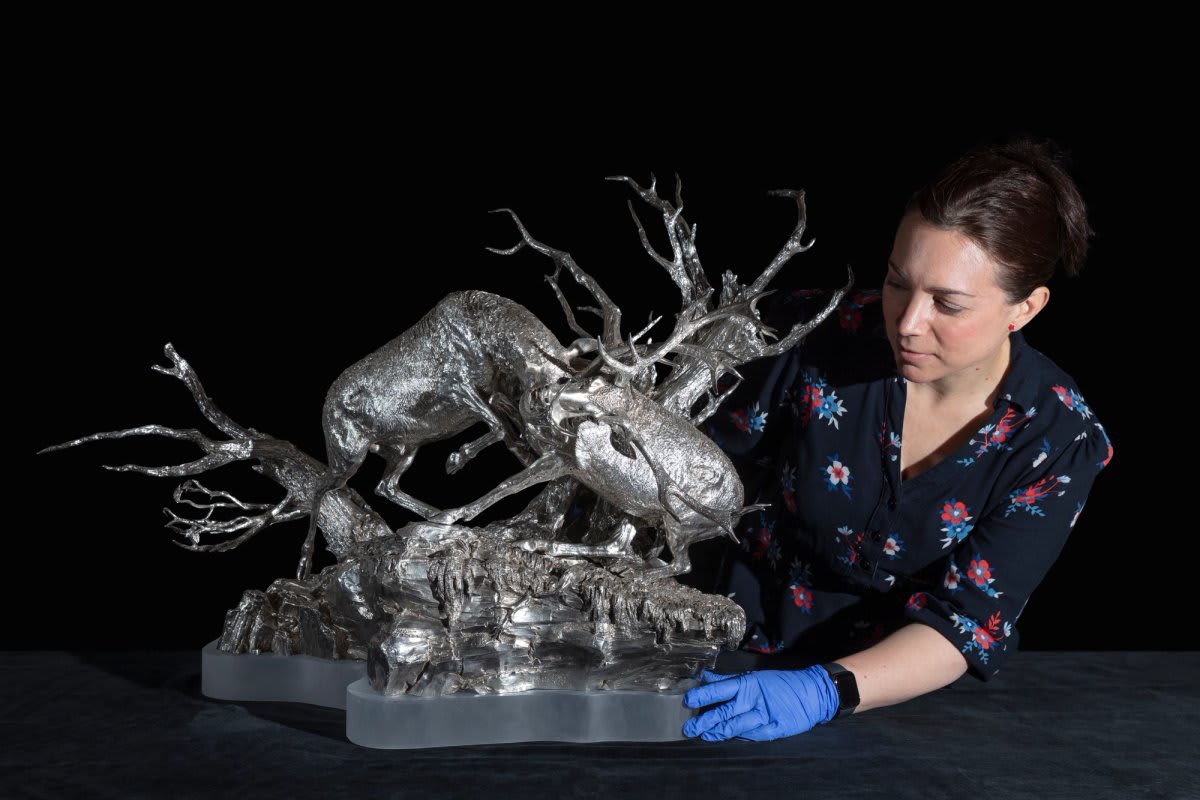
National Trust+1.National Trust+1.National Trust.National Trust.National Trust+1.A spectacular silver sculpture depicting two stags locked in combat, commissioned in 1855 by the 7th Earl of Stamford as a symbol of his defiance against Victorian society's disapproval of his marriage to Catherine Cox, a former circus performer with an equestrian background, has been rediscovered and put on display at Dunham Massey after being feared lost for decades.
George Harry Grey, born on January 7, 1827, became the 7th Earl of Stamford and 3rd Earl of Warrington following his grandfather's death on April 26, 1845. He had previously succeeded his father as the 9th Baron Grey of Groby in 1835 at just eight years old. The Earl inherited substantial estates across England, including properties at Enville in Staffordshire, Bradgate Park in Leicestershire, Dunham Massey in Cheshire, and Stalybridge near Manchester.thepeerage.com+2
Beyond his peerage responsibilities, the 7th Earl was a man of varied interests. He played first-class cricket for the Marylebone Cricket Club between 1851 and 1858, though with modest success. A prominent patron of horse racing, he served as Master of the Quorn Hunt from 1856 to 1863, and his colt Diophantus won the prestigious Two Thousand Guineas in 1861. The Earl also held military appointments, serving as a captain in the Cheshire Yeomanry before becoming Honorary Colonel of the 7th Battalion, Lancashire Rifles in 1871. His personal life generated controversy in Victorian society, particularly his marriage to Catherine Cox (also recorded as Katherine Cocks) in 1855, which became the inspiration for the silver stag sculpture that symbolized his defiance against social disapproval. He died on January 2, 1883, just five days before his 56th birthday.Wikimedia Foundation, Inc.+1
Catherine Cox, born in 1826 in Dorset, was one of three sisters renowned for their equestrian talents. In the 1840s and early 1850s, she performed as a bareback rider at Astley's Amphitheatre in London, the first modern circus, where she and her sisters thrilled audiences with daring stunts including leaping their horses through burning hoops. This flamboyant background, along with her claimed gypsy grandmother, contributed to the scandal when she married George Harry Grey, the 7th Earl of Stamford, in 1855 shortly after the death of his first wife.Wikimedia Foundation, Inc.+2
Despite society's outrage at their union, Catherine proved herself more than capable of managing the family estates, demonstrating that the discipline and common sense required for circus performing translated well to aristocratic responsibilities. The couple faced severe social ostracism—Queen Victoria reportedly refused to sit in a neighboring box to them, while in Cheshire, Catherine endured public humiliation including being called a "strumpet" at Knutsford races, which prompted the couple to abandon Dunham Massey. Though they never returned to live there, Catherine is now commemorated in the gardens of the estate, a testament to her remarkable journey from circus performer to countess.The Art Newspaper - International art news and events+1
Modelled by Alfred Brown and crafted by royal goldsmiths Hunt & Roskell, Stags in Bradgate Park is a meticulously detailed silver masterpiece depicting two rutting Red Deer stags positioned on a rocky outcrop with gnarled hollow oaks. The sculpture was a sensation in its day, gracing the pages of the Illustrated London News and being exhibited at both the London International Exhibition of 1862 and the Paris Exposition Universelle of 1867—prestigious events that drew millions of visitors.The Manc
The dramatic sculpture, now on display in the Great Gallery at Dunham Massey since June 26, 2025, is only the central component of what was originally a much larger composition. Long feared to have been melted down, this Victorian silver centrepiece has miraculously survived and represents not just extraordinary craftsmanship but also serves as a powerful symbol of defiance against societal norms—a physical manifestation of the Earl "locking horns" with the society that had rejected his marriage.National Trust+3


