Newsletter Subscribe
Enter your email address below and subscribe to our newsletter
[forminator_form id="25163"]

All voices matter
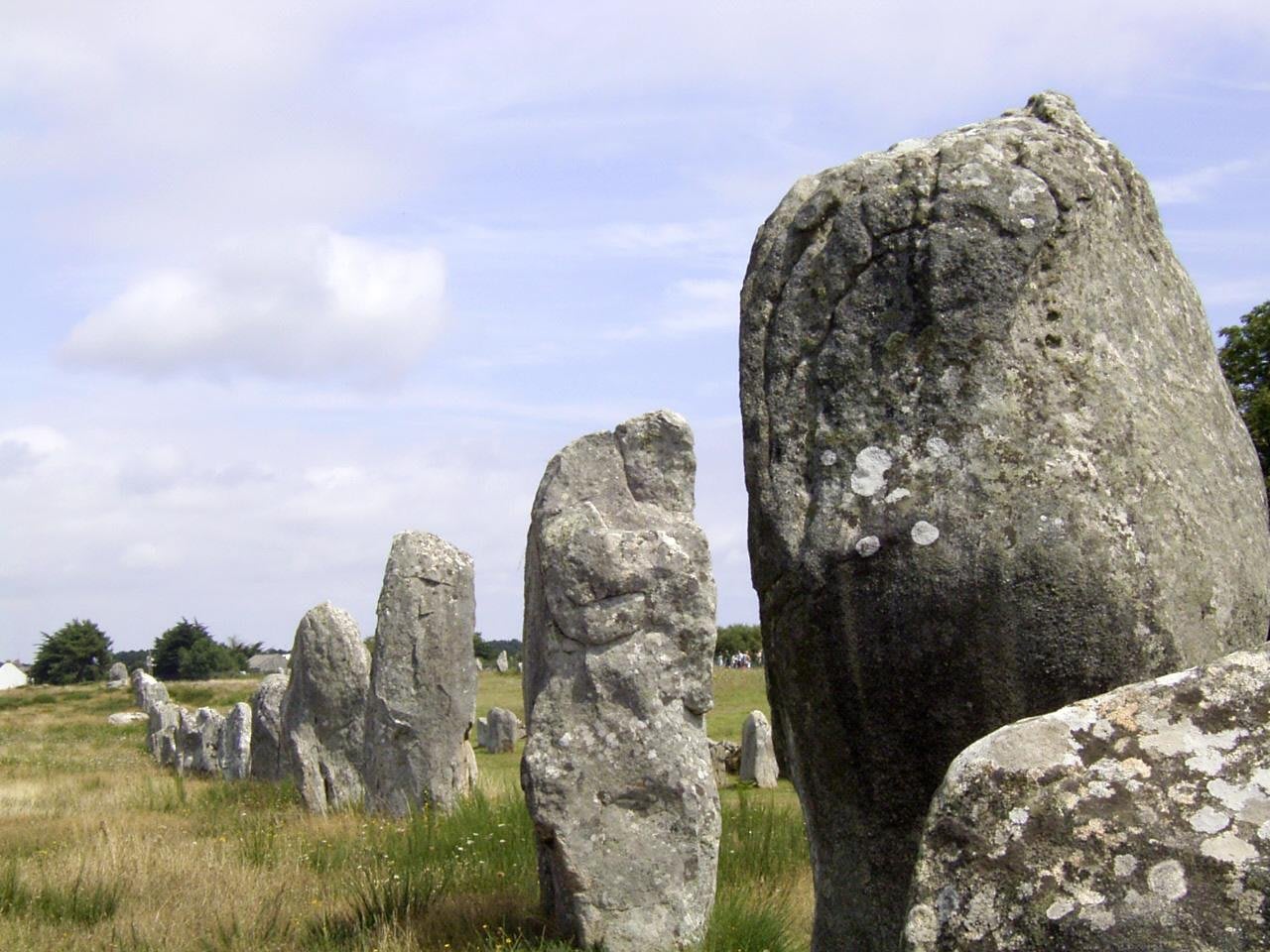
Phys.org+2.Phys.org+2.Phys.org+2.Phys.org+1.Phys.org+1.Recent research has revealed that the enigmatic stone alignments in France's Carnac region, consisting of over 3,000 standing stones stretching across 10 kilometers of coastal landscape, date back to between 4600 and 4300 BCE, making them among the earliest megalithic monuments in Europe and confirming the Bay of Morbihan as Europe's earliest megalithic region.
The Le Plasker site, located in the center of Plouharnel just 2km west of the Le Ménec alignments in Carnac, was discovered during rescue excavations conducted in autumn 2020 prior to business park development. Led by Audrey Blanchard of Archeodunum, the excavation covered approximately 7,000 square meters, though researchers believe the original site likely extended beyond this area. Situated on a southwest-facing slope overlooking the Bay of Quiberon, Le Plasker's strategic position offered visibility to and from the sea during the Neolithic period when sea levels were approximately five meters lower than today.The Brighter Side of News+3
The excavation revealed a complex archaeological landscape including foundation pits of removed megaliths arranged in rows, fire-related features such as cooking pits possibly used in rituals, and a monumental tomb built around 4700 BCE that was constructed directly over the remains of a Mesolithic hunter-gatherer hut. This juxtaposition of domestic and ceremonial features provides valuable insights into the social organization of early Neolithic communities and their relationship with ancestral sites, while the site's proximity to other known alignments—including Le Vieux Moulin just 800m to the northwest—confirms it as an integral part of the larger Carnac megalithic complex.arkeonews.net+2
The Bay of Morbihan has now been definitively confirmed as the cradle of European megalithic culture, thanks to the groundbreaking Franco-Swedish NEOSEA project led by Dr. Bettina Schulz Paulsson of the University of Gothenburg. Using nearly 50 radiocarbon samples analyzed with Bayesian statistical modeling, researchers achieved unprecedented chronological precision in dating the Carnac alignments, establishing them as Europe's earliest known megalithic monuments. This discovery significantly alters our understanding of Neolithic European societies, predating even the famous stone circles of the British Isles.Phys.org+2
The research not only dated the stone alignments to 4600-4300 BCE but also uncovered a monumental early tomb constructed around 4700 BCE directly above the remains of a Mesolithic hunter-gatherer hut. This stratigraphic relationship between Mesolithic and Neolithic structures provides crucial evidence for understanding the transition between these periods and suggests a possible cultural continuity or deliberate connection to ancestral sites by the megalith builders. The sheer scale of the Carnac complex—with thousands of stones arranged over six miles—demonstrates the remarkable organizational capabilities of these early Neolithic communities.arkeonews.net+2
The precise dating of the Carnac megalithic alignments to 4600-4300 BCE was achieved through innovative archaeological techniques that overcame previous limitations. Researchers collected nearly 50 radiocarbon samples from Le Plasker and applied Bayesian statistical modeling to analyze them with unprecedented chronological precision. This methodological breakthrough was particularly significant because the acidic soils of Morbihan typically prevent organic material preservation, especially bone, which had previously limited dating opportunities in the region.Discover Magazine+1
Although many of the original stones were removed either in prehistory or historical times, their foundation pits remained intact, providing crucial dating material. The excavation team analyzed sediment and stone fragments from these pits, along with charcoal samples from adjacent hearths and cooking features that appeared to be contemporaneous with the stone alignments. This comprehensive approach not only established the Carnac alignments as Europe's oldest megalithic monuments but also revealed their association with fire-related features, suggesting possible ritual activities involving lighting, cooking, or feasting during their construction.Phys.org+2