Newsletter Subscribe
Enter your email address below and subscribe to our newsletter
[forminator_form id="25163"]

All voices matter
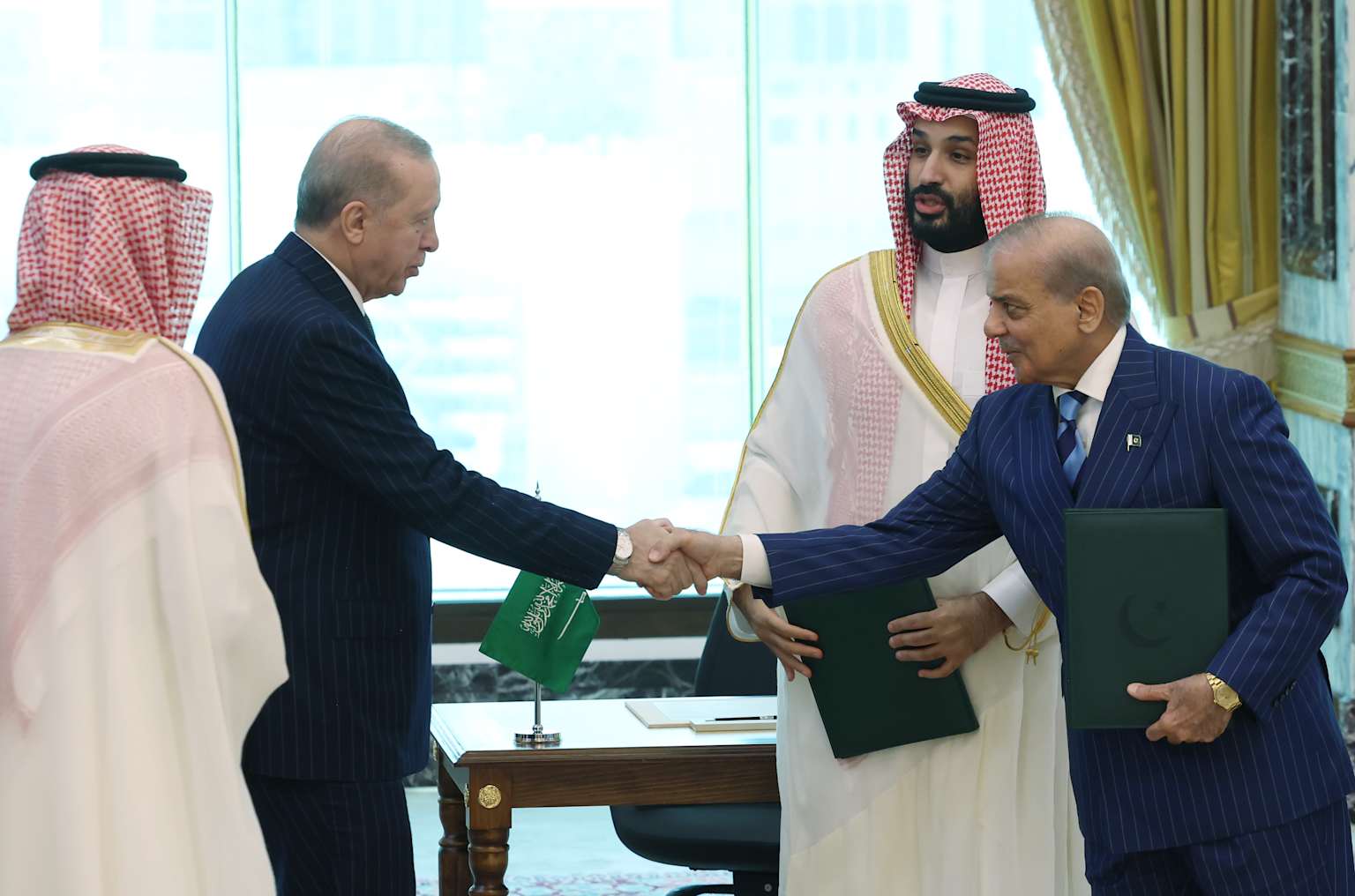
cbsnews+1al-monitor+1cbsnews+1Saudi Arabia, Turkey, and Pakistan on Friday signed a landmark collective defense agreement in the holy city of Mecca, establishing that an armed attack against any one of the three nations will be treated as an attack against all — a framework echoing NATO's Article 5 mutual defense clause.
The "Mecca Joint Defense Agreement" was signed by Saudi Crown Prince Mohammed bin Salman, Turkish President Recep Tayyip Erdogan, and Pakistani Prime Minister Shehbaz Sharif at what was called the Makkah Al-Mukarramah Summit for Joint Defence.cbsnews+1
"The agreement is intended to strengthen collective deterrence against any act of aggression, and stipulates that any armed attack against any one of the three states shall be regarded as an attack against them all," the Pakistani Foreign Ministry and Turkey's presidential communications directorate said in identical statements.thehill+1
The pact unites three of the Muslim world's most consequential military actors: Saudi Arabia, one of the world's top oil exporters and guardian of Islam's holiest sites; Pakistan, the only nuclear-armed Muslim country; and Turkey, which has NATO's second-largest army and a rapidly growing defense industry.reuters+1
Turkish media reports indicate the agreement will allow joint military exercises, training, technology transfers, and intelligence sharing. A Turkish official described the pact as "purely defensive in nature," insisting it is "not against any specific actor" and is open for other regional countries to join. Saudi Deputy Minister for Public Diplomacy Rayed Krimly said on X that the agreement "does not represent an effort to establish a military axis or a sectarian bloc" and is not linked to nuclear ambitions.apnews+2
The agreement follows nearly a year of negotiations, first reported by Reuters in January, and comes as the U.S.-Israeli military campaign against Iran — launched on February 28 — has exposed Gulf states' security vulnerabilities. Saudi Arabia has been repeatedly struck by Iran and its Houthi allies in Yemen and Shia militias in Iraq since the war began, while shipping through the Strait of Hormuz has been largely shut down.timesofisrael+1
The pact builds on a bilateral Saudi-Pakistani Strategic Mutual Defense Agreement signed in September 2025, under which Pakistan has deployed approximately 8,000 troops, fighter jets, drones, and an air-defense system to the kingdom. Former Pakistani ambassador to the United States Hussain Haqqani told RFE/RL that "Turkey is not leaving NATO. Instead, it is cultivating a parallel partnership to enhance strategic flexibility and bargaining power."rferl+1
The Wall Street Journal News Corp reported that the agreement emerges as U.S. allies explore strategies to bolster security amid doubts about the reliability of the American security guarantee. Abdulaziz Sager, chairman of the Saudi-based Gulf Research Center, said the trilateral framework "could strengthen the three countries' collective diplomatic and defense weight while contributing to the emergence of a more regionally driven security architecture."wsj+1
The agreement does not replace any existing bilateral or multilateral arrangements, officials said, including Turkey's NATO membership.breakingdefense+1