Newsletter Subscribe
Enter your email address below and subscribe to our newsletter
[forminator_form id="25163"]

All voices matter
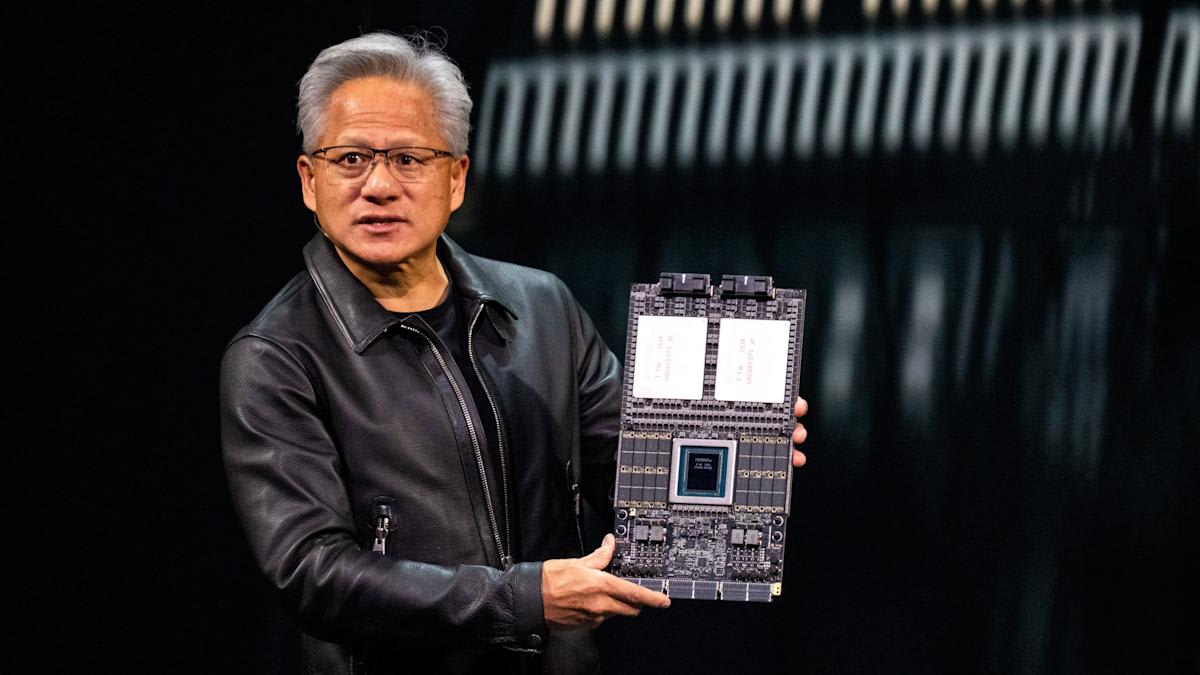
servethehome+1theplanettools+1thenextweb+1Nvidia is using SIGGRAPH 2026 in Los Angeles to expand on the technical underpinnings of its Vera CPU, the company's first fully custom data center processor and its most direct challenge yet to AMD Advanced Micro Devices, Inc. and Intel in the server market.
The conference, which runs through July 23, features sessions on Vera's role in AI factory infrastructure alongside Nvidia's broader graphics and simulation announcements. The presentations build on months of incremental disclosures since the chip was first shown at CES in January and formally launched at GTC Taipei on May 31.nvidianews.nvidia+3
At the heart of Vera are 88 custom Olympus cores, Nvidia's first in-house CPU core design since the Denver era nearly a decade ago. Built on the Arm v9.2-A instruction set, Olympus features a 10-wide instruction decoder — wider than AMD's Zen 5 at eight-wide and Intel's Granite Rapids at six-wide — paired with dual neural branch predictors. Nvidia is targeting 1.5 times the instructions-per-clock of its predecessor Grace CPU, which used licensed Arm Neoverse V2 cores.servethehome
The chip employs what Nvidia calls spatial multithreading, physically partitioning each core's resources to deliver 176 threads rather than relying on traditional simultaneous multithreading. The design keeps all 88 cores on a single compute chiplet, eliminating NUMA domains and ensuring uniform access to the 1.2 TB/s of LPDDR5X memory bandwidth — roughly triple the per-core bandwidth of competing x86 designs, according to Nvidia.digitalapplied+1
Independent testing from Phoronix in late May placed Vera about 55 percent ahead of Intel's Xeon 6980P and roughly 10 percent faster than AMD's EPYC 9575F in a geometric mean of benchmarks, while recording a 20-second Linux kernel compile — the fastest the outlet had ever measured. In agentic AI sandbox workloads, Nvidia has claimed up to 1.8 times faster task completion than the best-performing x86 processors.theplanettools+3
Tom's Hardware reported this week that Nvidia is emphasizing Vera's single-threaded performance as its primary advantage for agentic workloads, where agents must execute sequential tool calls, run code, and process results between model invocations. The monolithic die design avoids the inter-chiplet latency penalties that multi-die x86 processors can incur.tomshardware+2
Nvidia began hand-delivering the first Vera systems in May to Anthropic, OpenAI, SpaceX, and Oracle Cloud Infrastructure. Oracle is set to be the first hyperscaler to deploy the chip at scale, with broader cloud availability expected later this year.linkedin+2
Notably, Nvidia plans to sell Vera as a standalone CPU — not just bundled with Rubin GPUs in its NVL72 racks — marking the company's first serious bid to compete in the general server CPU market. AMD has already responded, claiming its upcoming 256-core Zen 6 "Venice" processor will deliver 3.3 times Vera's rack-level performance at equivalent power.tomshardware+1