Newsletter Subscribe
Enter your email address below and subscribe to our newsletter

All voices matter
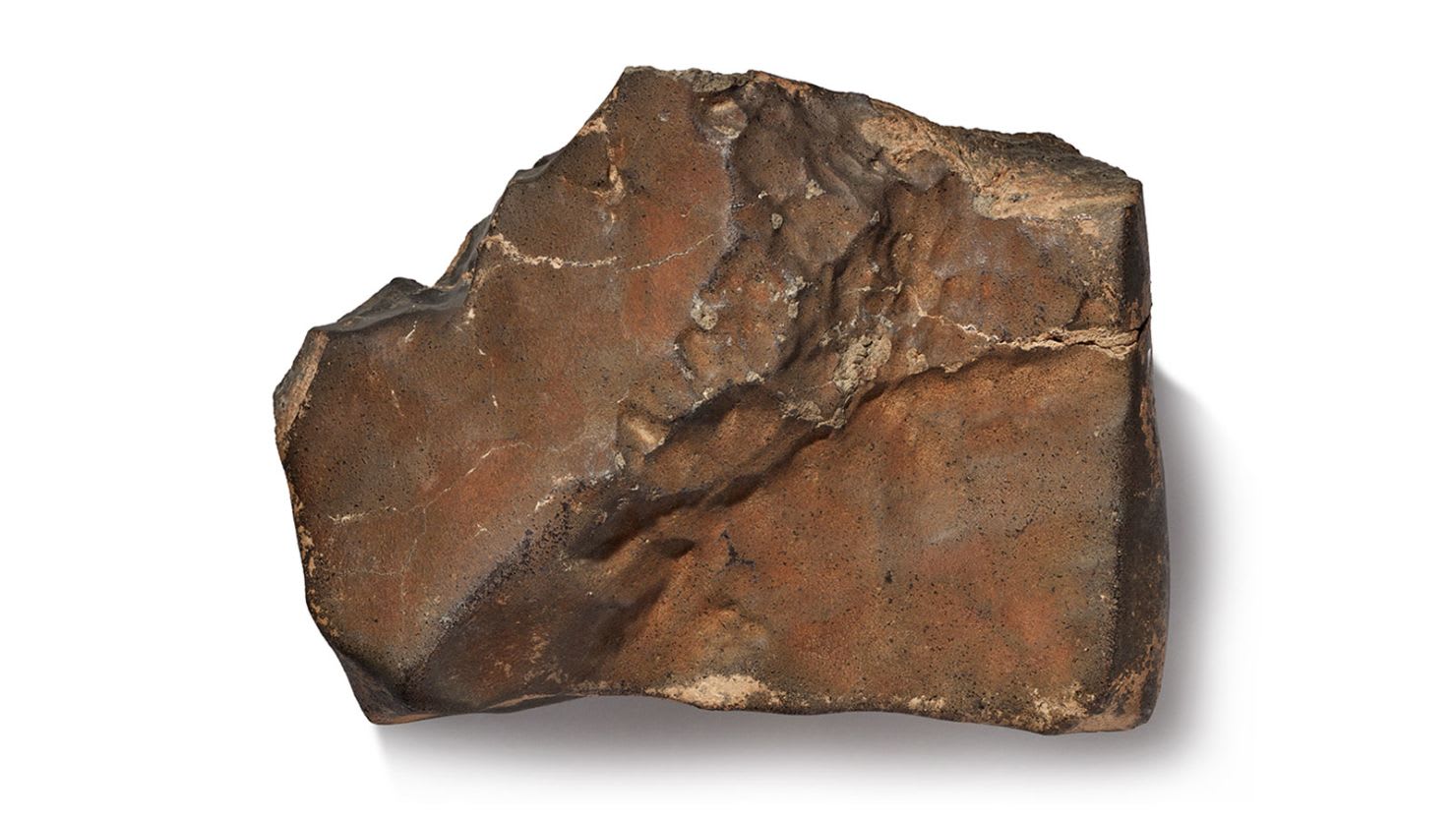
local12+1.news.artnet+1.local12+1.fact-news.news.artnet+1.A 54-pound chunk of Mars, the largest piece of the red planet ever discovered on Earth, will go under the hammer at Sotheby's New York on July 16 with an estimated price tag of up to $4 million. The meteorite, designated NWA 16788, represents the most valuable extraterrestrial specimen ever offered at public auction and accounts for roughly 6 percent of all Martian material found on our planet.
The sale comes as private collectors increasingly compete for rare space rocks, with Sotheby's accepting cryptocurrency as payment for the lot. Only about 400 Martian meteorites have been officially classified worldwide, making them rarer than diamonds.
The meteorite was discovered in November 2023 by a meteorite hunter in Niger's remote Agadez region. At 70 percent larger than any other known Martian fragment, the rust-colored rock bears the scars of a violent journey. Scientists determined it was blasted from Mars' surface by an asteroid impact so intense that parts of the rock transformed into glass.fadmagazine+3
"NWA 16788 is a discovery of extraordinary significance—the most valuable of its kind ever offered at auction," said Cassandra Hatton, Sotheby's vice chairman of science and natural history. The meteorite's surface displays patches of glassy fusion crust, evidence of its fiery passage through Earth's atmosphere before landing in the Sahara Desert.news.artnet+1
The specimen was authenticated by The Meteoritical Society and published in June 2024 in the Meteoritical Bulletin, the official record for meteorite classification. Before arriving at Sotheby's, it was exhibited at the Italian Space Agency in Rome and in Tuscany.fadmagazine
The auction has sparked debate within the scientific community about whether such specimens should remain accessible to researchers. Steve Brusatte, a paleontologist at the University of Edinburgh, argues that unique objects like this "should be preserved in museums and be accessible to the public," according to Fact News.fact-news
However, Julia Cartwright, a planetary scientist at the University of Leicester, sees value in the meteorite market. She told Fact News there is "symbiosis" between scientists and collectors, noting that a reference sample of NWA 16788 has already been transferred to China's Purple Mountain Observatory for study.fact-news
The meteorite market has grown steadily, with previous Martian samples selling for hundreds of thousands. In 2021, a 0.05-ounce Mars fragment sold for $13,750 at Christie's.news.artnet
"This stone can still tell a lot," Cartwright said.fact-news
The same Sotheby's natural history auction featuring the massive Martian meteorite will also showcase an exceptionally rare juvenile Ceratosaurus nasicornis skeleton, estimated to fetch between $4-6 million. This remarkable carnivorous dinosaur, which lived approximately 150 million years ago during the Late Jurassic period, stands at 6 feet 3 inches tall and measures 10 feet 8 inches long. What makes this specimen truly extraordinary is its rarity—it's the only known juvenile among just four Ceratosaurus skeletons in existence worldwide.sothebys+2
The Ceratosaurus, characterized by a distinctive ridge-like horn on its snout and a pair of horns over its eyes, thrived during the Kimmeridgian Stage when the supercontinent Pangaea was gradually breaking apart. This created diverse habitats where predators like Ceratosaurus coexisted with herbivores such as Stegosaurus and Apatosaurus. The skeleton, mounted for exhibition for the first time in its history, offers paleontologists and collectors a unique glimpse into the early life stage of one of prehistory's most fearsome predators. Like the Martian meteorite, Sotheby's is accepting cryptocurrency as payment for this prehistoric treasure.news.artnet+3